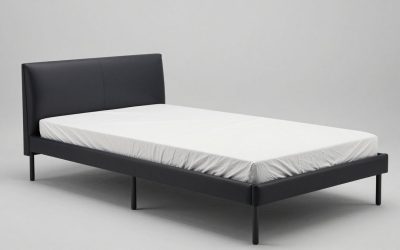
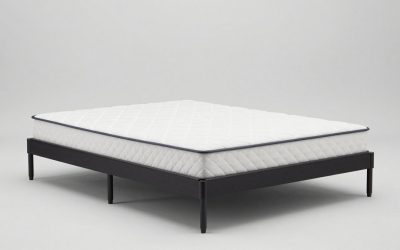
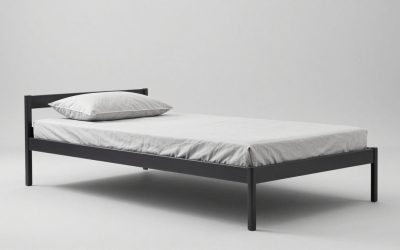
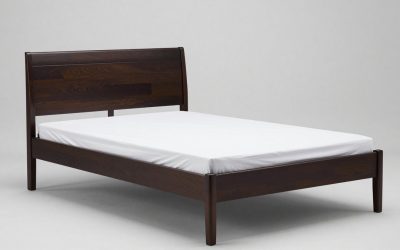
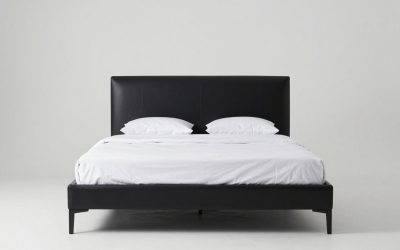
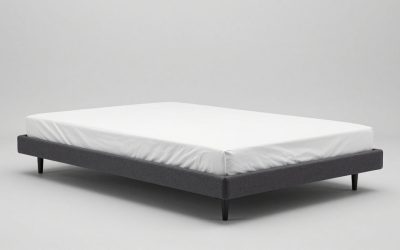
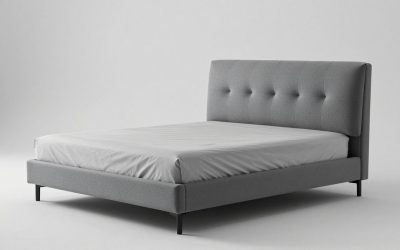
A queen platform bed with storage headboard adds 4 to 10 inches beyond the standard 80-inch queen mattress length, pushing the total footprint to 84 to 90 inches long, with usable shelf depths of 3.5 to 9 inches depending on whether you choose a shallow bookcase, deep cubby, or sliding-door headboard.
That extra length is what determines whether the bed works in a room under 11 feet long, whether you can still open drawers, and whether you actually gain usable storage or just a display ledge. Below is how to measure, compare, and choose based on your room and storage needs.
Our top picks
 UHTN Queen Bed Frame with Storage Drawers
- Keep your bedroom neat and organized with two…
- Stay connected and keep devices powered with the…
- The modern LED headboard adds ambient lighting for…


As an Amazon Associate we earn from qualifying purchases at no extra cost to you.
How Big Is a Queen Platform Bed With Storage Headboard Really?
A standard queen mattress is 60 x 80 inches. The platform frame itself usually adds 1 to 2 inches on each side for the rails. The storage headboard is where the size changes most:
- Slim bookcase headboard (open shelves): 4 to 6 inches deep. Total bed length: ~84 to 86 inches.
- Cubby headboard with divided compartments: 6 to 8 inches deep. Total bed length: ~86 to 88 inches.
- Cabinet-style headboard with doors or sliding panels: 8 to 10 inches deep. Total bed length: ~88 to 90 inches.
- Headboard with integrated charging niche and double-thick back panel: Up to 11 inches deep in some wood platform bed with storage and headboard designs.
Shelf depth matters more than overall depth. The usable shelf depth — the flat space where you can actually set a book, alarm clock, or storage bin — is typically 1 to 1.5 inches less than the total headboard depth because of the back panel and any cord-management channel.
| Headboard Type | Total Added Length | Total Bed Length (with 80″ mattress) | Usable Shelf Depth | Best For |
|---|---|---|---|---|
| Slim bookcase, open shelves | 4 – 5.5 in | 84 – 85.5 in | 3.5 – 4.5 in | Small rooms, books and phones only |
| Cubby storage with 3-4 compartments | 6 – 8 in | 86 – 88 in | 5 – 6.5 in | Bins, folded clothes, medium baskets |
| Cabinet with sliding doors | 8 – 10 in | 88 – 90 in | 7 – 9 in | Hidden storage, dust-free display |
| Platform bed with storage no headboard | 0 in (frame only) | 81 – 82 in | N/A | Tightest footprint, wall-mounted shelf instead |
For reference, a 6-inch shelf can hold a standard paperback (5.5 inches deep) and a 10 oz candle, but not a 12-inch storage cube. For cubes or folded sweaters, you need at least 7.5 inches of usable depth.
Will It Fit in a Room Under 11 Feet Long?
Rooms under 11 feet long — like a 10 x 10 ft or 10 x 12 ft bedroom — are where the headboard depth makes or breaks the layout. You need clearance in three places:
- Foot of bed to wall/door: 24 inches minimum to walk, 30 inches if you have drawer storage or a queen headboard and footboard with storage that requires pull-out space.
- Side of bed to wall: 20 to 24 inches on at least one side for making the bed; 30 inches if you need nightstand + walkway.
- Headboard to wall outlet: If the headboard is 8+ inches deep, check that it does not block baseboard heaters or window trim.
Here is how the math works in a 10-foot (120-inch) long room with the bed on the short wall:
With an 84-inch slim bookcase queen platform bed with storage headboard: 120 – 84 = 36 inches remaining. That leaves 30 inches for a walkway plus 6 inches of breathing room, but only if you do not add a footboard. With an 88-inch cubby headboard plus a storage footboard that adds another 4 inches: 120 – 92 = 28 inches remaining — tight for daily use and not enough to fully extend footboard drawers, which need 18 to 22 inches of pull-out clearance.
In a 10 x 12 ft room (132 inches on the long wall), an 86-inch bed leaves 46 inches at the foot — enough for a dresser or a queen platform bed with storage drawers along the sides to open fully. This is why side-drawer models are usually the better fit than footboard-drawer models when one dimension is under 132 inches.
Drawer vs. Footboard Storage: Where to Put It
Queen platform bed with storage drawers on the sides needs lateral clearance. Each drawer front is typically 18 to 24 inches wide and pulls out 18 to 22 inches. You need at least 24 inches of open floor beside the bed to use them. In a room where the bed is centered with 22 inches on each side, the drawers will hit the nightstand or wall before fully opening.
Queen headboard and footboard with storage shifts storage to the ends. Headboard cubbies require zero floor clearance, footboard drawers or lift-top benches need that 18+ inches at the foot. If your layout forces the foot of the bed within 30 inches of a closet door or entry door, avoid footboard storage and choose headboard + side drawers instead.
Platform bed with storage no headboard and queen platform bed with storage no headboard are the same footprint-saving option: no extra length from a headboard. You get a 81 to 82-inch total length and can use side drawers or under-bed rolling bins without sacrificing walkway space. This configuration works best if you plan to mount a floating shelf or shallow wall cabinet above the bed for the nightstand function instead.
Choosing By Material and Style
The storage headboard and frame material affects weight, durability, and how the shelf holds up to daily use.
| Construction | Typical Weight Limit (platform + storage) | Box Weight / Assembly | Shelf Durability | Trade-off |
|---|---|---|---|---|
| Solid wood (pine, rubberwood, acacia) – queen wood platform bed with headboard | 600 – 800 lbs total | 120 – 160 lbs in 2-3 boxes | Resists sagging, can be refinished | Heavier to move, higher price range usually $600–$1,200 |
| Engineered wood (MDF/particleboard with veneer) – common for white queen platform bed with storage | 400 – 600 lbs total | 90 – 130 lbs in 2 boxes | Can sag if overloaded, sensitive to moisture | Lighter and lower price usually $300–$700, less forgiving with over-tightened screws |
| Queen upholstered platform bed with storage (wood frame + foam/fabric) | 500 – 700 lbs total | 110 – 150 lbs in 2-3 boxes | Fabric on headboard ledge stains; shelf is usually wood inside | Softer headboard for sitting up, requires vacuuming and spot cleaning |
A wood platform bed with storage and headboard in solid rubberwood or acacia will hold heavier items on the headboard shelves — like a stack of hardcovers or a 15-lb basket — without bowing over time. Engineered wood shelves over 24 inches wide without a center divider often dip if you load more than 15 to 20 lbs per shelf. If you want a white queen platform bed with storage in a small or low-light room, the white finish helps the bulky headboard feel less heavy, but choose one with a thermally fused laminate or lacquer rather than paper veneer if you plan to place drinks or plants directly on the shelves.
A queen upholstered platform bed with storage often pairs a padded, fabric-wrapped headboard with a wood bookcase behind or beside the cushion. The cushion is comfortable for reading, but the fabric on the top ledge will show dust and pet hair faster than wood. Look for removable, washable linen-blend covers or performance fabric if you have pets. The storage itself is still wood, so check the drawer construction — dovetail or dowel joints with ball-bearing glides last longer than stapled particleboard glides.
Decision Matrix: Which Configuration Fits Your Situation
Use your room size and how you live in it to pick:
- Small apartment, room is 10 x 11 ft or smaller, no walk-in closet: Choose a queen platform bed with storage headboard that is slim (4 to 6 inches deep) plus side drawers. You get vertical storage without losing the walkway. Avoid a storage footboard.
- You want to replace both nightstands: Choose a cubby headboard with at least 5.5 inches of usable depth and integrated cable cutouts/USB. Each cubby functions as a nightstand. This works for couples where side space is only 18 to 20 inches.
- Renter who moves every 1-2 years: Choose a platform bed with storage no headboard or a queen wood platform bed with headboard that ships in 3 smaller boxes. Slim, freestanding headboards under 60 lbs are easier to get through 28 to 30-inch doorways and up stairwells than one-piece 80-lb cabinet headboards.
- Kids, pets, or dust concerns: Choose a headboard with sliding doors or fabric doors to hide shelves, and drawers with enclosed sides. Open bookcase shelves collect dust and are easy for pets to knock items off.
- Back pain or need for firm support: All platform beds here eliminate the box spring, so focus on slat spacing — 2.5 to 3 inches apart is ideal for a foam or hybrid queen mattress. Add a headboard cushion if you sit up to read; a flat wood cubby is not comfortable to lean against without pillows.
Assembly, Moving, and What Wears First
Most queen platform beds with storage headboards ship flat-packed in 2 to 3 boxes, the largest typically 62 x 22 x 10 inches. Measure your doorway (standard interior door is 28 to 30 inches wide, 80 inches tall) and hallway turns. Cabinet headboards that come pre-assembled are the hardest to maneuver — a 62-inch wide headboard will not pivot through a 28-inch doorway if it is 10 inches deep. Two-piece headboards that bolt together inside the room are easier for apartments.
Assembly usually takes 90 minutes to 2.5 hours with two people. Headboard cubbies add 30 to 45 minutes because each compartment has its own shelf and back panel. The parts that wear first are not the frame but the hardware: drawer glides, shelf pins, and the screws that anchor the headboard to the side rails. To extend life, avoid overloading any single drawer beyond 40 to 50 lbs, and do not drag the bed — lift it, even if it has felt pads, because lateral stress loosens the headboard joint.
For cleaning, open wood shelves need weekly dusting; upholstered headboards need vacuuming with an upholstery attachment. If the platform has under-bed drawers, leave 1 to 2 inches of clearance above the floor for the drawer casters or glides — thick pile rugs can jam low-profile drawers.
FAQ
Can I use a queen platform bed with storage headboard without attaching the headboard?
Many models allow it. If you buy a queen platform bed with storage no headboard version of the same frame, the side rails and slats are identical and the headboard is a separate bolt-on piece. If you already have a freestanding bookcase headboard, you can place the platform frame 1 to 2 inches away from it and secure it to the wall with anti-tip hardware instead of bolting it to the bed. Check the manual — some frames rely on the headboard for lateral rigidity and will wobble if you skip it without adding a metal cross-brace.
How much weight can the headboard shelves hold?
Most manufacturers rate each shelf at 20 to 35 lbs for solid wood and 15 to 20 lbs for engineered wood. That is enough for 8 to 12 books, a lamp, and a phone. Avoid placing a 30-lb TV or a full set of encyclopedias on a single shelf, especially on spans wider than 30 inches without a center divider.
Is a white queen platform bed with storage harder to maintain?
White laminate and lacquer show scuffs less than matte white paint, but any white surface shows dust and hand oil more than wood tone. Wipe shelves with a damp microfiber cloth and avoid harsh cleaners that dull the finish. For an upholstered white headboard, choose a performance fabric rated for at least 30,000 rubs and a removable cover.