
Key takeaways
- Target Audience: Adult
- Recommended Uses For Product: Endurance, Exercise and Fitness, Speed
- Item Length: 280 Centimeters
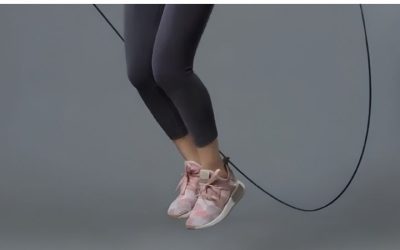
The thing that stops most people skipping indoors is not fitness, it is geometry. A rope needs roughly your height plus 18 to 24 inches of vertical clearance to pass overhead cleanly, which means a standard 8-foot ceiling leaves a 5-foot-8 jumper with only a few inches of margin once you add the arc of the cable. Add a ceiling fan, a light fixture, or a basement duct and the usable zone shrinks to nothing. Most people discover this by whipping a plaster ceiling on rep four and quietly retiring the rope to a drawer.
Working within those constraints is entirely possible, but it changes what you should buy. Shorter cable settings, thinner and lighter cables that decelerate quickly, and handles that let you cut the rope length precisely all matter more than top-end speed. The six ropes here span a featherweight speed cable, two adjustable all-rounders, a bulk set for a household, and two weighted ropes. Below is which of them survive a low ceiling and a 6-by-6-foot patch of floor, and which need a garage.
Our top picks
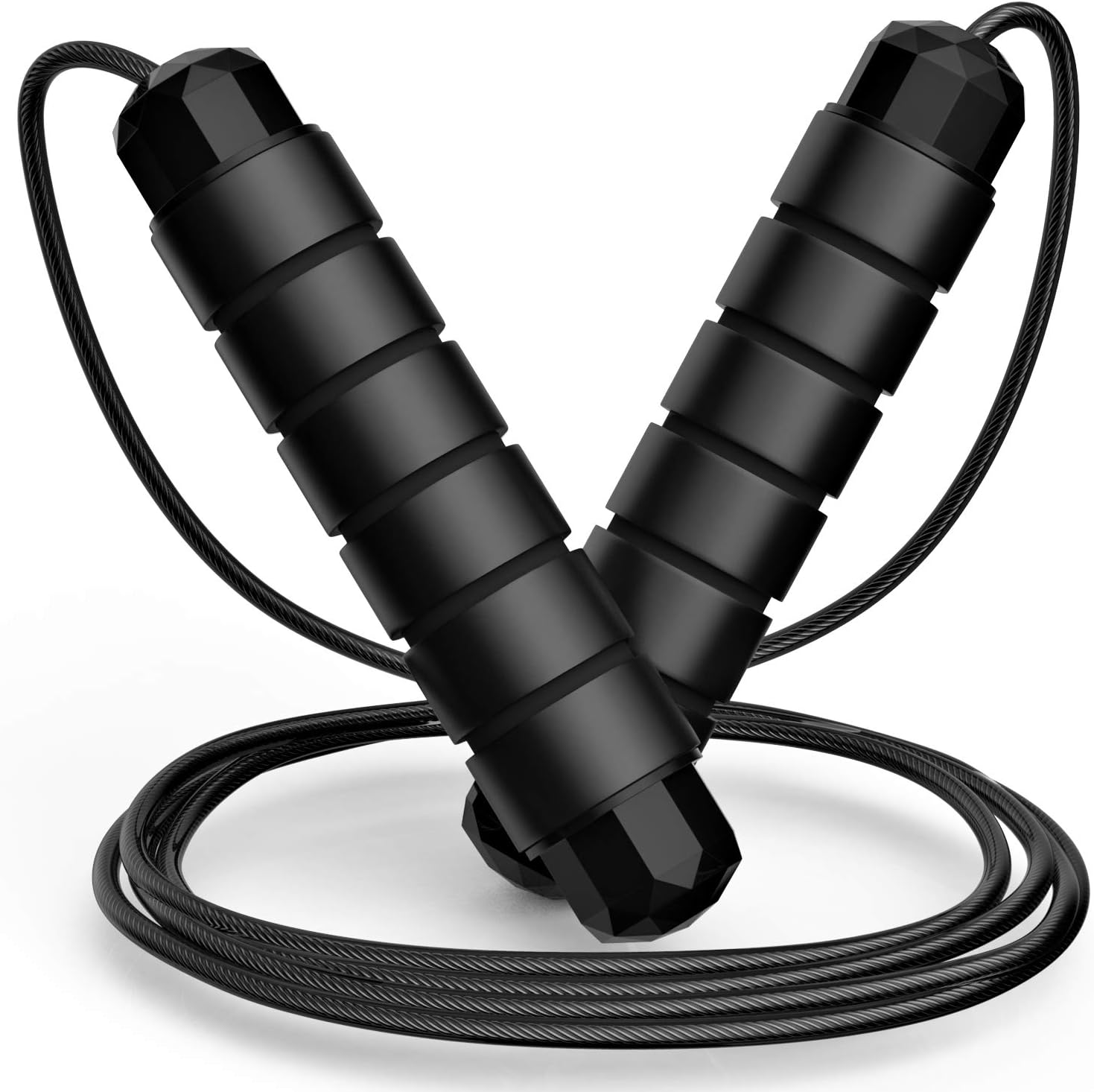 Jump Rope
- Target Audience: Adult
- Recommended Uses For Product: Endurance, Exercise and Fitness, Speed
- Item Length: 280 Centimeters
 BOOMIBOO Jump Rope
- Target Audience: Adult, Kid
- Recommended Uses For Product: Exercise and Fitness
- Item Length: 9.2 Feet
 Adjustable Jump Rope for Fitness
- Target Audience: Adult
- Recommended Uses For Product: Speed and Endurance
- Item Length: 9.2 Feet
| Product | Key specs | |
|---|---|---|
| Jump Rope | Target Audience: Adult Recommended Uses For Product: Endurance, Exercise and Fitness, Speed Item Length: 280 Centimeters | Check price |
| BOOMIBOO Jump Rope | Target Audience: Adult, Kid Recommended Uses For Product: Exercise and Fitness Item Length: 9.2 Feet | Check price |
| Adjustable Jump Rope for Fitness | Target Audience: Adult Recommended Uses For Product: Speed and Endurance Item Length: 9.2 Feet | Check price |
 SPORTBIT Adjustable Jump Rope for Fitness and SPORTBIT Adjustable Jump Rope for Fitness and | Check price | |
 Jump Rope Jump Rope | Self-Locking Exciting? Definitely Faster and Smoother - Premium grade 360-degree ball… Adjustable Rope - We provide 1 steel cable… | Check price |
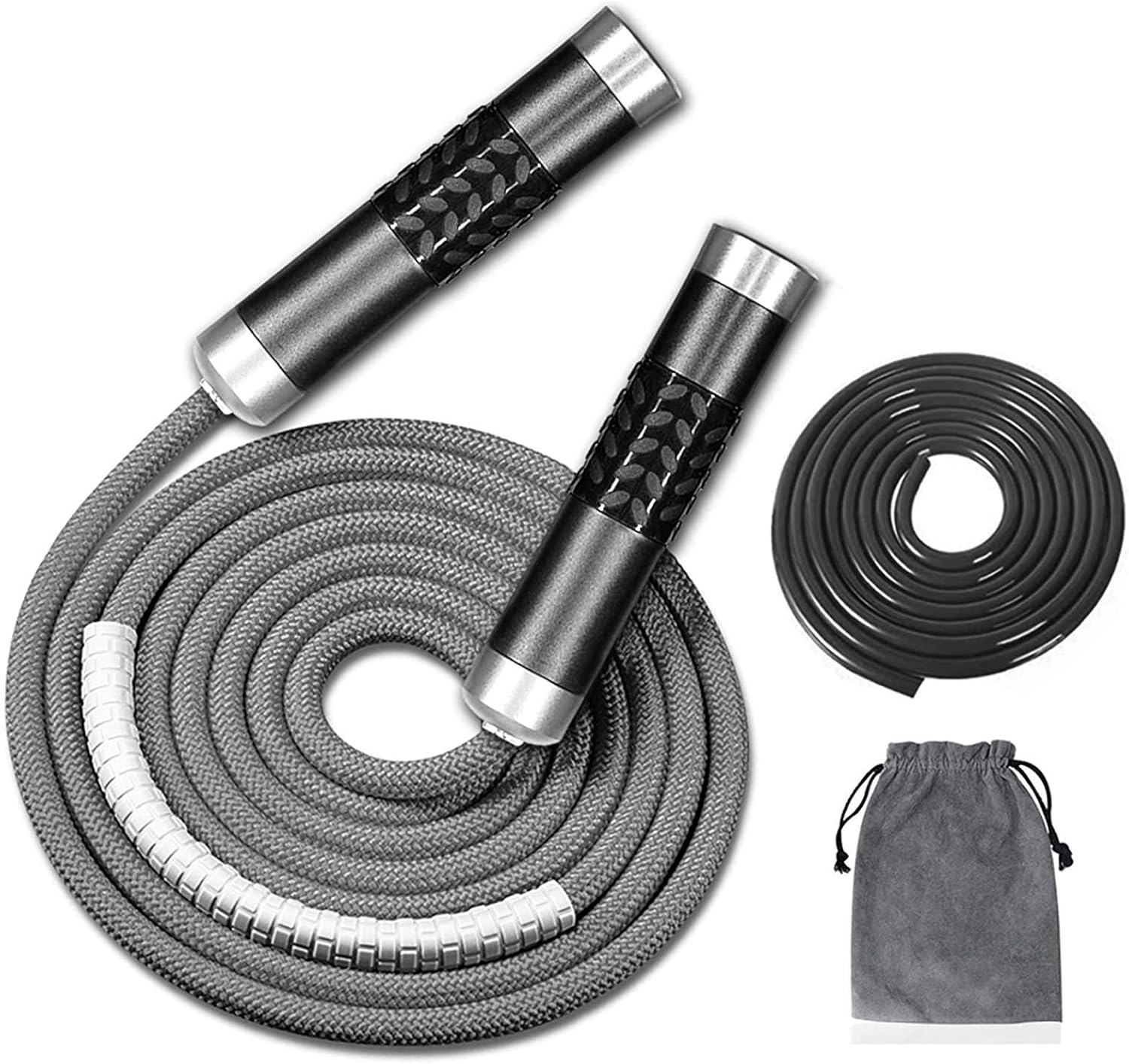 Redify Weighted Jump Rope for Workout Fitness Redify Weighted Jump Rope for Workout Fitness | Target Audience: Adult Item Length: 120 Inches Handle Diameter: 1 inches | Check price |
 12 Pieces Jump Rope for Fitness with 12 Pieces Jump Rope for Fitness with | Target Audience: Adult Recommended Uses For Product: Exercise and Fitness Item Length: 110 Inches | Check price |
 SPORTBIT Adjustable Jump Rope for Fitness and SPORTBIT Adjustable Jump Rope for Fitness and | Target Audience: Adult Recommended Uses For Product: Exercise and Fitness Item Length: 124 Inches | Check price |
As an Amazon Associate we earn from qualifying purchases at no extra cost to you.
Quick Comparison
| Product | Best For | Standout Feature | Watch Out For |
|---|---|---|---|
| Tangle-Free Speed Rope | Tight indoor spaces and fast footwork | Ball-bearing swivels keep the arc compact | Thin cable stings bare legs on a miss |
| BOOMIBOO Adjustable Rope | Shared use at different heights | Quick length adjustment without tools | Excess cable must be trimmed or it whips |
| 40-Piece Bulk PVC Set | Classes, clubs and large families | Fixed 9.2 ft length ready to use | Too long for most low-ceiling rooms |
| SPORTBIT Adjustable Rope | General fitness in a spare bedroom | Comfortable handles at a modest price | Plastic swivel is slower than bearings |
| High Speed Weighted Rope | Adding intensity without more space | Screw-free self-locking length system | Heavier cable needs a slightly wider arc |
| Redify Weighted Rope (1 lb) | Boxing and MMA conditioning | One pound of load builds shoulder endurance | Demands full ceiling clearance to swing safely |
How to Choose
- Measure your ceiling first: Stand where you plan to jump, raise one arm, and note the gap. Under 12 inches of headroom above your fingertips means you need a short cable setting and a low, wrist-driven turn rather than a full shoulder swing.
- Set length by the armpit test: Step on the cable’s midpoint, pull the handles up, and the tops should reach your armpits. Longer feels forgiving but forces a wider arc, which is exactly what a small room cannot accommodate.
- Prefer a thin cable indoors: A 2 to 3 mm coated steel cable moves through a compact arc and slows quickly when it clips something. Thick PVC and weighted ropes carry more momentum and cover more airspace per rotation.
- Check the adjustment mechanism: Screw-free locking systems let you dial in length repeatedly as you improve. Ropes that require cutting are precise but permanent, which is a poor match for a household with two jumpers of different heights.
- Plan the landing surface: A 4-by-6-foot rubber mat or a low-pile rug protects both the cable and your floor. Bare concrete shreds coated cables within weeks and gives your knees nothing back.
Top Picks Reviewed
Best for Low Ceilings: Tangle-Free Speed Rope
Ball-bearing swivels let this cable rotate from a small wrist motion, which keeps the arc tight and the elbows tucked. In a room with a fan or a low soffit, that compact envelope is the difference between a workout and a repair job.
The cable is thin and unforgiving. Missed reps sting against bare shins, so wear long socks for the first few weeks while your timing settles.
Best Shared Rope: BOOMIBOO Adjustable Rope
Length changes take seconds, which matters when a 5-foot-3 and a 6-foot user share the same rope. It is quick enough that nobody skips the adjustment and jumps on a badly sized cable.
If you leave a long tail of excess cable coiled at the handle, it flails and throws off the balance of the turn. Trim it or tuck it properly.
Best Household Supply: 40-Piece Bulk PVC Set
For a family, a homeschool group, or a community class, buying forty lightweight ropes at once removes the argument about whose rope is whose. The PVC cable is durable on gym floors and cheap to replace.
At a fixed 9.2 feet these are long for indoor use by anyone under about six feet. Expect to use them outdoors or in a room with high ceilings.
Best Everyday Value: SPORTBIT Adjustable Rope
Comfortable handles, an easy adjustment range, and a price that makes it painless to keep one rope in a gym bag and another at home. For steady cardio work it does everything asked.
The swivel is plastic rather than bearing-mounted, so at very high cadence it develops a slight hitch. For double-unders and speed work, spend more.
Best Intensity in Small Rooms: High Speed Weighted Rope
The self-locking, screw-free adjustment is the standout: you can shorten the cable in seconds to suit a tighter space, and the added cable weight raises effort without needing more floor area.
Weight also widens the natural arc slightly. If your ceiling clearance is marginal, set it shorter than you think you need and build up.
Best for Fight Conditioning: Redify Weighted Rope
A full pound of load turns three minutes into a genuine shoulder and forearm burn, which is why this style is a staple in boxing gyms. Bearing-mounted swivels keep it smooth despite the mass.
This is the rope least suited to a low-ceiling basement. The momentum is real, and a clipped light fixture will not end well for the fixture or the cable.
Frequently Asked Questions
What is the minimum room size for skipping?
About 6 feet square of clear floor and roughly 12 inches of headroom above your raised fingertips. Less than that and you should shorten the cable and keep the turn low and wrist-driven.
Why does my rope keep hitting the ceiling?
Almost always because the cable is too long, the elbows are flaring out, or the shoulders are driving the turn. Shorten the rope by two inches and keep your hands at hip height in front of the body.
Are weighted ropes harder on the shoulders?
They load the shoulders and forearms more, which is the point, but they also punish sloppy form faster. Build a few weeks of clean skipping on a light cable before adding a pound.
How do I stop damaging the cable?
Skip on wood, rubber matting, or short-pile carpet rather than concrete or asphalt. Abrasive surfaces are what kill coated steel cables, not the jumping itself.
Final Thoughts
Skipping indoors is a spatial problem before it is a fitness problem. Measure the headroom, size the cable to your armpits, and choose a thin bearing-mounted rope if the room is tight. Save the weighted options for a garage or a high-ceilinged space, and put a mat down on day one so the floor and the cable both survive the habit you are trying to build.

Write Your Review
No reviews yet. Be the first to share your experience!