
Key takeaways
- Target Audience: Adult
- Recommended Uses For Product: Endurance, Exercise and Fitness, Speed
- Item Length: 280 Centimeters
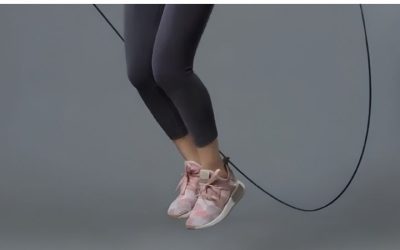
Ten minutes of skipping, done most days, beats an hour-long session done occasionally — and the jump rope is unusually well suited to that pattern because there is almost no setup. No changing rooms, no machine to warm up, no travel. You pick it up, you go outside or stand in the garage, and eight minutes later you are done and genuinely out of breath. The barrier to a daily habit is close to zero, provided the rope itself does not create friction.
That last part is where most people fail. A rope that arrives coiled and holds a permanent memory of the packaging takes two minutes of straightening before every session, which is enough to make you skip it on a busy morning. A rope adjusted by knotting inside the handle slips out of length and needs resetting. A cheap coating flakes off after a fortnight on a driveway. None of these are catastrophic problems, but each one adds a small tax that eventually makes the daily habit collapse. The ropes below differ mainly in how little they get in your way.
Our top picks
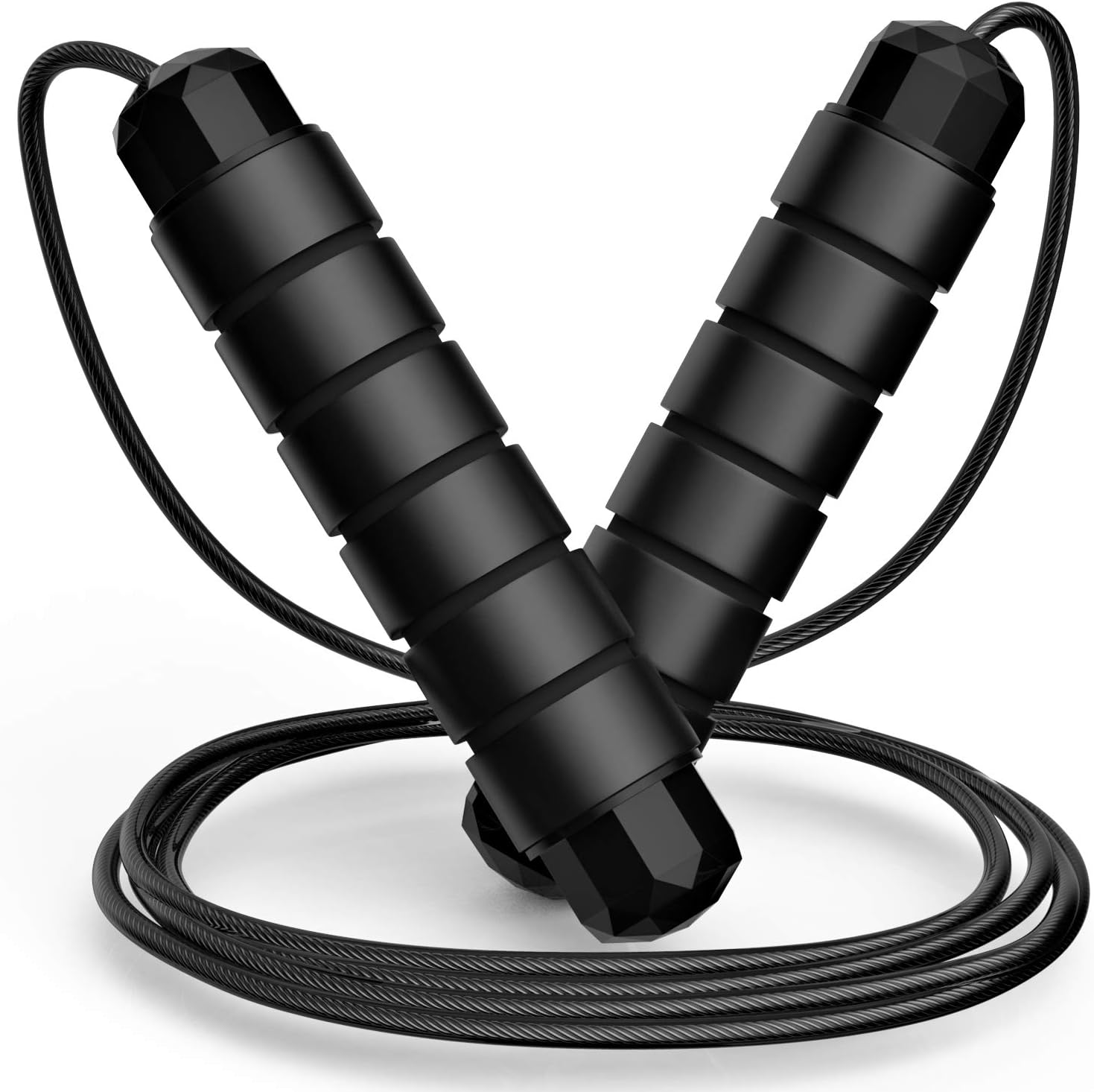 Jump Rope
- Target Audience: Adult
- Recommended Uses For Product: Endurance, Exercise and Fitness, Speed
- Item Length: 280 Centimeters
 BOOMIBOO Jump Rope
- Target Audience: Adult, Kid
- Recommended Uses For Product: Exercise and Fitness
- Item Length: 9.2 Feet
 20 Pack Weighted Jump Ropes with Steel
- Includes 20 weighted jump ropes with 5 ropes…
- Features steel wire core coated with protective PVC…
- Each jump rope measures approximately 106 inches total…
| Product | Key specs | |
|---|---|---|
| Jump Rope | Target Audience: Adult Recommended Uses For Product: Endurance, Exercise and Fitness, Speed Item Length: 280 Centimeters | Check price |
| BOOMIBOO Jump Rope | Target Audience: Adult, Kid Recommended Uses For Product: Exercise and Fitness Item Length: 9.2 Feet | Check price |
| 20 Pack Weighted Jump Ropes with Steel | Includes 20 weighted jump ropes with 5 ropes… Features steel wire core coated with protective PVC… Each jump rope measures approximately 106 inches total… | Check price |
 SPORTBIT Adjustable Jump Rope for Fitness and SPORTBIT Adjustable Jump Rope for Fitness and | Check price | |
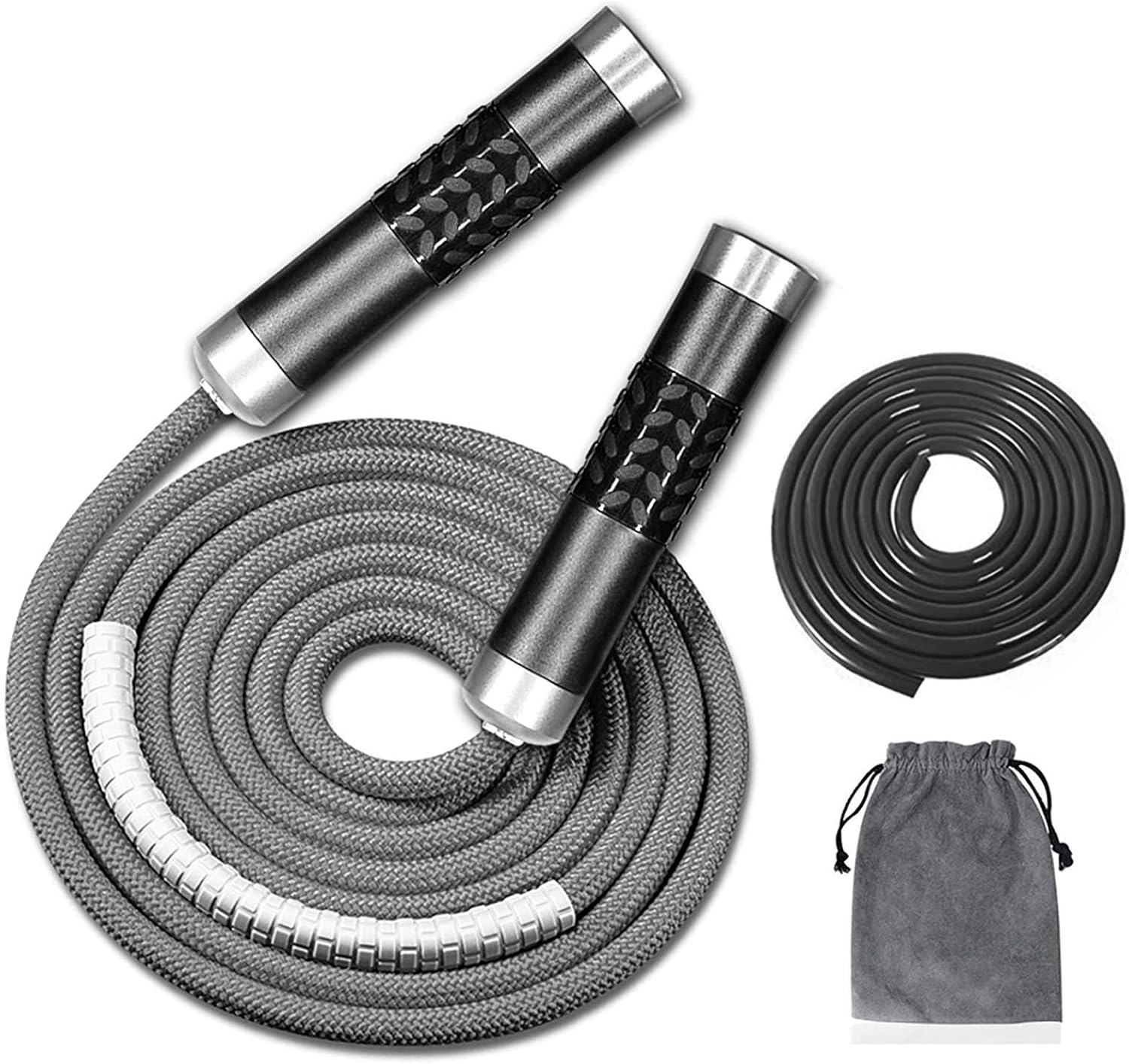 Redify Weighted Jump Rope for Workout Fitness Redify Weighted Jump Rope for Workout Fitness | Target Audience: Adult Item Length: 120 Inches Handle Diameter: 1 inches | Check price |
 Amazon Basics Jump Rope for Exercise Amazon Basics Jump Rope for Exercise | Check price | |
 Adjustable Jump Rope for Fitness Adjustable Jump Rope for Fitness | Target Audience: Adult Recommended Uses For Product: Speed and Endurance Item Length: 9.2 Feet | Check price |
 Redify Adjustable Jump Rope Redify Adjustable Jump Rope | Check price |
As an Amazon Associate we earn from qualifying purchases at no extra cost to you.
Quick Comparison
| Product | Best For | Standout Feature | Watch Out For |
|---|---|---|---|
| Tangle-Free Speed Rope | Grab-and-go daily use | Cable holds shape, no untangling | Coating wears on rough ground |
| BOOMIBOO Adjustable Rope | Getting the length right once | Secure adjustment that stays set | Handles are on the slimmer side |
| 20-Pack Weighted Steel Ropes | Households and groups | Everyone gets their own rope | Foam handles compress over time |
| SPORTBIT Adjustable Rope | Simple everyday sessions | Comfortable grip, reliable basics | Basic bearings limit top speed |
| Redify Weighted Rope | Short, harder sessions | 1 lb of added resistance | Upper body tires before legs |
| Amazon Basics Jump Rope | Backup and travel | 118 in, adjusts to any height | Minimal handle comfort |
How to Choose
- Prioritise zero setup: A rope with a tangle-resistant cable is ready the second you pick it up. If straightening the rope is a two-minute ritual, the daily habit will not survive a busy week.
- Set the length once and lock it: Screw-lock or clamp adjusters keep your setting. Knot-in-the-handle systems drift, and re-sizing before every session is exactly the friction that kills consistency.
- Keep it where you will use it: A rope in a drawer gets forgotten; a rope hanging by the back door gets used. Storage location matters more for adherence than any specification.
- Choose a coating for your surface: PVC-coated cable handles smooth surfaces well but wears on rough concrete. If your daily spot is a driveway, expect to replace a thin rope periodically or buy a thicker cord.
- Start shorter than the internet suggests: Handles at armpit height when standing on the cord is the beginner guideline; most people should shorten from there once the movement is comfortable, because excess rope drags and trips.
Top Picks Reviewed
Best Overall: Tangle-Free Rapid Speed Rope
The tangle-free cable is the feature that matters most for daily use. It comes out of a bag or off a hook straight and ready, which removes the single most common reason a session gets abandoned before it starts. The ball-bearing handles keep rotation consistent as your cadence rises.
The coating is its weak point on rough surfaces. Used daily on unfinished concrete it will wear through eventually, so if your spot is a driveway, expect this to be a consumable rather than a lifetime rope.
Best Adjustment: BOOMIBOO Adjustable Jump Rope
Adjustment that holds is underrated. This one lets you set your length properly and then forget about it, which means every session starts at the right size rather than with a fiddle. For someone building a daily habit, that consistency is worth more than raw speed.
The handles are slimmer than average. Most people are fine with that, but anyone with larger hands or who sweats heavily may find the grip less secure than a thicker foam handle.
Best for Households: 20-Pack Weighted Steel Cable Ropes
Buying in bulk sounds excessive until you consider that shared ropes are the main reason household members stop using them. Everyone having their own, set to their own length, removes that entirely — and the per-rope cost is trivially low.
The foam handles compress and eventually tear with regular use. At this price that is an acceptable tradeoff, and with a pack this size you simply move on to the next one.
Best Everyday Basic: SPORTBIT Adjustable Jump Rope
Comfortable grips, straightforward adjustment and a cable that behaves make this a dependable choice for someone whose goal is ten minutes of steady work rather than skill development. Nothing about it will frustrate you.
The bearings are basic, which caps how fast the rope will turn cleanly. For single unders and steady cardio that is irrelevant; for double unders you will notice the ceiling.
Best for Short Sessions: Redify Weighted Jump Rope
A pound of added weight raises heart rate faster and recruits the shoulders and forearms, which means a five-minute block does the work of a longer session with a light rope. On a genuinely rushed day that is exactly what you want.
The upper body fatigues before the legs, and over long sessions that becomes the limiting factor. It works best as an occasional variation rather than the rope you use every single day.
Best Backup: Amazon Basics Jump Rope
At 118 inches it adjusts down to any height and costs so little that keeping one in a bag, a car or a suitcase is a sensible redundancy. Travel is where daily habits usually break, and having a rope with you removes that excuse.
Handle comfort is minimal — thin and unpadded. Fine for a ten-minute session, less pleasant for extended work, which is why it belongs as a second rope rather than your primary one.
Frequently Asked Questions
Is ten minutes of jumping rope a day enough?
For general cardiovascular fitness, yes — skipping is intense enough that ten focused minutes most days produces meaningful adaptation. The consistency matters far more than the duration of any individual session.
How do I stop my rope from tangling?
Buy a cable designed to resist memory, and store it hanging rather than tightly coiled. Ropes stuffed into a bag develop permanent kinks that no amount of straightening fully removes.
Will jumping rope hurt my knees?
Done on a forgiving surface with soft, low jumps it is gentler than running. Jumping high on concrete in unsupportive shoes is what causes problems. Keep the jumps barely off the ground and the impact stays modest.
How do I size a jump rope correctly?
Stand on the middle of the cord and pull the handles up. Armpit height suits learning; chest height suits proficient jumpers. Adjust down gradually as your technique improves rather than starting too short.
Final Thoughts
For a genuine daily habit, the Tangle-Free Rapid Speed Rope removes the most friction — it is ready the instant you pick it up. If several people at home want to join in, the 20-Pack Weighted Steel Cable Ropes means nobody is resizing a shared rope. And keeping an Amazon Basics Jump Rope in a travel bag is the cheapest insurance against a habit lapsing while you are away.

Write Your Review
No reviews yet. Be the first to share your experience!