
Key takeaways
- Target Audience: Adult
- Recommended Uses For Product: Endurance, Exercise and Fitness, Speed
- Item Length: 280 Centimeters
Here is the trade-off that gets glossed over in every article praising jump rope as elite cardio: for the first few weeks, your cardiovascular system is not the thing limiting you. Coordination is. A beginner stops after eighteen jumps because they caught the cable on their toe, not because they were out of breath. Their heart rate spends the session climbing to 130 and dropping back down during the twenty seconds it takes to untangle and restart. That is not a cardio workout; it is a skill practice session with a cardio label.
This matters because it determines whether skipping is the right choice for you right now. If you can already string together a minute of clean rotations, a rope is arguably the most time-efficient cardio equipment you can own. If you cannot, there is a two to four week apprenticeship first, during which a stationary bike would genuinely give you a better training effect. The six ropes below sit at different points on that skill curve, and choosing the wrong one extends the apprenticeship considerably.
Our top picks
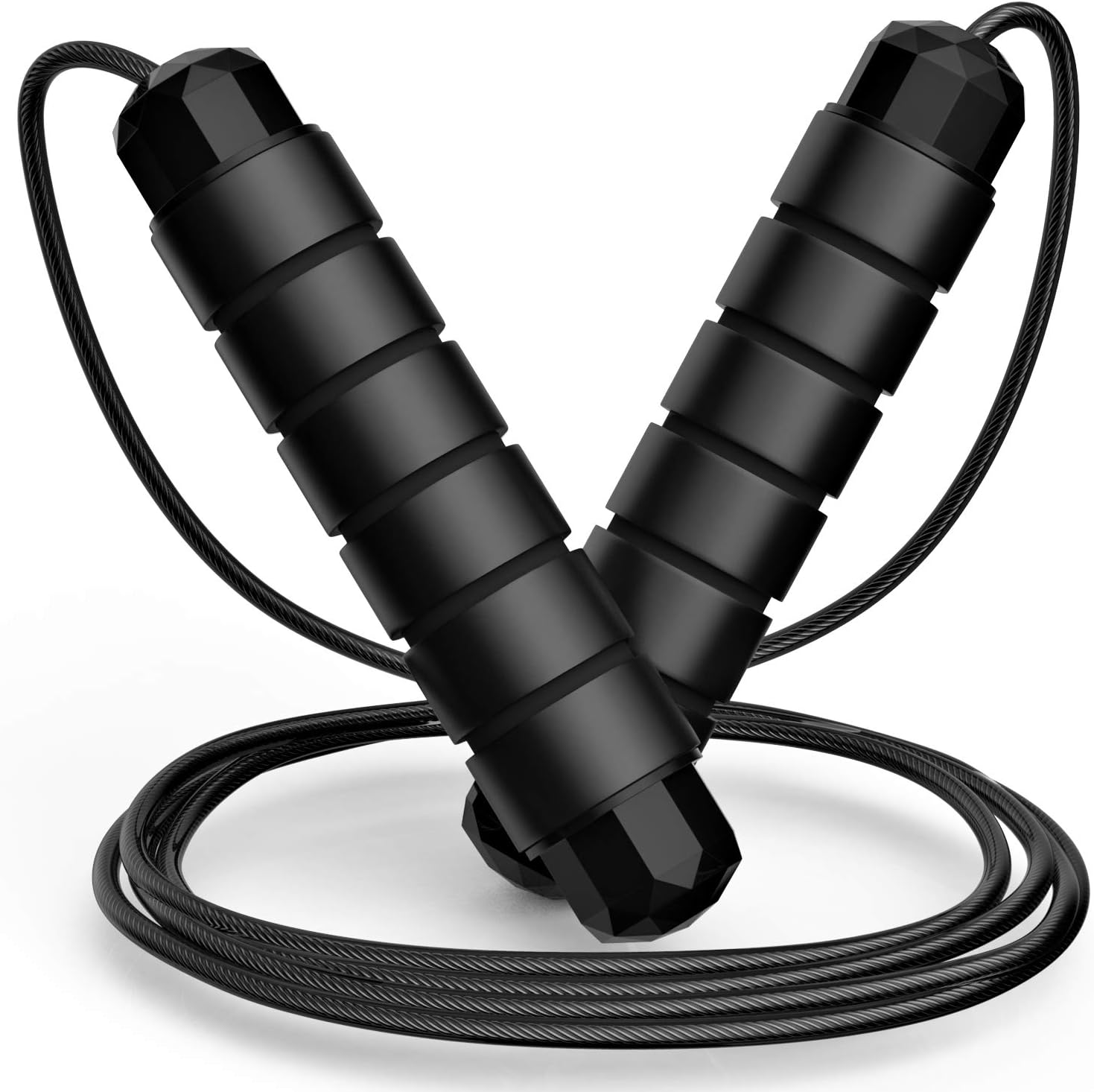 Jump Rope
- Target Audience: Adult
- Recommended Uses For Product: Endurance, Exercise and Fitness, Speed
- Item Length: 280 Centimeters


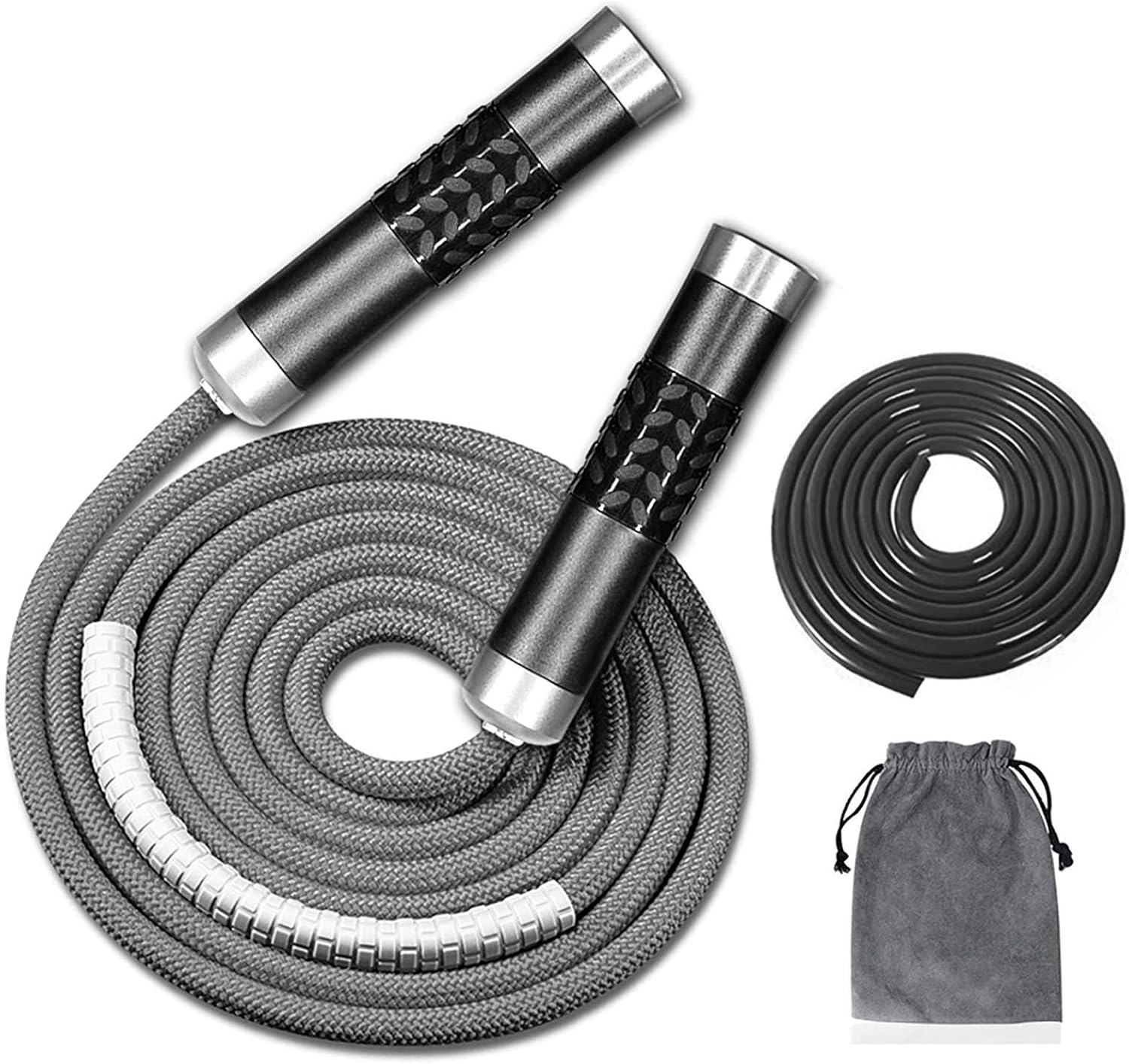 Weighted Jump Rope for Men Women
- Target Audience: Adult
- Item Length: 120 Inches
- Handle Diameter: 1 inches
 Redify Weighted Jump Rope for Workout Fitness
- Target Audience: Adult, Kid
- Recommended Uses For Product: Exercise and Fitness
- Item Length: 9.2 Feet
As an Amazon Associate we earn from qualifying purchases at no extra cost to you.
Quick Comparison
| Product | Best For | Standout Feature | Watch Out For |
|---|---|---|---|
| SPORTBIT Adjustable Rope | The learning phase | Forgiving turn speed and easy sizing | Outgrown once cadence work begins |
| Weighted Jump Rope (1 lb) | Feeling where the cable is | Weight gives clear positional feedback | Tires untrained forearms quickly |
| KUTIZE Weighted Rope (1 lb) | Building rhythm with adjustable length | Shorten as your technique tightens | Heavy for a complete beginner |
| Honor Athletics Pro Boxing Rope | Intermediate round-based work | Durable 5.3 mm cable for repeated sessions | Requires established rhythm to use well |
| Pre-Sized Weighted Rope | Removing setup variables | Correct length out of the packet | No adjustment as your skill improves |
| Tangle-Free Speed Rope | Once you can skip continuously | Enables genuine interval intensity | Frustrating and stingy for beginners |
How to Choose
- Assess your current skill honestly: If you cannot complete sixty unbroken jumps, buy for learning rather than for intensity. A fast cable in untrained hands produces frustration, not fitness.
- Understand what breaks the cardio effect: Every miss drops your heart rate. Twenty misses in a ten-minute session turns continuous work into fragments, which is why skill precedes conditioning here.
- Use a bridging plan: During the learning weeks, alternate 30 seconds of skipping attempts with 30 seconds of fast marching or step-ups. You keep the heart rate elevated while the coordination catches up.
- Size for reliability, not speed: A slightly longer cable at armpit height reduces misses while you learn. Shorten it later, once clean rotations are automatic and you want faster turnover.
- Track unbroken sets, not total time: Progress from 20 to 50 to 100 consecutive jumps is the real metric early on. When 100 is routine, the rope becomes a genuine cardio tool and the intensity conversation begins.
Top Picks Reviewed
Best Learning Rope: SPORTBIT Adjustable Rope
A moderate turn speed gives beginners the fractional extra time they need to react, and easy adjustment means you can set a forgiving length while the timing develops. Fewer misses means more continuous work, which is the entire point.
It has a low ceiling. Once you can skip continuously and want to push cadence, the swivel becomes the limiting factor rather than your legs or lungs.
Best Feedback for Timing: Weighted Jump Rope
The extra cable mass makes the arc perceptible in your hands, which teaches timing much faster than a light rope that effectively disappears between passes.
Forearms fatigue well before the cardiovascular system does at first. Keep working intervals to 20 or 30 seconds early on, or the technique falls apart at the end of every set.
Best Progression Path: KUTIZE Weighted Rope
Combining useful cable weight with adjustable length means one rope carries you from tentative early sessions to a tight, fast arc months later, shortened a couple of inches at a time.
A full pound is a lot for someone who has never skipped. If you are starting from zero, spend a fortnight on a light rope before switching to this.
Best Once Rhythm Is Established: Honor Athletics Pro Boxing Rope
A durable 5.3 mm cable suits three-minute rounds and holds up to repeated sessions on gym floors, which is exactly what an intermediate jumper doing boxing-style conditioning needs.
It assumes you already have a rhythm. Without one, the thicker cable simply means slower, more frustrating misses.
Best Setup Elimination: Pre-Sized Weighted Rope
Sizing is one of the most common beginner errors, and a pre-sized rope removes it entirely. Correctly proportioned out of the packet with no excess cable to unbalance the turn.
You cannot shorten it as you improve. Since most jumpers eventually want a shorter cable, this is a genuine limitation in the second and third month.
Best for Real Intervals: Tangle-Free Speed Rope
Once continuous skipping is automatic, this is where the cardio claims become true. High cadence intervals raise heart rate faster than almost any other equipment you can keep in a drawer.
Bought too early it is the fastest route to giving up. Thin cable, fast rotation and repeated stinging misses are a discouraging combination for someone still learning.
Frequently Asked Questions
How long does it take to learn to skip properly?
Most adults reach 100 continuous jumps within two to four weeks of practising a few times a week. Coordination improves faster than fitness at this stage.
Is skipping good cardio if I keep stopping?
Not particularly, because the heart rate drops during each break. Filling those breaks with marching or step-ups preserves the training effect while you learn.
What heart rate should I expect from skipping?
Once continuous, moderate skipping typically produces a solid aerobic effort and fast interval work climbs considerably higher. Beginners rarely reach either because sessions are too fragmented.
Should I learn on a light or a weighted rope?
A slightly weighted cable teaches timing faster because you can feel where the rope is. A full pound is too much at the start; something moderate is ideal.
Final Thoughts
Jump rope becomes excellent cardio at the point where you stop tripping over it, and not before. If you are learning, buy a forgiving rope, size it generously, and bridge the gaps with marching so the sessions still count. Once 100 unbroken jumps is routine, switch to a fast bearing-mounted cable and the efficiency everyone talks about finally shows up in your training.
Write Your Review
No reviews yet. Be the first to share your experience!