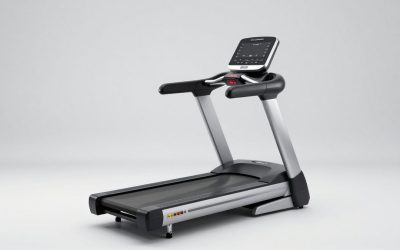
The best commercial treadmills for home use are the Sole F85 for most serious home gyms, the NordicTrack Commercial 1750 for interactive incline training, the Horizon 7.8 AT for interval runners, and the Life Fitness T5 or Precor TRM 800 when long-term construction quality matters more than price.
“Commercial” does not always mean identical to a health-club treadmill. In a home gym, it usually means a stronger motor, a larger running deck, a more durable belt and roller system, and a frame designed for frequent use. The right choice depends on your running speed, available room, noise tolerance, floor structure and whether you need subscription-based workouts.
Our top picks
 NordicTrack Commercial 1750 Treadmill with iFIT
- A full-featured treadmill that works great out of…
- 16" TOUCHSCREEN - The pivoting 16” touchscreen allows…
- Run, jog, or walk at speeds of up…
 NordicTrack Commercial 1250 Treadmill with iFIT
- A full-featured treadmill that works great out of…
- 10" TOUCHSCREEN - The tilting 10” touchscreen allows…
- Run, jog, or walk at speeds of up…
 Niceday TM3 Commercial Series Treadmills for Home
- Extra-Thick 20" x 60" Anti-Slip Deck: Niceday commercial…
- Commercial-Grade Durability: Built with commercial-grade steel and an…
- 0.6–11.2 MPH & 0%–15% Auto Incline: The 4.0…
| Product | Key specs | |
|---|---|---|
| NordicTrack Commercial 1750 Treadmill with iFIT | A full-featured treadmill that works great out of… 16" TOUCHSCREEN - The pivoting 16” touchscreen allows… Run, jog, or walk at speeds of up… | Check price |
| NordicTrack Commercial 1250 Treadmill with iFIT | A full-featured treadmill that works great out of… 10" TOUCHSCREEN - The tilting 10” touchscreen allows… Run, jog, or walk at speeds of up… | Check price |
| Niceday TM3 Commercial Series Treadmills for Home | Extra-Thick 20" x 60" Anti-Slip Deck: Niceday commercial… Commercial-Grade Durability: Built with commercial-grade steel and an… 0.6–11.2 MPH & 0%–15% Auto Incline: The 4.0… | Check price |
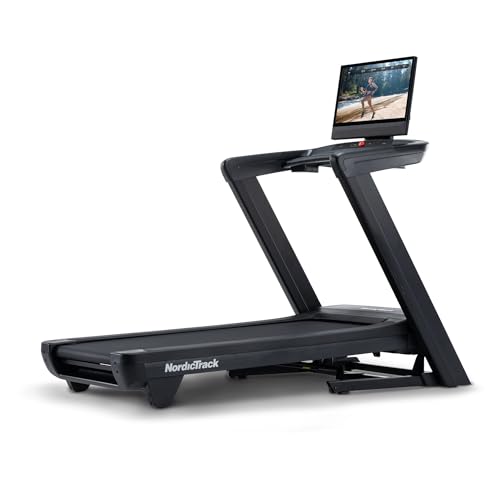 NordicTrack Commercial 2450 Treadmill with iFIT NordicTrack Commercial 2450 Treadmill with iFIT | A full-featured treadmill that works great out of… 24" TOUCHSCREEN - The 24” touchscreen tilts and… Run, jog, or walk with speeds up to… | Check price |
As an Amazon Associate we earn from qualifying purchases at no extra cost to you.
Best commercial-grade treadmills by situation
| Situation | Best fit | Why it fits | Main compromise |
|---|---|---|---|
| Most home runners | Sole F85 | Large deck, powerful drive system, folding frame and broad incline range | Less polished software than subscription-focused competitors |
| Interactive incline workouts | NordicTrack Commercial 1750 | Automatic speed and incline changes, a large screen and steep incline capability | Best features depend on a paid iFIT membership |
| Frequent intervals and sprint training | Horizon 7.8 AT | Quick speed changes, sturdy deck and responsive controls | Large footprint and less immersive built-in training |
| Durability above all else | Life Fitness T5 or Precor TRM 800 | Commercial-influenced frames, stable running platforms and serviceable components | Usually more expensive and less space-efficient |
| Quiet, low-impact home walking | A well-cushioned commercial-style treadmill with a 2.5–3.0 HP continuous-duty motor | Enough capacity without paying for a large-screen running machine | May not suit heavy users or regular high-speed running |
Head-to-head comparison of the best commercial treadmills for home use
| Treadmill | Motor guidance | Running surface | Incline | Cushioning and noise | Room and user considerations |
|---|---|---|---|---|---|
| Sole F85 | About 4.0 HP peak, generally positioned for heavy home use | Approximately 22 x 60 inches | Up to about 15% | Firm-to-moderate cushioning; relatively simple electronics can help limit fan and speaker noise | Often folds, but still needs roughly 80 x 40 inches of floor area when operating; commonly rated around 400 lb, depending on version |
| NordicTrack Commercial 1750 | About 3.5 CHP class | Approximately 22 x 60 inches | Typically a steep positive incline plus decline capability | Comfortable deck cushioning; screen, cooling fan and motor noise are more noticeable during hard sessions | Needs a substantial footprint and overhead clearance; verify the current version’s folded height before placing it under shelving |
| Horizon 7.8 AT | About 4.0 CHP class | Approximately 22 x 60 inches | Up to about 15% | Stable, moderately cushioned platform; designed for quick speed transitions rather than whisper-quiet operation | Heavy, wide and better suited to a permanent location; check doorway width and stair access |
| Life Fitness T5 | Commercial-quality drive system, with specifications varying by console | Approximately 22 x 60 inches | Up to about 15% | Well-controlled impact absorption and a stable feel; belt and motor sound remain audible at running speed | Typically non-folding and requires a dedicated area; a strong option for daily use by multiple household members |
| Precor TRM 800 | Commercial-grade motor and drive components | Approximately 22 x 60 inches | Commonly up to about 15% | Stable deck with adjustable or engineered cushioning depending on configuration | Large and heavy; plan for professional delivery and a permanent room location |
Specifications can vary by model year, console and region, so confirm the exact motor rating, maximum user weight and folded dimensions before ordering. Peak horsepower is also a poor comparison by itself. A continuous-duty rating, cooling system, belt quality and warranty support tell you more about whether a treadmill can handle daily running.
What matters more than the advertised horsepower
Motor power
For walking and light jogging, a 2.5–3.0 HP continuous-duty motor is usually adequate for an average-size user. Regular runners, heavier users and households sharing one machine should look toward the 3.0–4.0 HP continuous-duty class. A stronger motor is less likely to labor at a steady pace, but it does not make a poorly built treadmill durable. Examine the maximum user weight, warranty and service network alongside the motor specification.
Belt dimensions
A 20 x 55-inch deck can work for walking, but a 22 x 60-inch belt is a safer target for running. Tall users with a long stride benefit from the extra length, while the additional width makes it easier to maintain a relaxed gait during intervals. Do not place a treadmill so close to a wall that a misstep leaves no escape path.
Cushioning
Treadmill cushioning reduces impact compared with many outdoor surfaces, but a soft deck is not automatically better. Excessive softness can feel unstable and may require more effort from the legs. Look for a platform that feels consistent from the center to the front and sides. If back, knee or hip comfort is a priority, test the deck in walking shoes and at both an easy pace and a faster pace before committing.
Noise and vibration
The belt striking the deck, the motor fan, incline gears and footfalls all contribute to sound. A treadmill that seems quiet in a showroom can transmit low-frequency vibration through a wood-framed floor. Place it on a dense rubber mat, keep the belt lubricated as specified and leave space around the motor hood for airflow. In an upstairs room, a non-folding platform with a stable frame may transmit less movement than a lighter folding design, even if the motor sound is similar.
Room requirements that listings often leave out
Measure the machine in its operating position, not just its folded position. For a 22 x 60-inch treadmill, reserve at least 3 feet of clear space on each side where possible and 6–7 feet behind the deck for safe dismounting. A practical minimum room for one treadmill is about 10 x 12 feet; that leaves limited space for a bench or dumbbell rack. A 12 x 14-foot room is more comfortable for a treadmill plus a small strength-training area.
- Allow roughly 7.5–8 feet of ceiling height for a tall runner using a treadmill with a raised incline. Add the user’s height, shoe thickness and maximum deck elevation before deciding.
- Check door openings, turns, stairwells and elevator dimensions. Many heavy treadmills arrive in a box wider or taller than the assembled machine.
- Expect a substantial machine to weigh about 300–450 pounds, with commercial models sometimes exceeding that range.
- Do not assume a folding treadmill can be stored against a wall immediately after use; the folded unit may be 65–75 inches tall and still require clearance for its transport wheels.
- Keep the treadmill away from radiators, damp basements and direct sunlight, which can shorten the life of electronics and belt materials.
Assembly, moving and durability realities
Commercial-style treadmills are difficult to move after assembly. The deck is heavy, the frame can be awkward on stairs and the machine may need four or more adults or professional delivery equipment. Confirm whether delivery includes room placement, assembly and removal of packaging. If you rent, measure the full route from the building entrance to the final room before purchase; a 32-inch doorway may be passable, but a sharp hallway turn can still stop the delivery.
The belt, deck surface, drive belt and rollers are common wear points. Dust, pet hair and infrequent lubrication increase friction and motor load. A treadmill used by several people may need belt tracking and lubrication sooner than the calendar in the manual suggests. Keep pets away from the motor compartment, and vacuum around—not inside—the electronics unless the manufacturer gives specific instructions.
Which treadmill should you buy?
Choose the Sole F85 if you want a broad running deck, strong capacity and a folding frame without making interactive content the center of the purchase. Choose the NordicTrack Commercial 1750 if guided workouts, automatic incline changes and a large display will keep you exercising; include the ongoing membership cost in your budget. Choose the Horizon 7.8 AT for repeated speed intervals and direct-access controls. Choose Life Fitness or Precor when a stable, serviceable, non-folding machine is worth the additional cost and permanent floor space.
For most homes, the best commercial treadmills for home use are not the ones with the biggest screen or highest peak horsepower. They are the models that fit the room with safe clearance, support the intended users, provide a 22 x 60-inch deck for running, and have a service and maintenance plan you can realistically follow.
Frequently asked questions
Is a commercial treadmill too large for a home?
Not necessarily, but a true commercial-style treadmill usually needs a permanent location. Measure the operating footprint, overhead height, delivery path and rear safety clearance before comparing features.
Is a 4 HP treadmill better for every user?
No. It is useful for frequent running, heavier users and multiple daily users, but a quality 3 HP continuous-duty machine can be the better value for walking or moderate jogging.
Can I put a treadmill on a second floor?
Often, yes, if the floor can support the concentrated load and vibration. Use a dense equipment mat, avoid placing it directly beside a bedroom wall and confirm structural concerns with a qualified professional when the building is older or the machine is exceptionally heavy.