Key takeaways
- No stated weight-to-body guidance on the listing. Reputable sellers state the target body weight for each blanket weight.
- Weight listed but no dimensions, or dimensions that suggest a King-size footprint at 15 pounds, which will feel like nothing.
- Pocket grid larger than 6 inches or visibly uneven bead distribution in product photos.
- Claims that the blanket treats or cures a medical condition. It provides pressure, nothing more.
- “Machine washable” on a 25-pound blanket with no removable cover. Most home washers are rated for 15 to 20 pounds of dry laundry, and a wet weighted blanket is heavier.
- Any blanket marketed for infants or toddlers. Weighted blankets are not appropriate for children under about 50 pounds or anyone who cannot remove it unaided.
What's inside
The most common weighted blanket mistake is buying by bed size instead of body size. A Queen-labeled 20-pound blanket sounds right for a Queen bed, but if the person under it weighs 130 pounds, that is 15 percent of body weight and far too heavy for comfort. The second mistake is the opposite: choosing a blanket so light that it feels like an ordinary comforter and does nothing. The third is ignoring the dimensions, which is why so many weighted blankets end up sliding off one side of the bed at 2 a.m. Weight, size, and fill all have to match the sleeper, and the bed is secondary.
Decide These 3 Things First
Who is sleeping under it. A weighted blanket is for one person. The standard guideline is 7 to 12 percent of body weight, with 10 percent as the starting point. A 150-pound adult lands at 15 pounds; a 200-pound adult at 20 pounds. Couples who want to share need two blankets or a very wide one with a compromise weight that suits neither person perfectly.
As an Amazon Associate we earn from qualifying purchases at no extra cost to you. Product prices and availability are accurate as of the date shown and are subject to change.
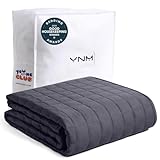
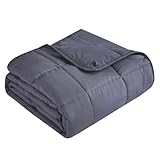


Whether it stays on the bed or the couch. A bed blanket should cover the sleeper, not the mattress, so 48 x 72 inches suits most adults on any bed up to Queen. A couch throw can be smaller, 41 x 60 inches, and lighter.
How hot you sleep. Glass beads add weight without bulk, and a breathable cotton or bamboo cover keeps the blanket from trapping heat. Plastic pellet fill and fleece covers are warmer and only make sense in a cold bedroom.
Weight
Start at 10 percent of body weight and round to the nearest available size, which is usually 5-pound increments from 5 to 30 pounds. A person at 140 pounds fits a 15-pound blanket, which is why models such as the YnM 15lbs Weighted Blanket at $23.89 are labeled for roughly 140-pound users. Someone between 190 and 210 pounds fits a 20-pound blanket, matching the range printed on the yescool 20 lbs Weighted Blanket at $39.99. If you are between sizes, lighter is the safer choice for a first blanket; you can always move up. Anyone under 50 pounds, and anyone who cannot easily lift the blanket off themselves, should not use one.
Size
Weighted blankets are sold in three common footprints. The 41 x 60 inch throw is for one person on a sofa or a Twin bed and typically carries 10 to 15 pounds. The 48 x 72 inch size covers one adult in a Twin, Full, or Queen bed and carries 15 to 20 pounds; the L’AGRATY 15lbs blanket at 48 x 72 inches and $27.99 is a typical example. The 60 x 80 inch size matches a Queen mattress top and is meant for one large adult or two people sharing, usually at 20 to 25 pounds; the Topcee 20lbs at 60 x 80 inches and $32.99 falls here. Do not size a weighted blanket to drape over the mattress edges; the overhang pulls the whole thing off the bed during the night.
Fill Material
Micro glass beads are the standard in 2026. They are small, roughly the size of sand grains, dense enough to keep the blanket thin, and quiet. Plastic poly pellets are cheaper, larger, and slightly noisy, and they make the blanket bulkier for the same weight. Steel shot beads are rare and very heavy per volume. Some budget blankets mix beads with polyester batting to smooth out the feel, which also adds warmth. For a cool, low-profile blanket, look for glass beads with minimal batting.
Cover and Construction
The blanket itself is a grid of sewn pockets, usually 4 to 6 inches square, each holding a measured dose of beads. Smaller pockets distribute weight more evenly and stop beads from pooling at the foot. Look for double stitching on the pocket seams and a fabric weight heavy enough that beads cannot leak through. Many blankets ship with a removable duvet-style cover that ties or zips onto the inner blanket; that cover is what you wash weekly, while the inner blanket is washed only a few times a year. Cotton and bamboo covers breathe best; minky or fleece covers are warm and plush but hold heat.
Comfort and Performance
A properly sized blanket feels like steady, even pressure across the body, not like a pile of books on the chest. It should take 3 to 7 nights to get used to. If you wake up feeling pinned or overheated, the blanket is too heavy or the cover is too warm. Cooling claims on the label mostly refer to the cover fabric and bead fill rather than any active cooling, so treat them as “not as hot as fleece” rather than “cold.”
Price Tiers
Budget, $20 to $35. Glass bead fill, microfiber or polyester cover, 15 to 20 pounds, often no removable cover. The examples above from YnM, L’AGRATY, and Topcee all sit in this tier.
Mid-range, $35 to $80. Adds a removable washable cover, tighter pocket grid, and cotton or bamboo fabrics. The yescool at $39.99 is at the bottom edge of this tier.
Premium, $80 to $250. Knitted chunky designs with no beads at all, organic cotton, or dual-sided covers with a cool side and a warm side. Worth it mainly for hot sleepers who want a fully breathable knit.
Spec Checklist
| Spec | Budget | Mid | Premium |
|---|---|---|---|
| Price | $20 to $35 | $35 to $80 | $80 to $250 |
| Weight options | 15 and 20 lbs | 10 to 25 lbs in 5-lb steps | 10 to 30 lbs, custom sizes |
| Sizes | 48 x 72 or 60 x 80 in | 41 x 60 through 80 x 87 in | Throw through King |
| Fill | Glass beads with poly batting | Glass beads, minimal batting | Glass beads or beadless knit |
| Pocket size | 5 to 6 in squares | 4 to 5 in squares | 3 to 4 in squares or knit |
| Cover | Fixed microfiber | Removable cotton or bamboo | Removable dual-sided or organic |
| Washing | Machine wash whole blanket, cold | Wash cover weekly, blanket rarely | Same, plus dryer-safe knits |
| Warranty | Retailer return window | 1 year | 1 to 3 years, sleep trial |
Red Flags
- No stated weight-to-body guidance on the listing. Reputable sellers state the target body weight for each blanket weight.
- Weight listed but no dimensions, or dimensions that suggest a King-size footprint at 15 pounds, which will feel like nothing.
- Pocket grid larger than 6 inches or visibly uneven bead distribution in product photos.
- Claims that the blanket treats or cures a medical condition. It provides pressure, nothing more.
- “Machine washable” on a 25-pound blanket with no removable cover. Most home washers are rated for 15 to 20 pounds of dry laundry, and a wet weighted blanket is heavier.
- Any blanket marketed for infants or toddlers. Weighted blankets are not appropriate for children under about 50 pounds or anyone who cannot remove it unaided.
FAQ
What weight blanket should a 180-pound person use?
About 18 pounds by the 10 percent rule, which rounds to a 15 or 20 pound blanket. Choose 15 if you sleep hot or are new to weighted blankets, 20 if you want firmer pressure and sleep cool.
Can two people share one weighted blanket?
Only with a 60 x 80 inch or larger blanket and a weight that is about 7 to 8 percent of the lighter person’s body weight. Most couples are happier with two individual 48 x 72 inch blankets side by side.
Is a weighted blanket too hot for summer?
A glass bead blanket with a cotton or bamboo cover and no fleece is usable year-round in a bedroom kept at 68 to 72 degrees. Fleece-covered or pellet-filled blankets are winter items.
How do I wash a 20-pound weighted blanket?
Check the washer capacity first; most residential machines handle a 15-pound blanket but struggle with 20 or more. Wash cold on gentle, tumble dry low or lay flat, and never use bleach or fabric softener. If your washer is too small, use a laundromat’s large-capacity machine.