
The most successful vibration plate owners I have come across are not the ones who bought it to lose weight. They are runners who use it for ten minutes on tight calves after a long effort, desk workers who stand on it mid-afternoon when their legs feel heavy, and people rehabbing an ankle who want gentle loaded movement before they are cleared to run. Used that way, the machine has a defined job with a clear endpoint, and it gets used because the benefit is immediate and obvious.
Framed as a fat-loss device, the same machine disappoints within a month, because the effect it produces is not the effect that was promised. So this comparison approaches the six plates below as recovery and circulation tools first: what the movement pattern feels like on sore muscles, whether the deck supports the positions recovery work actually requires, and how comfortable each is for a passive ten-minute session rather than a hard training block.
Our top picks


As an Amazon Associate we earn from qualifying purchases at no extra cost to you.
Quick Comparison
| Product | Best For | Standout Feature | Watch Out For |
|---|---|---|---|
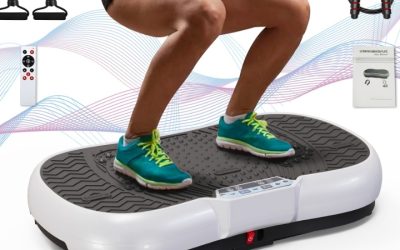
| Renoj 3D Vibration Platform | Post-run leg recovery | Multi-plane motion suits loose stretching | Less effective for loaded strength work |
| MERACH CV30 Pro Curved | Calm sessions without motor drone | Curved deck cradles the foot arch | Awkward for hands-on-deck positions |
| 130-Level Vibration Plate | Dialing in a gentle recovery setting | Very fine low-end speed adjustment | Deck too small for kneeling stretches |
| Lifepro Waver | Combining stretching with band work | Bands allow assisted upper-body stretches | Presets are aimed at exercise, not recovery |
| SEDOZIK Vibration Plate | Longer sessions without bending down | Remote lets you adjust mid-stretch | Heavier build than recovery use requires |
| HVX Vibration Platform | Full-body positions and foam rolling | Wide deck fits hands, knees or a roller | Bulk is overkill for calves alone |
How to Choose
- Prioritize the low end of the speed range: Recovery work happens at gentle settings. A plate whose lowest usable level is already aggressive is the wrong tool, no matter how many levels it lists above that.
- Look for a deck you can put hands and knees on: Calf and hamstring work is easy standing up, but shoulders, hips and thoracic spine need positions where part of your body is on the deck. Narrow platforms rule those out.
- Keep sessions short and specific: Ten minutes total, split into 60 to 90 second holds per position, works better than one long stand. Vibration exposure has diminishing returns and fatigue accumulates faster than it feels like it does.
- Think about timing around training: Gentle plate work after a session or on a rest day tends to feel best. Immediately before heavy lifting, it can leave the legs feeling slightly disconnected for the first sets.
- Check foot comfort: Barefoot on a hard textured deck is uncomfortable for some people after a few minutes. A curved or slightly padded surface, or thin socks, makes a real difference to whether you stay the full ten minutes.
Top Picks Reviewed
Best Recovery Tool: Renoj 3D Vibration Platform
The multi-directional movement is at its most useful exactly here, where you are trying to loosen tissue rather than load it. Standing with a soft knee for ninety seconds after a run genuinely takes the edge off tight calves.
Do not expect the same motion to be a strength stimulus. For squats and holds, the more directional oscillating plates give clearer feedback and a firmer platform.
Most Comfortable Underfoot: MERACH CV30 Pro Curved
The curved deck supports the arch rather than flattening it, which makes standing sessions noticeably more pleasant barefoot. Low motor noise means you can use it while reading or watching something.
The same curve makes hands-on-deck positions awkward. Anything involving pressing your palms into the platform is more comfortable on a flat surface.
Best Gentle Control: 130-Level Vibration Plate
Fine adjustment at the bottom of the range is exactly what recovery use wants. You can find the setting that feels pleasant rather than being forced up to an intensity that turns relaxation into work.
The small deck limits you to standing positions. Kneeling hip stretches and plank variations simply do not fit.
Best for Assisted Stretching: Lifepro Waver
The bands are genuinely useful for shoulder and chest openers, giving you something to pull against while the platform keeps the lower body engaged. That combination covers more of the body than a plate alone.
The presets are built around exercise intensity, not recovery. You will end up ignoring most of them and running a manual low setting.
Best Hands-Free Adjustment: SEDOZIK Vibration Plate
Being able to change the setting from a stretch position, without stepping off and breaking the sequence, makes ten-minute routines flow properly.
The heavy 450-pound-rated build is more machine than a recovery-focused user needs, and it is correspondingly harder to move and store.
Most Versatile Deck: HVX Vibration Platform
A wide flat platform lets you kneel, plank, or rest a foam roller on it, which opens up hip flexor, glute and thoracic work that narrow plates cannot accommodate.
If your only goal is ten minutes on tired calves, this is far more machine and floor space than the job requires.
Frequently Asked Questions
When is the best time to use a plate for recovery?
Most people find it most useful within a few hours after training or on a rest day. Directly before heavy lifting it can leave the legs feeling slightly numb for the opening sets.
Does vibration reduce muscle soreness?
Users commonly report that it feels better afterwards, and gentle movement of any kind tends to ease stiffness. Treat it as a comfort measure rather than a proven treatment.
How long should a recovery session last?
Ten minutes total is plenty, broken into 60 to 90 second holds. Extending to twenty or thirty minutes usually produces fatigue rather than extra benefit.
Can I use it every day?
Daily short sessions at low settings are common and generally well tolerated. If you notice tingling that persists after stepping off, reduce the duration or the speed.
Final Thoughts
A vibration plate makes far more sense as a recovery station than as a weight-loss machine. Buy one with a genuinely gentle low-speed range and a deck large enough for the positions you want, put it somewhere you will step onto it after a run, and keep the sessions to ten focused minutes. Set expectations there and it becomes a piece of equipment you actually keep using.
Write Your Review
No reviews yet. Be the first to share your experience!