
Key takeaways
- Set Name: 3, 5, and 8 Pound Dumbbell Set
- Handle Diameter: 1.22 inch, 1.38 inch, 1.54 inch
- Number of Pieces: 6
If you have trained for more than a year, your dumbbell problem is not variety — it is the top end. Rows and Romanian deadlifts outgrow pressing weights fast, and the moment your working set on a single-arm row passes 50 lb, most compact home sets become accessory equipment. That is why so many experienced lifters own an adjustable pair they use only for lateral raises and face pulls, and drive to a gym for everything else.
Solving it in a small room means accepting one of two compromises. Either you buy a plate-loaded system that reaches 90 lb and accept that changing weight takes real time, or you buy fixed pairs on a rack and accept a permanent footprint. Fast-adjusting sets that stop at 25 or 30 lb per hand simply do not enter the conversation for lower body work. The comparison below is written from that starting point.
Our top picks
 Amazon Basics Neoprene Dumbbell Hand Weights for
- Set Name: 3, 5, and 8 Pound Dumbbell Set
- Handle Diameter: 1.22 inch, 1.38 inch, 1.54 inch
- Number of Pieces: 6
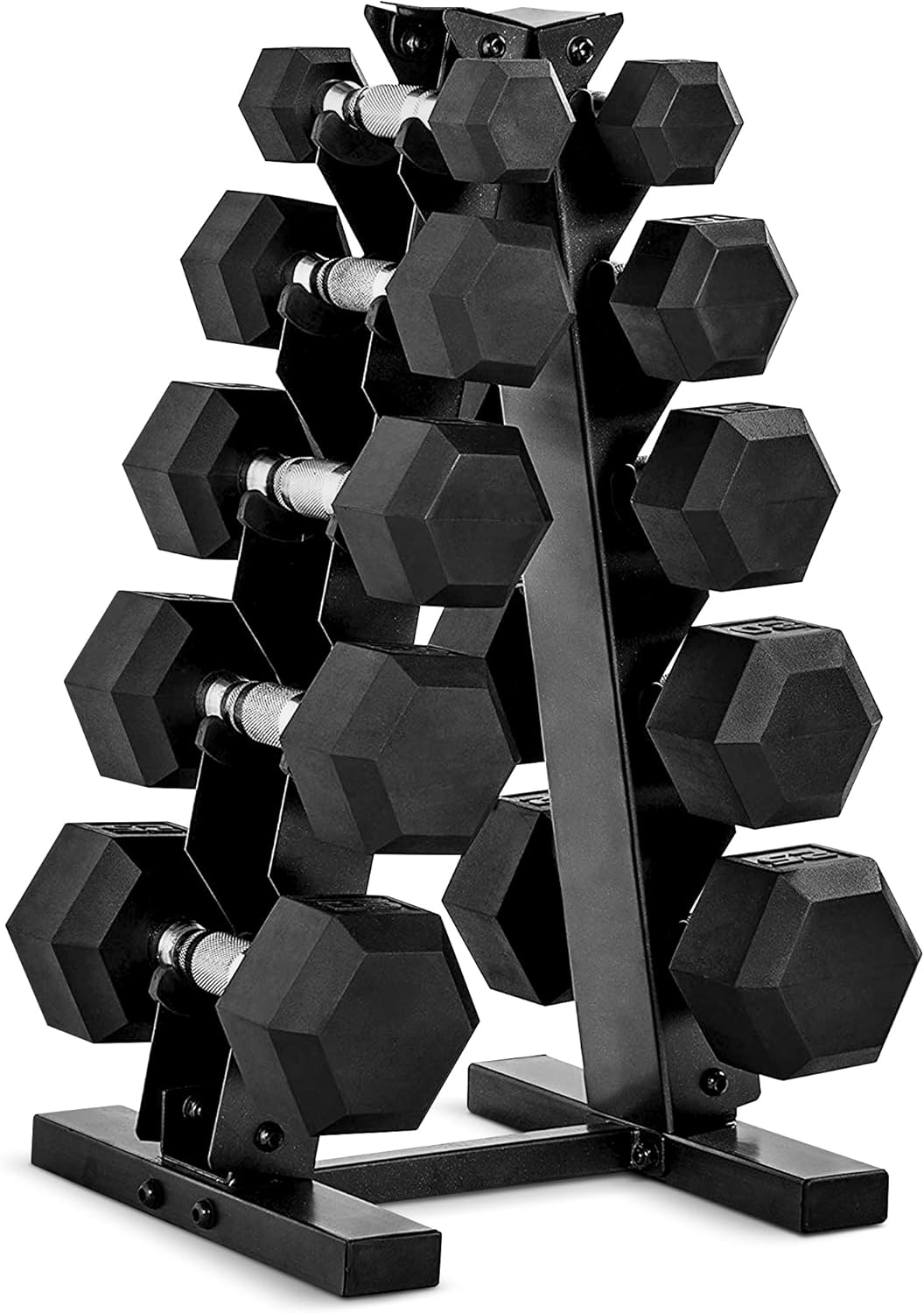 CAP Rubber Coated Hex Dumbbell Set with
- Frame Type: A-Frame
- Material: Metal
- Item Dimensions D x W x H: 12.8"D x 14.37"W x 25.98"H
| Product | Key specs | |
|---|---|---|
 Amazon Basics Neoprene Dumbbell Hand Weights for Amazon Basics Neoprene Dumbbell Hand Weights for | Check price | |
| Amazon Basics Neoprene Dumbbell Hand Weights for | Set Name: 3, 5, and 8 Pound Dumbbell Set Handle Diameter: 1.22 inch, 1.38 inch, 1.54 inch Number of Pieces: 6 | Check price |
| CAP Rubber Coated Hex Dumbbell Set with | Frame Type: A-Frame Material: Metal Item Dimensions D x W x H: 12.8"D x 14.37"W x 25.98"H | Check price |
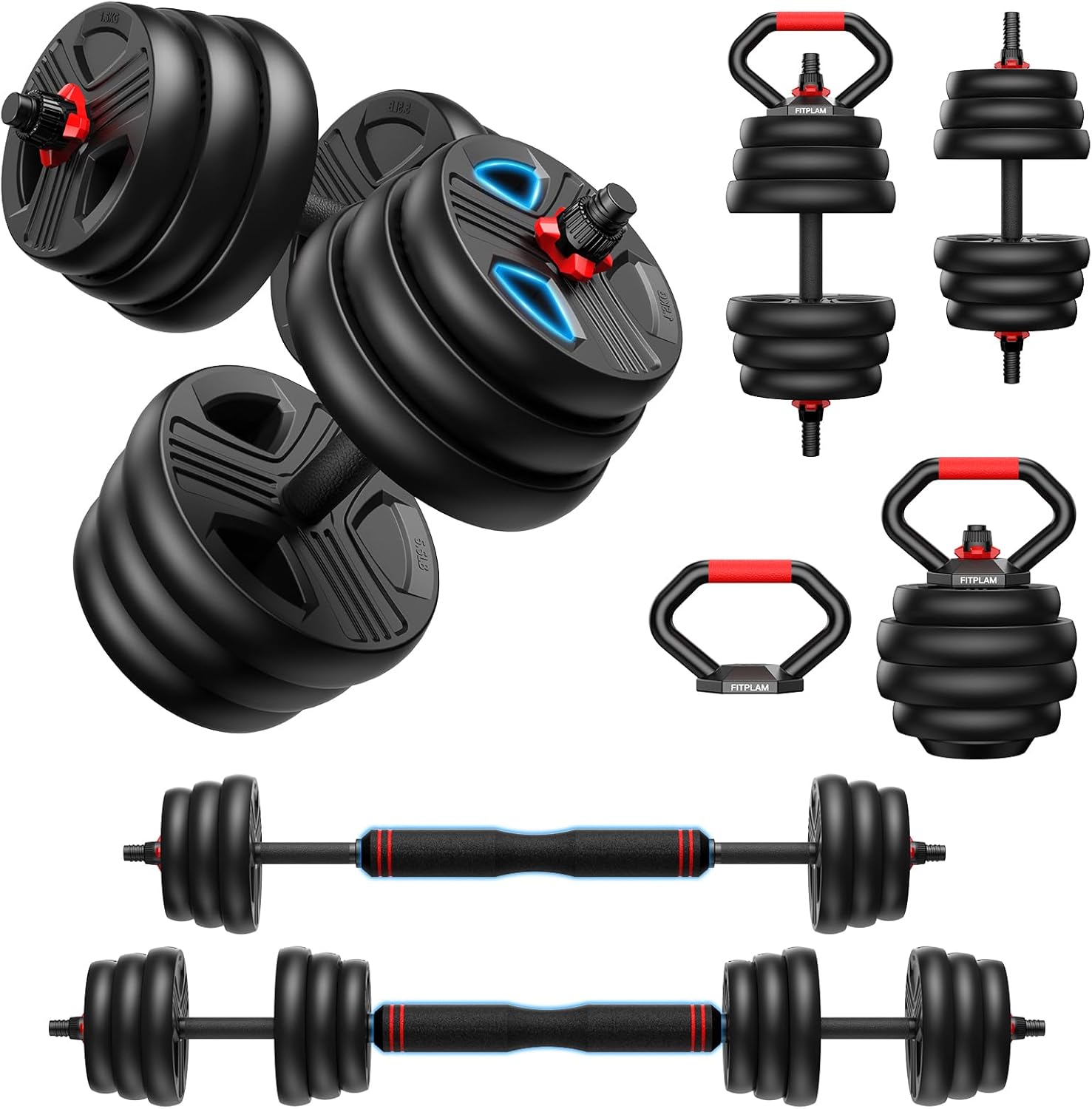 FITPLAM Adjustable dumbbell set FITPLAM Adjustable dumbbell set | Easily converts into dumbbells, kettlebells, barbells, weight plates,… Featuring a unique red-and-black double-lock system, the red… Customize your training intensity with adjustable weights options | Check price |
 Adjustable Dumbbell set Adjustable Dumbbell set | Check price | |
 Amazon Basics Neoprene Dumbbell Hand Weights for Amazon Basics Neoprene Dumbbell Hand Weights for | Set Name: Pair Item Dimensions L x W: 7.05"L x 3.21"W Handle Diameter: 3 inch | Check price |
 2026 FDB2 Updated Adjustable Dumbbell Set of 2026 FDB2 Updated Adjustable Dumbbell Set of | Check price | |
 Adjustable Dumbbell Adjustable Dumbbell | Set Name: Adjustable Weights Dumbbells Set Other Special Features of the Product: Adjustable Weight Target Use Body Part: Body | Check price |
As an Amazon Associate we earn from qualifying purchases at no extra cost to you.
Quick Comparison
| Product | Best For | Standout Feature | Watch Out For |
|---|---|---|---|
| FITPLAM 5-in-1 Adjustable Set | Structured strength progression | Six steps ending at 90 lb | Slow changes between sets |
| 5-in-1 Connector Dumbbell Set | Barbell rows and floor presses | Handles combine into one bar | Assembly time before each session |
| 4-in-1 Free Weight Set | Simple heavy training | Reaches 90 lb with few parts | Coarse 25 lb jumps |
| CAP Hex Set with Rack | Fast heavy sets, no adjusting | Multiple fixed pairs to 210 lb | Permanent footprint required |
| FDB2 Set with Storage Box | Accessory and pump work | Quick selection at lower loads | Ceiling too low for hinges |
| Amazon Basics Neoprene Weights | Warm-ups and rotator work | Always ready, never adjusted | No role in heavy training |
How to Choose
- Anchor on your heaviest working set: Take the load you use for a single-arm row for eight reps and add 30 percent. If a set cannot reach that number, it is an accessory purchase, not a training solution.
- Decide how many loads a session needs: A strength session usually uses two or three weights. A conditioning session uses six. Plate-loaded sets are perfectly workable for the former and unusable for the latter.
- Look for tight steps in the middle: Progress stalls where the jumps are largest. A set going 45 to 70 lb asks for a 55 percent increase in one step, which nobody makes cleanly on a row or a press.
- Prioritise handle length and sleeve capacity: Loaded to 90 lb, a short handle crowds your hand against the plates. Check that the sleeve accommodates the full plate stack without fouling your grip on pressing lifts.
- Have a plan for failure: Heavy dumbbell pressing without a spotter needs a controlled bail-out. Train over a bench with a clear path to the floor, and never take a plate-loaded handle to true failure overhead.
Top Picks Reviewed
Best Overall for Strength: FITPLAM 5-in-1 Adjustable Set
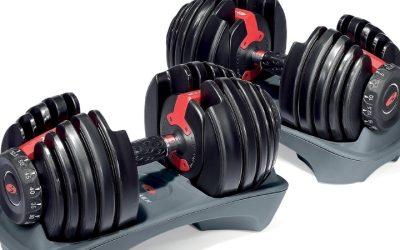
The 20, 35, 45, 55, 70 and 90 lb ladder is the best-spaced progression here. Those mid-range steps of 10 and 15 lb are exactly what a training programme needs, and the 90 lb top end covers heavy rows, split squats and Romanian deadlifts.
Adjustment is the price. Each change means unloading plates and re-securing the nut, which rules out fast supersets. Build sessions around two loads and it works well; try to run a circuit and it will frustrate you.
Best for Compound Lifts: 5-in-1 Connector Dumbbell Set
The connector bar is what makes this more than a dumbbell set. Bent-over rows, floor presses and hip thrusts at 90 lb are all available, and the bar position lets you handle more total load than two independent handles ever could.
You are effectively assembling equipment before training. Once configured it is excellent; the setup and teardown either side of a session is roughly five minutes you need to plan for.
Simplest Heavy Set: 4-in-1 Free Weight Set
Four configurations to 90 lb with minimal componentry suits a lifter who wants load without fuss. Fewer collars means fewer things to check and fewer things to lose in a garage.
The jumps are the weakness. Going 45 to 70 lb is too large a step for most pressing lifts, so you either grind reps at the lower weight or stall. It works better for hinges and rows, where the jump is more absorbable.
Best for Session Flow: CAP Hex Set with Rack
Fixed pairs up to 210 lb total mean no adjusting, ever. For a lifter running drop sets or high-volume work, this is the only option here that keeps rest periods honest, and the rubber-coated hex heads are stable for renegade rows.
The fixed increments are also the ceiling. You buy specific pairs, and outgrowing the heaviest one means another purchase. It also needs a permanent, solid spot on the floor and cannot realistically be moved once loaded.
Best Accessory Set: FDB2 Set with Storage Box
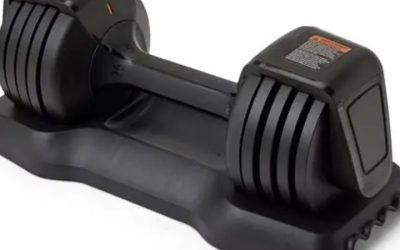
For lateral raises, curls, rear delt work and high-rep pressing, quick selection at moderate weights is genuinely more useful than a 90 lb ceiling. The storage box keeps everything together between sessions.
Do not expect it to carry your heavy days. Twenty-five pounds per hand is light for an experienced lifter’s rows or squats, and treating it as a primary set will stall your progress rather than support it.
Best Warm-Up Pair: Amazon Basics Neoprene Weights
A dedicated light pair that never needs adjusting is more valuable than it sounds when your main set is loaded to 70 lb. Rotator cuff work, band-free shoulder prep and rear delt flyes all live here.
That is the entire use case. There is no pressing or rowing progression available, and the coating degrades if the pair is stored in an unheated garage over several summers.
Frequently Asked Questions
How heavy do home dumbbells need to be for real strength work?
For most trained lifters, 70 to 90 lb per hand covers rows, split squats and hinges for years. Pressing usually needs less. Below 50 lb, lower-body dumbbell work becomes endurance training rather than strength training.
Can plate-loaded dumbbells handle heavy pressing safely?
Yes, with tight collars and a controlled bail-out plan. The risk is not the load but a loose collar shedding a plate mid-rep, so check tension before every set rather than every session.
Is a 90 lb adjustable set enough to replace a barbell?
For rows, presses, lunges and hinges, largely yes. For heavy squats and deadlifts, no — those need loads well beyond what dumbbells can carry, and the limiting factor becomes grip long before your legs.
How do I progress when the jumps between settings are too big?
Add reps and sets at the lower load until you can complete the target volume comfortably, then make the jump. Slowing the tempo on the lowering phase is the other reliable way to bridge a large increment.
Final Thoughts
Experienced lifters in a small space are best served by the FITPLAM 5-in-1 Adjustable Set, which has both the ceiling and the increment spacing that progression requires. Add the 5-in-1 Connector Dumbbell Set if barbell rows matter to you, or commit to the CAP Hex Set with Rack if you have the floor space and want your rest periods back.
Write Your Review
No reviews yet. Be the first to share your experience!