
Key takeaways
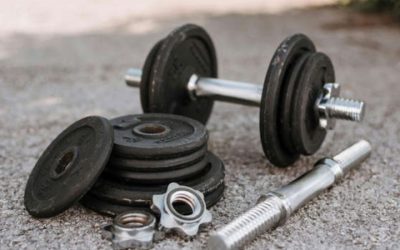
- Set Name: GOIMU Adjustable Dumbbells
- Item Dimensions L x W: 23.62"L x 11.42"W
- Material: Cast Iron
Most home dumbbell purchases are made for the person you are today and abandoned by the person you become in eight months. A 25 lb pair feels heavy in week one and becomes a warm-up tool by week twenty, at which point you either stop progressing or buy again. The equipment that survives is the equipment with headroom — enough range above your current strength that you can keep adding load for a year or two without a second purchase.
Headroom is not free, though. Wider-range adjustable sets cost more, get physically longer at heavy settings, and often adjust more slowly. So the sensible approach is to work out where you will realistically be in a year rather than where you are now. For most people who train two or three times a week, that means rows and presses somewhere between 40 and 60 lb per hand, and hinges or goblet squats higher still. Buy for that, and the light end of the range takes care of itself. These six options span everything from a light dial pair to a full rack, and they differ mainly in how long they will stay useful.
Our top picks


 Adjustable Dumbbells
- Set Name: GOIMU Adjustable Dumbbells
- Item Dimensions L x W: 23.62"L x 11.42"W
- Material: Cast Iron


As an Amazon Associate we earn from qualifying purchases at no extra cost to you.
Quick Comparison
| Product | Best For | Standout Feature | Watch Out For |
|---|---|---|---|
| 25 lb Dial Dumbbell Pair | Beginners and isolation work | Instant dial adjustment | Outgrown quickly on compounds |
| HANDBODE Hex Set with Rack | Buying once, keeping forever | Fixed pairs, nothing to wear out | Largest cost and floor space |
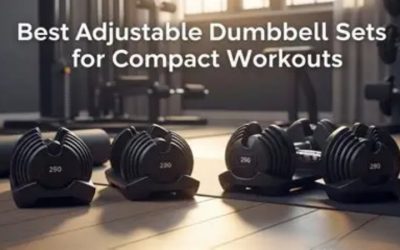
| GOIMU 4-in-1 Adjustable | Years of progression | Reaches 94 lb per hand | Cumbersome length when loaded |
| Adjustable Set with Connector | Growing into barbell work | Barbell mode extends usefulness | Threaded joins loosen over time |
| Palace Learning Workout Posters | Structuring progression | Three volumes of exercise variety | No progression scheme included |
| Amazon Basics Neoprene Weights | The permanent light end | Stays useful at any strength level | Never becomes a main tool |
How to Choose
- Buy for twelve months out: Estimate where your working weight will be after a year of consistent training and buy a range that covers it. Replacing an outgrown set costs far more than the extra range would have.
- Look at cost per pound of capacity: Divide the price by total pair capacity. Adjustable sets usually beat fixed sets substantially on this metric, which is why they dominate home gyms despite being less pleasant to use.
- Weigh adjustment speed against range: Wide-range sets tend to adjust slowly. If your programme is straight sets with proper rest, that costs you nothing. If it is circuits, it costs you the session.
- Keep a light pair regardless: No matter how strong you get, warm-ups, rotator cuff work and rear delt training stay light. A cheap fixed pair at the bottom end never becomes obsolete.
- Add structure, not just weight: Progression requires knowing what you did last time. A written log or a wall chart is worth more to long-term progress than an extra 20 lb of capacity.
Top Picks Reviewed
Best Starting Point: 25 lb Dial Adjustable Dumbbell Pair
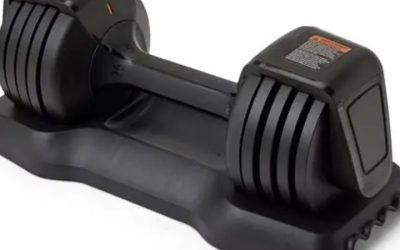
For someone new to training, this covers a genuinely wide span of useful work — the dial moves through the range in a second, and 5 to 30 lb is enough for presses, rows, raises and lunges in the early months. The anti-roll shape is a small but welcome detail on hard floors.
The honest limitation is the ceiling. Rows and presses progress faster than most people expect, and within a year many users find 30 lb per hand insufficient. Excellent as a first set; not a set you keep as your only one.
Best Long-Term Purchase: HANDBODE Hex Dumbbell Set with A-Frame Rack
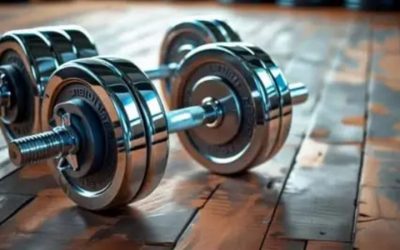
Fixed dumbbells never wear out, never need adjusting, and never limit what you can do. Buying a spread up to 600 lb total means you have every increment available immediately and permanently, which is why commercial gyms still use them.
You pay for that in money and floor space, both substantially. This only makes sense if you have a room dedicated to training and intend to keep it that way for years.
Most Headroom: GOIMU 4-in-1 Adjustable Dumbbells
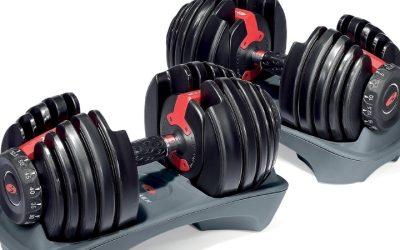
A 94 lb per hand ceiling means you are very unlikely to outgrow this within any reasonable timeframe. It comfortably covers heavy rows, presses, split squats and hinges, and the additional barbell and kettlebell configurations extend the exercise list further.
The tradeoff is physical size at heavy settings. Loaded to the top, these are long and awkward to unrack and control, particularly for pressing. That is manageable but it is a real difference from a fixed dumbbell of the same weight.
Best Progression Path: Adjustable Dumbbell Set with Connector
The barbell conversion is what makes this grow with you. Once dumbbell hinges and squats stop being limited by your legs and start being limited by your grip, converting to a barbell moves the ceiling substantially — for the cost of a connector rather than a new set.
Threaded connectors work loose under load. This is not a defect so much as a characteristic, and it means checking the joint before each barbell set. Users who skip that check are the ones with complaints.
Best for Variety: Palace Learning Dumbbell Workout Posters
Three volumes of laminated exercise charts on the wall does more for long-term progress than most people expect, simply because it removes the decision paralysis that leads to doing the same three movements forever.
It shows exercises, not a progression scheme. You still need to decide how to add load or reps over time, so pair it with a simple written log rather than expecting it to programme for you.
Best Permanent Light Pair: Amazon Basics Neoprene Hand Weights
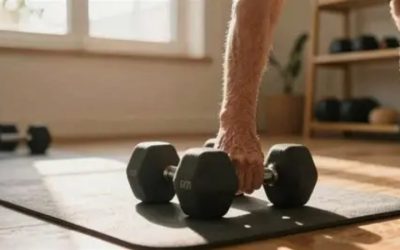
Whatever else you own, light dumbbells stay relevant. External rotations, rear delt work, warm-up sets and rehabilitation exercises never move into heavy territory, and having a dedicated pair means never adjusting a heavier set down for them.
They will never be your main tool. Treat them as an inexpensive permanent supplement rather than part of the progression path.
Frequently Asked Questions
How quickly will I outgrow a 25 lb dumbbell pair?
On rows and presses, often within six to twelve months of consistent training. Isolation work like lateral raises will stay in that range far longer, which is why light pairs remain useful even after you buy heavier weights.
Is it cheaper to buy adjustable or fixed dumbbells?
Adjustable sets are almost always cheaper per pound of capacity. Fixed sets win on durability, speed of use and resale value, and they never have a mechanism to fail.
What weight should I buy if I am starting from scratch?
A range topping out around 50 lb per hand covers most people for a year or more of training. Starting lower saves money now and usually costs more later, because you end up buying twice.
How do I keep progressing with a fixed weight range?
When you reach the top of your range, progress through reps, tempo, unilateral variations and reduced rest rather than load. That extends the useful life of a set considerably, though it does not replace adding weight indefinitely.
Final Thoughts
If you want one purchase that lasts, the GOIMU 4-in-1 Adjustable Dumbbells give the most headroom for the money and will still be challenging years from now. Where budget and space allow a permanent installation, the HANDBODE Hex Dumbbell Set with A-Frame Rack is faster and more durable than any adjustable design. And whichever route you take, a light fixed pair such as the Amazon Basics Neoprene Hand Weights stays useful no matter how strong you get.
Write Your Review
No reviews yet. Be the first to share your experience!