
Key takeaways
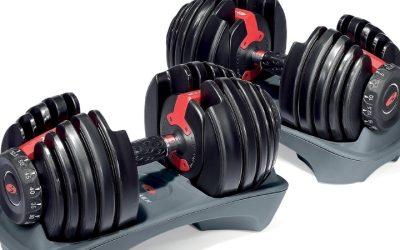
- Set Name: Expandable Set
- Item Dimensions L x W: 4.88"L x 1.78"W
- Handle Diameter: 1 inch
Every home gym eventually runs into the same wall: the equipment supports four exercises well and everything else badly. Dumbbells alone give you curls, hammer curls, kickbacks and overhead extensions, which is a reasonable arm routine for about three months. After that, the absence of a straight bar, an incline, or any way to change the angle of pull starts to show. Progress slows not because you are not working hard, but because you have run out of ways to make the work different.
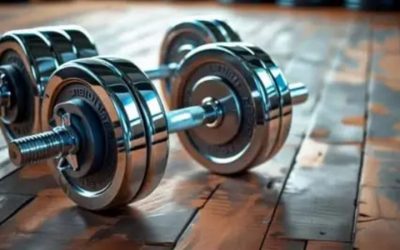
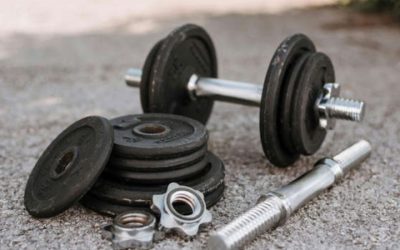
Convertible equipment is the interesting answer to that problem in a home context. A set of dumbbells that joins into a barbell roughly doubles the exercise library from the same box of iron, adding close-grip presses, straight-bar curls, drag curls and bent-over rows to the dumbbell repertoire you already have. This comparison looks at the five setups below through that lens: how much each one expands what you can do, and what the expansion costs in time, space or money.
Our top picks
 Amazon Basics Neoprene Dumbbell Hand Weights for
- Set Name: Expandable Set
- Item Dimensions L x W: 4.88"L x 1.78"W
- Handle Diameter: 1 inch
 Amazon Basics Neoprene Dumbbell Hand Weights for
- Set Name: Pair
- Item Dimensions L x W: 7.05"L x 3.21"W
- Handle Diameter: 3 inch


 Women's Health The Woman's Guide To Strength
- Target Audience: Adult
- Recommended Uses For Product: Health & Fitness
- Format: Notebook


As an Amazon Associate we earn from qualifying purchases at no extra cost to you.
Quick Comparison
| Product | Best For | Standout Feature | Watch Out For |
|---|---|---|---|
| Convertible Dumbbell-to-Barbell Set | Doubling exercise options in one purchase | Two training formats from a single set | Conversion time between formats |
| EQUIPRO Adjustable Set | Depth of loading rather than breadth | Fine increments across a practical range | Dumbbell exercises only |
| Amazon Basics Neoprene Dumbbells | Filling gaps in a heavier setup | Enables light angles heavy weights cannot | Adds no new movement categories |
| Women’s Health Dumbbell Training Guide | Getting more from equipment you own | Expands exercise variety with no new gear | Requires you to supply the discipline |
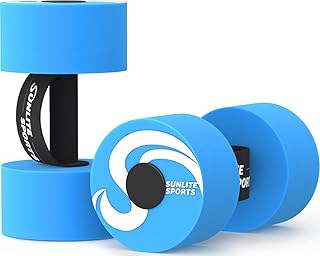
| Sunlite Sports Water Weights | Adding an entirely different environment | Resistance in every direction of movement | Only usable with pool access |
How to Choose
- Count movement categories, not exercises: Curling variations are one category. Pressing is another. Rowing is a third. A setup that adds a category expands your training far more than one that adds a fifth way to curl.
- Value two-handed loading: A barbell lets you handle more total weight than two dumbbells you must stabilize individually, which matters for close-grip pressing and rows that build the arms indirectly.
- Understand the conversion overhead: Joining dumbbells into a barbell typically means unscrewing collars, adding a connector and reloading plates. Budget several minutes and structure your session around one changeover, not five.
- Check the bar length: Short connecting bars limit grip width, which changes which muscles the exercise emphasizes. Verify you can achieve at least a shoulder-width grip before assuming barbell exercises will feel normal.
- Consider stability demands: Dumbbells recruit more stabilizers and expose left-right imbalances. Barbells allow heavier loads but let the stronger side compensate. A setup with both lets you address each in turn.
Top Picks Reviewed
Biggest Expansion: Convertible Dumbbell-to-Barbell Set
Adding close-grip bench presses, straight-bar curls and barbell rows to an existing dumbbell repertoire is the single largest jump in exercise variety available from one purchase. For a compact home setup it changes what is possible rather than just how much you can lift.
The conversion is not instant. Collars have to come off and plates have to be rearranged, so sessions need planning around one changeover rather than casual switching between formats.
Best Loading Depth: EQUIPRO Adjustable Set
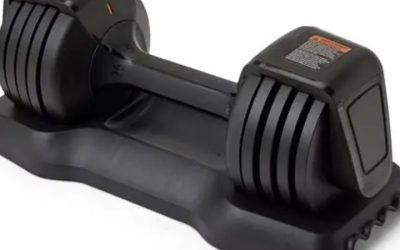
Where the convertible set adds breadth, this adds depth: a fine range of loads that lets each dumbbell exercise progress properly over months rather than stalling on coarse jumps.
It does not add any new movement categories. Everything you can do with it, you could do with fixed dumbbells; you simply get more usable weights in less space.
Best Gap Filler: Amazon Basics Neoprene Dumbbells
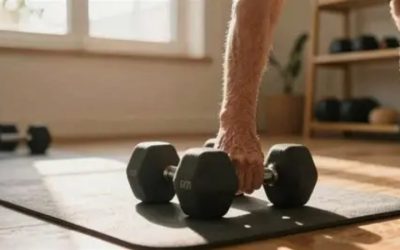
Light pairs enable the small-angle work, lateral raises and rear delt flyes that heavier setups handle badly. In a gym that already has weight, they add the exercises that require almost none.
They do not expand your training conceptually. It is more of the same category at lighter loads, which is useful but not transformative.
Best Zero-Cost Expansion: Women’s Health Dumbbell Training Guide
Most home lifters use perhaps a third of the exercises their equipment supports. A structured guide surfaces the rest, which expands variety without adding a single object to the room.
It only helps if you follow it. Bought and shelved, it changes nothing, which is a failure mode books share with unused equipment.
Most Different Stimulus: Sunlite Sports Water Weights
Water resistance works in every direction, so the triceps are loaded on the way up as well as the biceps on the way down. That continuous, multi-directional tension is genuinely different from anything free weights provide.
Pool access is a hard requirement. Without it, this is an interesting idea rather than a usable part of your setup.
Frequently Asked Questions
Are convertible dumbbell sets stable as a barbell?
With collars fully tightened, yes for moderate loads. Always start the thread by hand, tighten firmly, and check both ends before pressing anything overhead.
What exercises does a barbell add that dumbbells cannot?
Close-grip bench presses, straight-bar and drag curls, barbell rows and upright pulls. The fixed hand position changes the wrist and elbow angle, which loads the arms differently.
How often should I change my exercise selection?
Every six to eight weeks is a reasonable rhythm. Changing more often prevents you from progressing on any given movement, and changing less can lead to staleness and joint irritation.
Is more variety always better?
No. Progression on a small number of well-chosen exercises beats rotating constantly. Variety helps when it addresses a gap or a plateau, not when it replaces consistency.
Final Thoughts
If your arm training has stalled because you have run out of ways to work, buy breadth: a convertible set adds a whole category of two-handed movements from the same footprint. If you have variety but no progression, buy depth in the form of finer weight increments. And if the equipment is already adequate, a structured guide will surface exercises you own the gear for and simply never do.
Write Your Review
No reviews yet. Be the first to share your experience!