Key takeaways
- Measure your true clearance: “Zero clearance” and “wall hugger” are marketed interchangeably but perform differently. Zero-clearance designs need roughly one to three inches; older wall-hugger mechanisms may need six. Measure from baseboard to wall, not drywall to wall, and add an inch for cords.
- Recline depth beats recline count: For genuine rest, you want the backrest past 130 degrees so your torso and thighs open up and blood pooling in the legs eases. Shallow “TV recline” chairs feel supportive but won’t help you drift off.
- Independent headrest, independent footrest: Dual-motor chairs let you drop the back without launching your feet, and adjust the headrest so your chin isn’t tucked toward your chest — the single biggest cause of snoring and airway restriction in a chair.
- Upholstery and thermoregulation: Core body temperature has to fall for sleep to begin. Bonded and faux leather trap heat against the back and thighs; genuine leather, chenille, and perforated fabrics shed it far better. If you run warm, prioritize breathability over sheen.
- Motor noise and cord placement: Test or read reviews for mechanism volume. A whining motor at 10 p.m. is a small stimulant. Built-in USB and USB-C ports also keep you from reaching behind the chair, which defeats the flush-to-wall advantage entirely.
What's inside
Small living rooms create a frustrating trade-off. You want a chair that fully reclines for evening wind-down, but a conventional recliner demands eight to twelve inches of breathing room behind it — space that simply doesn’t exist in an apartment, a finished basement, or an RV slide-out. So the chair ends up floating awkwardly mid-room, or you skip reclining altogether and doze upright on the sofa, which is one of the more reliable ways to wake up at 2 a.m. with a stiff neck and a scrambled sleep cycle.
Wall hugger recliners solve this by moving the seat forward as the back tilts, so the frame can sit within a few inches of the wall — some within one inch. As someone who spends most of my working life on sleep hygiene and evening routines, I evaluate these chairs on more than footprint: recline angle, headrest support, upholstery breathability, and whether the mechanism is quiet enough not to jolt a drowsy nervous system. Below are the models worth your attention in 2026, plus the specifications that actually predict comfort.
As an Amazon Associate we earn from qualifying purchases.


🛒 Best Price Today on Amazon
Prime members get fast, free shipping on everything above, plus member-only deals. New members get a 30-day free trial — cancel anytime.
How to Choose a Wall Hugger Recliner (2026)
- Measure your true clearance: “Zero clearance” and “wall hugger” are marketed interchangeably but perform differently. Zero-clearance designs need roughly one to three inches; older wall-hugger mechanisms may need six. Measure from baseboard to wall, not drywall to wall, and add an inch for cords.
- Recline depth beats recline count: For genuine rest, you want the backrest past 130 degrees so your torso and thighs open up and blood pooling in the legs eases. Shallow “TV recline” chairs feel supportive but won’t help you drift off.
- Independent headrest, independent footrest: Dual-motor chairs let you drop the back without launching your feet, and adjust the headrest so your chin isn’t tucked toward your chest — the single biggest cause of snoring and airway restriction in a chair.
- Upholstery and thermoregulation: Core body temperature has to fall for sleep to begin. Bonded and faux leather trap heat against the back and thighs; genuine leather, chenille, and perforated fabrics shed it far better. If you run warm, prioritize breathability over sheen.
- Motor noise and cord placement: Test or read reviews for mechanism volume. A whining motor at 10 p.m. is a small stimulant. Built-in USB and USB-C ports also keep you from reaching behind the chair, which defeats the flush-to-wall advantage entirely.
The Best Wall Hugger Recliners of 2026, Reviewed
EONIX Dual Motor Zero Clearance Wall Hugger Recliner
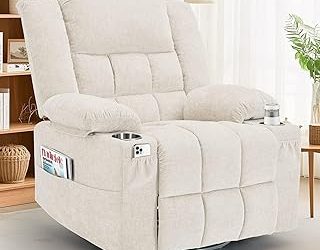
The dual-motor layout and adjustable power headrest make this the most sleep-friendly chair here: you can flatten the back for deep rest while keeping your head neutral, which protects the airway far better than a fixed headrest. Breathable upholstery and USB-C charging round out a genuinely well-considered compact design.
Watson & Whitely Genuine Leather Wall Hugger Power Recliner
Genuine leather is the smart pick for anyone who overheats at night — it wicks and vents in a way bonded alternatives can’t, and it ages rather than peels. The power headrest and dual-port charging make it a strong long-term choice for a primary reading or napping chair.
EONIX Zero Clearance Wall Hugger Power Recliner (Small)
Built for tight footprints, this one-button model synchronizes backrest and footrest, so there’s no fiddling once you’ve settled — a real advantage when you’re already drowsy. The 400 lb tested frame is reassuring given how narrow the chair reads visually.
KISLOT Faux Leather Power Wall Hugger Recliner
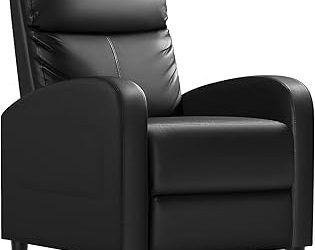
The best value entry point, with smooth power recline and USB ports at a fraction of the leather models’ cost. Faux leather does hold heat, so pair it with a light cotton throw if you plan on long evening sessions.
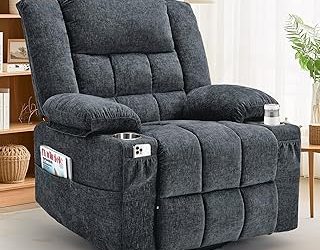
Massage Recliner Chair with Heat (39″ Wide, Grey)
Gentle lumbar heat and vibration are legitimately useful for pre-sleep muscle relaxation, and the 39-inch width gives you room to shift position. Because it’s manual, the recline holds wherever you leave it — no motor hum, no cord.
Frequently Asked Questions
How much space does a wall hugger recliner really need?
Expect one to three inches for zero-clearance mechanisms and four to six for standard wall huggers. Always confirm the manufacturer’s stated figure and measure to your baseboard.
Is sleeping in a recliner bad for you?
Occasional recliner sleep is fine, and for people with reflux, sleep apnea, or post-surgical recovery it’s sometimes better than lying flat. The keys are a recline past 130 degrees and a headrest that keeps your chin off your chest.
Power or manual?
Power offers precise, effortless adjustment and independent headrest control; manual is quieter, cheaper, and never needs an outlet. Choose power if you want a true rest position, manual if simplicity matters most.
Do the chenille and fabric models hold up?
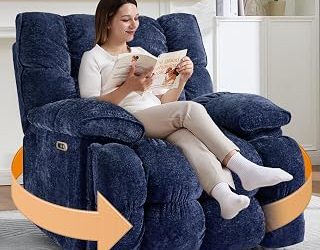
Yes, and they breathe better than faux leather. Chenille resists cracking and stays cooler, though it needs vacuuming and prompt spot-cleaning.
Final Thoughts
For most rooms, the EONIX Dual Motor Zero Clearance model is the best overall choice — independent headrest and footrest control make it the only chair here designed for real rest rather than just television. Choose the Watson & Whitely genuine leather recliner if you sleep hot and want a chair that lasts a decade, or the KISLOT if you need power recline on a tighter budget.