Key takeaways
- Backing chemistry: Vinyl plank has a printed design layer sealed under urethane, and it is chemically fussy. Look for pads that name LVP or vinyl explicitly — EVA, needled felt, and washed natural rubber are the safe families. Skip anything advertising “tacky,” “adhesive,” or a shiny PVC film.
- Thickness versus door swing: A 3/8″ felt pad gives the plushest step and the best sound absorption, but measure your door clearance and the height of any adjoining threshold first. In bedrooms with low-clearance doors, 1/4″ is the practical ceiling.
- Grip you actually need: Heavy furniture-anchored rugs in a living room rarely move and do better with pure cushioning. Runners, bedside rugs, and anything crossed at odd angles in the dark need genuine anti-slip backing.
- Acoustic performance: Vinyl plank over a plywood subfloor is a drum. Density matters more than softness here — a firm, dense felt core absorbs footfall energy far better than a thin foam sheet that simply compresses and rebounds.
- Cleanability and off-gassing: For bedrooms and nurseries, prioritize odorless, low-VOC construction and, ideally, a washable pad. Unroll any new pad in a ventilated space for a day before the rug goes down.
What's inside
Anyone who has padded across a bedroom at 2 a.m. knows that flooring is a sleep variable, not just a design choice. Luxury vinyl plank is quiet, warm underfoot, and forgiving — until you throw a loose area rug on it. Then the rug creeps, the corners curl into trip hazards, and every step delivers that hollow tap that carries straight through a wall to a sleeping partner. Worse, many bargain rug pads use plasticizers or adhesive-style backings that react with LVP’s wear layer, leaving behind a yellowed haze or sticky ghost outline that no amount of scrubbing lifts.
As someone who spends most of my working hours helping people engineer calmer bedrooms, I treat the rug pad as a piece of sleep equipment: it dampens sound, insulates cold subfloors, cushions the joints on early-morning stretches, and keeps the rug where you left it. Below you’ll find the pads I recommend most often for vinyl plank, plus a plain-English buying framework covering thickness, backing chemistry, and how to match a pad to the room where you actually need silence.
As an Amazon Associate we earn from qualifying purchases.


🛒 Best Price Today on Amazon
Prime members get fast, free shipping on everything above, plus member-only deals. New members get a 30-day free trial — cancel anytime.
How to Choose a Rug Pad For Lvp Floors (2026)
- Backing chemistry: Vinyl plank has a printed design layer sealed under urethane, and it is chemically fussy. Look for pads that name LVP or vinyl explicitly — EVA, needled felt, and washed natural rubber are the safe families. Skip anything advertising “tacky,” “adhesive,” or a shiny PVC film.
- Thickness versus door swing: A 3/8″ felt pad gives the plushest step and the best sound absorption, but measure your door clearance and the height of any adjoining threshold first. In bedrooms with low-clearance doors, 1/4″ is the practical ceiling.
- Grip you actually need: Heavy furniture-anchored rugs in a living room rarely move and do better with pure cushioning. Runners, bedside rugs, and anything crossed at odd angles in the dark need genuine anti-slip backing.
- Acoustic performance: Vinyl plank over a plywood subfloor is a drum. Density matters more than softness here — a firm, dense felt core absorbs footfall energy far better than a thin foam sheet that simply compresses and rebounds.
- Cleanability and off-gassing: For bedrooms and nurseries, prioritize odorless, low-VOC construction and, ideally, a washable pad. Unroll any new pad in a ventilated space for a day before the rug goes down.
The Best Rug Pad For Lvp Floors (2026)s Reviewed
RUGPADUSA Vinyl Lock
This is the purpose-built answer: a felt cushion bonded to an EVA grip layer specifically formulated so it won’t react with vinyl or luxury vinyl plank wear layers. The 2’x8′ size makes it my default recommendation for bedside runners and hallway strips, where slippage is the real safety issue.
RUGPADUSA Basics Felt
At 3/8″ of pure needled felt, this is the quietest pad in the group and the one I suggest for bedrooms above a living space or a light sleeper’s room. It offers cushioning and floor protection rather than grip, so pair it with a large rug that furniture legs help hold in place.
RUGPADUSA Dual Surface
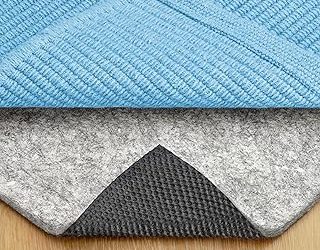
Felt over natural rubber at 1/4″ is the best all-around compromise — meaningful sound dampening, real anti-slip performance, and a low enough profile to clear most interior doors. It’s the pad I’d choose for a bedroom rug that extends past the bed and gets walked on from three sides.
Mayhawk Non-Slip Rug Gripper Pad
A thin silicone pad using suction-style vacuum grip rather than adhesive, so it lifts cleanly off LVP with no residue — genuinely useful for renters. Machine washable and odorless, though its slim profile means you’re buying grip and safety, not cushioning or acoustic benefit.
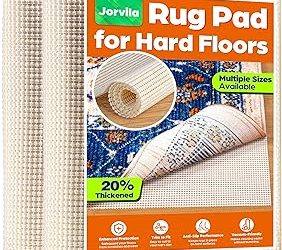
Jorvila Non-Slip Rug Pad Gripper
A budget-friendly 8×10 option that combines a cushioned body with an anti-skid face, aimed at keeping large rugs from creeping on hard floors. Grip is solid on smooth vinyl; just air it out for 24 hours before installing in a sleeping space.
Frequently Asked Questions
Will a rug pad damage or discolour my LVP?
Only if the backing is wrong. Plasticizer migration from cheap PVC or adhesive-style backings is what causes yellowing and staining. Felt, EVA, and washed natural rubber pads labelled safe for vinyl are the reliable choices.
How much does a rug pad reduce footstep noise?
A dense 3/8″ felt pad makes a clearly audible difference, softening the sharp tap of heel-on-plank into a muted thud. It won’t rival a proper acoustic underlayment, but for bedroom-to-bedroom noise it’s often enough to stop waking someone.
What size pad should I buy?
Buy the pad to match the rug’s nominal size and trim roughly an inch off each side, leaving the pad slightly inset. Felt cuts cleanly with a utility knife and a straightedge.
Do I still need a pad if my rug has a rubber backing?
Yes — and arguably more urgently. Integrated rubber backings are the most common source of marks on vinyl plank. A pad creates a barrier between that backing and your floor.
Final Thoughts
If your priority is a quiet, cushioned bedroom floor, start with the RUGPADUSA Basics 3/8″ felt. If you need grip and silence in one low-profile package, the RUGPADUSA Dual Surface is the smartest all-rounder, while the Vinyl Lock is the safest bet for anyone who wants a pad engineered specifically around LVP chemistry.