Key takeaways
- Grip strategy over carpet: Rubber backing grips smooth floors by friction, but over carpet the mechanism is different — the pad needs enough density and surface texture to lock into the pile rather than float on it. Dense felt with a rubber underside is the most reliable combination for carpeted rooms; thin plastic-mesh grippers alone tend to migrate.
- Thickness versus stability: Over hard floors, thicker feels better. Over carpet, you’re already standing on cushion, so a 1/4″ pad usually delivers the best balance of comfort and a firm, non-tipping edge. Reserve 1/2″ for thin, low-pile carpet or flat-woven rugs that need body.
- Edge behavior: Curling corners are the most common trip hazard in a bedroom. Look for a pad you can cut to roughly one inch smaller than the rug on all sides — the rug edge should taper cleanly to the carpet with nothing to catch a toe.
- Sound and thermal comfort: Dense felt absorbs impact noise, which matters if the room sits above a bedroom or if you share walls. It also buffers cold that radiates up through slab construction, a small but real contributor to comfortable sleep temperature.
- Off-gassing and air quality: Bedroom air is the air you breathe for a third of your life. Favor recycled-fiber felt and natural rubber over adhesive-heavy synthetics, and unroll any new pad in a ventilated space for a day or two before the rug goes down.
What's inside
Rug-on-carpet layering looks effortless in photographs and behaves badly in real rooms. The rug creeps toward the doorway, corners lift into trip hazards, and the pile underneath compresses unevenly until the whole arrangement reads as rumpled rather than restful. If that rug sits in a bedroom — which, in my experience advising people on sleep environments, it usually does — the problem is bigger than aesthetics. A shifting rug at the foot of the bed is exactly the surface your bare feet meet during a 3 a.m. trip to the bathroom, when your balance reflexes are at their least reliable and your eyes haven’t adapted to the dark. Underfoot stability is a genuine part of nighttime safety, and it starts below the rug.
Layering over carpet also changes what a pad needs to do. On hardwood, the job is grip and finish protection. On carpet, the pad has to resolve a mismatch between two soft, mobile surfaces — and it has to do it without adding so much loft that the rug becomes a wobbling platform. This guide covers what actually works over low, medium, and plush carpet, how thickness affects both comfort and stability, and which pads I’d put in a bedroom versus a high-traffic living space. It also addresses the acoustic side, since a well-chosen pad meaningfully dampens footfall noise in rooms above bedrooms.
As an Amazon Associate we earn from qualifying purchases.


🛒 Best Price Today on Amazon
Prime members get fast, free shipping on everything above, plus member-only deals. New members get a 30-day free trial — cancel anytime.
How to Choose a Rug Pad For Carpeted Floors (2026)
- Grip strategy over carpet: Rubber backing grips smooth floors by friction, but over carpet the mechanism is different — the pad needs enough density and surface texture to lock into the pile rather than float on it. Dense felt with a rubber underside is the most reliable combination for carpeted rooms; thin plastic-mesh grippers alone tend to migrate.
- Thickness versus stability: Over hard floors, thicker feels better. Over carpet, you’re already standing on cushion, so a 1/4″ pad usually delivers the best balance of comfort and a firm, non-tipping edge. Reserve 1/2″ for thin, low-pile carpet or flat-woven rugs that need body.
- Edge behavior: Curling corners are the most common trip hazard in a bedroom. Look for a pad you can cut to roughly one inch smaller than the rug on all sides — the rug edge should taper cleanly to the carpet with nothing to catch a toe.
- Sound and thermal comfort: Dense felt absorbs impact noise, which matters if the room sits above a bedroom or if you share walls. It also buffers cold that radiates up through slab construction, a small but real contributor to comfortable sleep temperature.
- Off-gassing and air quality: Bedroom air is the air you breathe for a third of your life. Favor recycled-fiber felt and natural rubber over adhesive-heavy synthetics, and unroll any new pad in a ventilated space for a day or two before the rug goes down.
The Best Rug Pad For Carpeted Floors (2026)s Reviewed
RUGPADUSA Dual Surface (1/4″, Felt + Rubber)
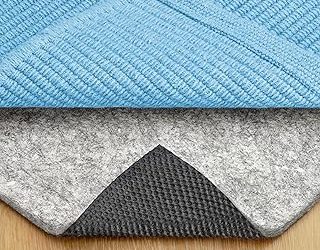
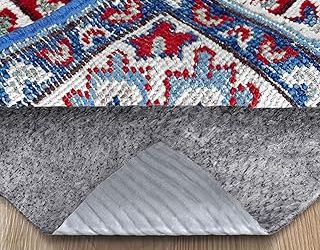
This is my default recommendation for rugs layered over carpet: the felt body has enough density to sit into the pile without floating, and the rubber face gives the rug something to bite. At a quarter inch it adds real cushioning and noise absorption while keeping the rug’s edges low and predictable.
RUGPADUSA Eco-Plush (1/2″, 100% Felt)
The plushest option here, and the right call over thin, dense low-pile carpet or under a flatweave that needs body. On thick carpet, though, half an inch stacks cushion on cushion and can make the rug feel unsteady — match it to a firm base, not a soft one.
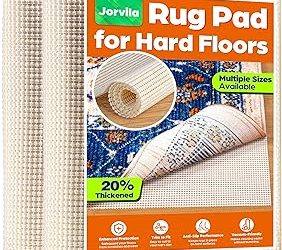
Jorvila Non-Slip Rug Pad Gripper (8×10)
A well-priced anti-skid mat that earns its place under lightweight rugs and in lower-traffic rooms where slippage, not cushioning, is the main complaint. Trim it slightly undersized and expect to reseat it occasionally on deeper pile.
RUGPADUSA Basics (1/4″, 100% Felt)
Pure felt with no rubber layer, which makes it the quiet, breathable choice for a bedroom where a heavy rug already holds its own position. Excellent for footfall dampening; less suited to light rugs that need active grip.
RUGPADUSA Eco-Plush — Custom Sizes
Worth calling out separately: the ability to order a precise size, or a thinner profile in the same construction, solves the trimming problem for oddly shaped rooms and runners. Ordering to spec is the single easiest way to eliminate curling edges.
Frequently Asked Questions
Do I really need a pad if the rug is already on carpet?
Yes, in most cases. Carpet gives a rug nothing to grip, so movement and edge curl are common — and both are avoidable trip hazards, particularly on a nighttime path to the bathroom.
What thickness works best over carpet?
A quarter inch suits most situations. Half-inch pads are better reserved for thin, firm carpet where the rug needs additional body.
Will a pad flatten my carpet underneath?
Some temporary compression is normal and typically recovers within a few days of removing the rug. Dense felt distributes weight more evenly than a rug alone, which actually reduces localized crushing from furniture legs.
Does a rug pad help with noise?
Meaningfully, yes. Dense felt absorbs impact sound, softening footsteps and dropped objects — useful in bedrooms, nurseries, and any room above a sleeping space.
Final Thoughts
For most carpeted rooms, the RUGPADUSA Dual Surface in 1/4″ is the pad I’d buy first — it balances grip, cushioning, and a low, safe edge better than anything else on this list. Choose the Eco-Plush 1/2″ if your carpet is thin and you want genuine underfoot softness, or the Basics felt pad if you have a heavy rug in a bedroom and want quiet, breathable cushioning without a rubber layer.