Key takeaways
- Recline geometry over recline range: The number that matters isn’t how flat a sofa goes, but whether it opens your hip angle while keeping your lumbar curve supported. Look for a smooth, continuous motor rather than two or three fixed stops, and prioritize models with independent powered headrests so your cervical spine isn’t pushed forward while you rest.
- Heat placement and shut-off: Warmth relaxes muscle tissue, but sustained heat against the body raises core temperature — the opposite of what your body needs to fall asleep. Choose seat heating with an automatic timer, and treat it as a 15-to-20-minute pre-rest tool, not something to leave running.
- Massage intensity, not massage count: Marketing loves listing modes. What you want is a low, broad, quiet vibration or air-cell action you can barely notice after a minute. Aggressive percussive nodes are stimulating and counterproductive if your goal is winding down.
- Wall clearance and room flow: Wall-hugger mechanisms recline within a few inches of the wall, which matters enormously in apartments, RVs, and narrow media rooms. Measure your available depth fully reclined before you fall in love with a sectional.
- Lighting and screen discipline: Ambient LED strips are lovely, but cool blue light near the eyes late in the evening suppresses melatonin. Favor downward-facing, dimmable, or warm-toned lighting, and skip anything that puts bright light in your visual field.
What's inside
Most people shopping for a reclining sofa are not really shopping for furniture — they’re shopping for rest. As a sleep-wellness consultant, I hear the same story constantly: someone finishes dinner, sinks into the couch at 8 p.m., and wakes up at 1 a.m. with a stiff neck, a numb arm, and a night of fragmented sleep ahead of them. The living room has quietly become a second bedroom, and the average sofa is spectacularly bad at that job. Too shallow to support the spine, too upright to let the shoulders release, too warm in the wrong places and too cold in the others.
A well-engineered power reclining sofa changes that equation. Motorized recline lets you find a genuinely neutral spine angle instead of the awkward compromise you’d hold on a static cushion, and features like powered headrests, zero-gravity positioning, and gentle seat heat can meaningfully lower the muscular tension that keeps people from drifting off. Below I’ve evaluated six of the strongest 2026 options for restorative lounging — looking at ergonomics, recline geometry, heat and massage quality, and the small details (cup holders, charging ports, lighting) that either support a calm evening routine or sabotage it.
As an Amazon Associate we earn from qualifying purchases.


🛒 Best Price Today on Amazon
Prime members get fast, free shipping on everything above, plus member-only deals. New members get a 30-day free trial — cancel anytime.
How to Choose a Reclining Power Sofa (2026)
- Recline geometry over recline range: The number that matters isn’t how flat a sofa goes, but whether it opens your hip angle while keeping your lumbar curve supported. Look for a smooth, continuous motor rather than two or three fixed stops, and prioritize models with independent powered headrests so your cervical spine isn’t pushed forward while you rest.
- Heat placement and shut-off: Warmth relaxes muscle tissue, but sustained heat against the body raises core temperature — the opposite of what your body needs to fall asleep. Choose seat heating with an automatic timer, and treat it as a 15-to-20-minute pre-rest tool, not something to leave running.
- Massage intensity, not massage count: Marketing loves listing modes. What you want is a low, broad, quiet vibration or air-cell action you can barely notice after a minute. Aggressive percussive nodes are stimulating and counterproductive if your goal is winding down.
- Wall clearance and room flow: Wall-hugger mechanisms recline within a few inches of the wall, which matters enormously in apartments, RVs, and narrow media rooms. Measure your available depth fully reclined before you fall in love with a sectional.
- Lighting and screen discipline: Ambient LED strips are lovely, but cool blue light near the eyes late in the evening suppresses melatonin. Favor downward-facing, dimmable, or warm-toned lighting, and skip anything that puts bright light in your visual field.
The Best Reclining Power Sofas (2026) Reviewed
Massage & Heat Wall Hugger Power Loveseat
This loveseat packs heat, massage, Bluetooth audio, and USB-C into a wall-hugger footprint, making it the most feature-dense choice for small media rooms and RVs. My one caution: use the LED lighting on its dimmest setting after sunset and let the heat cycle off before you settle in for a long stretch.
Bonzy Home Power 3-Seat with Flip-Down Console
The flip-down center console with wireless charging is genuinely useful for evening routines — it gives your phone a home outside arm’s reach, which is one of the simplest behavioral changes that improves sleep quality. Recline is smooth and the faux leather cleans easily, though the seat depth suits average-height users best.
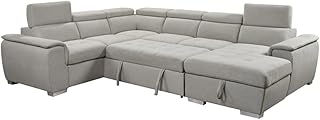
Air Leather Power Reclining Sectional with LED
The sectional layout is the best pick for anyone who genuinely naps on the couch, since the corner configuration lets you stretch your legs fully rather than curling into a side-lying position that torques the lower back. Confirm your wall clearance carefully — sectionals need real recline depth.
Bonzy Home 3-Seat with Thick Cushions
Thick, high-resilience cushioning is the quiet hero here; it resists the sag that gradually collapses your pelvis into a rounded posture over months of use. The three-level accent lighting is cool-toned, so I’d treat it as decorative rather than something to run during a wind-down hour.
Ashley Boyington Power Reclining Sofa
Zero-gravity positioning is the standout feature and the most physiologically interesting one — elevating the legs above the heart reduces peripheral pressure and takes measurable load off the lumbar spine. Combined with gentle air massage and a drop-down table, it’s the most rest-oriented sofa on this list.
Frequently Asked Questions
Is sleeping on a reclining sofa actually bad for you?
Occasional reclined sleep is fine, and for people with reflux or certain respiratory issues, a slight incline can help. The problem is unintentional couch sleep — shallow, interrupted, and often in a twisted posture. If you nap deliberately, recline fully and support your head.
Do heated seats help or hurt sleep?
Both, depending on timing. Warmth before rest dilates blood vessels and helps your core temperature drop afterward, which promotes sleep onset. Continuous heat during rest works against that cooling curve, so use a timer.
Leather, faux leather, or air leather?
Genuine leather breathes best and stays cooler against skin over long sessions. Air leather and quality faux leather are easier to wipe down and far cheaper, but they trap more heat — worth considering if you run warm.
How much clearance do power recliners need?
Standard mechanisms want 12 to 18 inches behind the frame; wall-hugger designs typically need only 3 to 6. Always measure at full extension, not at rest.
Final Thoughts
If restorative lounging is your priority, the Ashley Boyington is my top recommendation — zero-gravity positioning and gentle air massage do more for muscular release than any feature list can convey. For tight rooms and RVs, the Watson & Whitely genuine leather wall hugger offers the best combination of breathable upholstery and adjustable headrests, while the Bonzy Home model with the flip-down console is the smartest all-around value for family movie nights.