Key takeaways
- Independent lumbar motor: Insist that lumbar adjust on its own switch, separate from the backrest and headrest. Fixed foam “lumbar pillows” collapse within a year and can’t adapt as your posture changes through the evening.
- Zero-gravity geometry: Look for a position that lifts your knees above your heart while keeping the torso only slightly reclined. This unloads the lumbar discs and eases venous return — the reason it feels restorative rather than just soft.
- Seat depth versus your leg length: If the seat is deeper than your thigh, you’ll slide forward and lose the lumbar contact entirely. Measure from the back of your knee to your buttock and compare before buying.
- Footrest extension and headrest travel: Anyone over 5’10” should confirm the footrest fully supports the calves and heels; dangling feet create hamstring tension that telegraphs straight into the low back. Powered headrests matter for keeping the neck neutral instead of chin-to-chest.
- Heat, massage, and wind-down features: Gentle lumbar heat can reduce muscle guarding before bed, but skip vigorous massage cycles in the last hour — stimulation that late works against the drop in arousal your body needs to fall asleep.
What's inside
Most people shop for a reclining sofa the way they shop for a coffee table — by looking at it. But the sofa in your living room is quietly doing sleep-adjacent work every evening. It’s where your spine decompresses after a desk-bound day, where you drift through the last hour before bed, and, on more nights than anyone admits, where you actually fall asleep. From a sleep-wellness standpoint, that makes lumbar support less of a luxury feature and more of a recovery tool. A seat that lets your pelvis roll backward and your lower back flatten out will keep you shifting, fidgeting, and waking — the same micro-arousals that fragment sleep on a bad mattress.
This guide looks at power reclining sofas through that lens: how well each one preserves the natural inward curve of your lumbar spine, whether the lumbar adjustment is genuinely powered and independent, and how the recline geometry affects circulation and breathing. I’ve prioritized models with separately articulating headrests and lumbar bladders, zero-gravity positioning, and footrest extension long enough for taller bodies. Below you’ll find the current standouts, followed by a buying framework and answers to the questions readers ask most.
As an Amazon Associate we earn from qualifying purchases.




🛒 Best Price Today on Amazon
Prime members get fast, free shipping on everything above, plus member-only deals. New members get a 30-day free trial — cancel anytime.
How to Choose a Power Reclining Sofa With Lumbar Support (2026)
- Independent lumbar motor: Insist that lumbar adjust on its own switch, separate from the backrest and headrest. Fixed foam “lumbar pillows” collapse within a year and can’t adapt as your posture changes through the evening.
- Zero-gravity geometry: Look for a position that lifts your knees above your heart while keeping the torso only slightly reclined. This unloads the lumbar discs and eases venous return — the reason it feels restorative rather than just soft.
- Seat depth versus your leg length: If the seat is deeper than your thigh, you’ll slide forward and lose the lumbar contact entirely. Measure from the back of your knee to your buttock and compare before buying.
- Footrest extension and headrest travel: Anyone over 5’10” should confirm the footrest fully supports the calves and heels; dangling feet create hamstring tension that telegraphs straight into the low back. Powered headrests matter for keeping the neck neutral instead of chin-to-chest.
- Heat, massage, and wind-down features: Gentle lumbar heat can reduce muscle guarding before bed, but skip vigorous massage cycles in the last hour — stimulation that late works against the drop in arousal your body needs to fall asleep.
The Best Power Reclining Sofas With Lumbar Support (2026), Reviewed
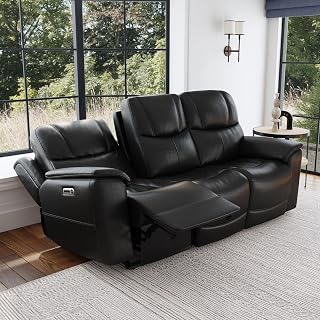
Flexsteel Crew Leather Power Reclining Sofa
The Crew is my top recommendation for anyone who genuinely relaxes on their sofa: powered headrests and lumbar work independently, so you can build a neutral spine position rather than accept a preset one, and the zero-gravity recline is well-calibrated for circulation. USB-A and USB-C at each seat means your phone charges at arm’s length instead of migrating to the bedroom.
Flexsteel Clive Power Reclining Sofa
A cleaner-lined, less theater-styled alternative to the Crew with the same essential hardware — power headrests plus power lumbar — which makes it the smarter pick for open-plan rooms where a bulky recliner would dominate. Flexsteel’s steel seat-frame construction is the reason the lumbar support still reads accurately after a few thousand cycles.
Watson & Whitely 3-Seat Power Reclining Sofa with Console
Genuine leather, adjustable headrest and lumbar, and an unusually aggressive zero-gravity range make this a strong value against pricier brands. The console storage and cup holders are practical, though be aware the console reduces usable seating width — measure your wall before committing.
Signature Design by Ashley Boyington Power Reclining Sofa
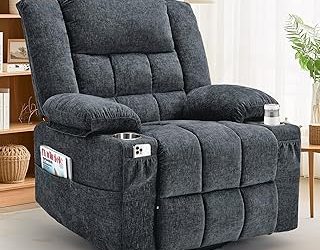
The best choice if you want heat and air massage integrated rather than layered on with a pad, and the drop-down table makes it a legitimate work-or-watch surface. Treat the heat as your evening wind-down setting and the massage as an afternoon feature.
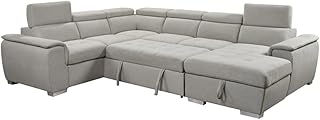
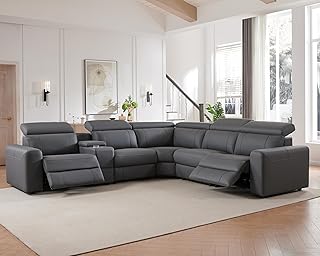
Power Reclining Sectional, 5-Seater with Console and USB
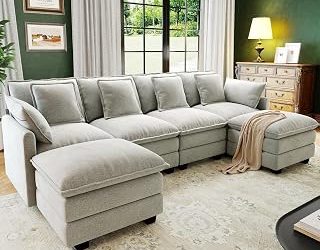
For households where two people want to recline simultaneously without negotiating, this sectional delivers adjustable headrests, storage, and charging across five seats at a reasonable per-seat cost. Support is competent rather than orthopedic-grade, so pair it with a lumbar cushion if you have a known back issue.
Frequently Asked Questions
Is sleeping on a power reclining sofa bad for me?
Occasional reclined sleep is generally fine and can even help people with reflux or mild sleep apnea, since elevation reduces airway collapse. The problem is habitual sofa sleeping: you’ll get less deep sleep from ambient light and noise, and you’ll wake with neck stiffness if the headrest isn’t holding your head neutral.
Does powered lumbar support actually help back pain?
It helps a specific kind — the postural, end-of-day ache from prolonged flexion. Adjustable lumbar support maintains your natural lordosis and lets you vary position over time, which is what fatigued tissue needs. It won’t resolve disc pathology or radiating nerve pain; see a clinician for those.
How much clearance do I need behind a power recliner?
Standard models want 12 to 18 inches from the wall. Wall-hugger designs, including the 80″ heat-and-massage model above, drop that to roughly 4 to 6 inches by sliding the seat forward as it reclines.
Should I use the heat and massage before bed?
Low heat, yes — ten to fifteen minutes releases muscle tension and the subsequent skin-cooling supports sleep onset. Skip percussive or vigorous massage within an hour of bedtime, and always let the unit auto-shut-off rather than falling asleep on active heat.
Final Thoughts
If you want the most spine-friendly seat on this list, the Flexsteel Crew earns it through genuinely independent power headrests and lumbar plus well-tuned zero-gravity geometry, with the Flexsteel Clive as the same engineering in a subtler frame. The Watson & Whitely is the value standout for adjustable support in real leather, and the Ashley Boyington makes the most sense if integrated heat and massage are part of how you plan to unwind.