Key takeaways
- Cooling method: Compressor units genuinely lower air temperature and remove moisture, making them the only real option in humid climates. Evaporative coolers add water vapor as they cool, which feels wonderful in dry desert air and disappointing in Gulf Coast August. Match the technology to your typical destination, not to the marketing copy.
- Noise floor: For sleep, target something in the 40–50 dB range with a steady, broadband sound rather than a pitchy whine. Constant white noise masks traffic and parking-lot disturbances; intermittent cycling does the opposite and can pull you out of deeper sleep stages.
- Power draw and runtime: Check wattage against your source. A 330–400W unit needs a healthy battery station or a running vehicle; a 5,000mAh internal battery will run a personal cooler for a few hours at most. Know your realistic overnight budget before you commit.
- Venting and condensate: True A/C must exhaust hot air and drain water somewhere. Confirm hose length, window-seal options, and tank capacity — a 1,500ml reservoir you have to empty at 3 a.m. defeats the purpose entirely.
- Sleep-friendly controls: Look for remote operation, dimmable or fully disabling LEDs, and a night or timer mode. Even modest light exposure suppresses melatonin, so a color-cycling display facing your head is a design flaw, not a feature.
What's inside
Anyone who has tried to nap in a parked car knows the problem is rarely fatigue — it’s heat. Core body temperature has to drop roughly one to two degrees for sleep to begin, and a sealed cabin sitting in afternoon sun works against that biology at every turn. Glass traps radiant heat, upholstery holds it, and the air goes still. Whether you’re a road-tripper stealing an hour at a rest stop, a truck driver on a mandated break, a parent waiting through a long practice, or someone car-camping through a warm shoulder season, the cabin becomes the one variable you can’t sleep through.
Idling the engine for factory A/C burns fuel, invites carbon-monoxide risk in enclosed spaces, and produces a low-frequency hum that fragments light sleep even when you don’t consciously wake. Portable car air conditioners offer a quieter, engine-off alternative — though the category is genuinely uneven, spanning true compressor split units to small evaporative coolers that behave more like humidified fans. Below, we break down what actually matters for cabin comfort and rest, then review the standouts for 2026 across budgets and use cases.
As an Amazon Associate we earn from qualifying purchases.


🛒 Best Price Today on Amazon
Prime members get fast, free shipping on everything above, plus member-only deals. New members get a 30-day free trial — cancel anytime.
How to Choose a Portable Air Conditioner For Cars (2026)
- Cooling method: Compressor units genuinely lower air temperature and remove moisture, making them the only real option in humid climates. Evaporative coolers add water vapor as they cool, which feels wonderful in dry desert air and disappointing in Gulf Coast August. Match the technology to your typical destination, not to the marketing copy.
- Noise floor: For sleep, target something in the 40–50 dB range with a steady, broadband sound rather than a pitchy whine. Constant white noise masks traffic and parking-lot disturbances; intermittent cycling does the opposite and can pull you out of deeper sleep stages.
- Power draw and runtime: Check wattage against your source. A 330–400W unit needs a healthy battery station or a running vehicle; a 5,000mAh internal battery will run a personal cooler for a few hours at most. Know your realistic overnight budget before you commit.
- Venting and condensate: True A/C must exhaust hot air and drain water somewhere. Confirm hose length, window-seal options, and tank capacity — a 1,500ml reservoir you have to empty at 3 a.m. defeats the purpose entirely.
- Sleep-friendly controls: Look for remote operation, dimmable or fully disabling LEDs, and a night or timer mode. Even modest light exposure suppresses melatonin, so a color-cycling display facing your head is a design flaw, not a feature.
The Best Portable Air Conditioners For Cars (2026), Reviewed
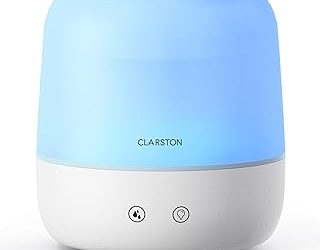
2026 New 4-in-1 Portable AC with 1500ML Tank
The generous 1,500ml reservoir means fewer refills across a long stretch, and the three-speed, three-mode layout gives you a genuinely low setting for overnight use. Just turn the seven-color LED off before you settle in — the remote makes that easy without sitting up.
FLOWBREEZE 3-in-1 Portable Air Conditioner, 5400mAh
Built around an internal 5,400mAh battery, this is the pick for anyone who wants cooling without a cord or an idling engine. Treat it as a personal-space cooler aimed at your face and neck rather than a whole-cabin solution, and its runtime becomes an asset instead of a limitation.
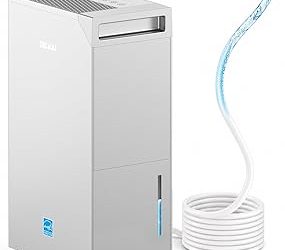
Treeligo 12V 10,000BTU Split Air Conditioner
This is the serious option: a true 12V compressor split system with the cooling capacity to make a truck sleeper, camper, or trailer genuinely comfortable overnight. Installation is a commitment, but the ultra-quiet operation and real dehumidification put it in a different class from everything else here.
Travel Air Conditioner V1-Pro, 330/400W
A compact compressor unit with a 60°F–89°F thermostat range, so you can hold a target temperature instead of guessing at fan speeds. Pair it with a decent power station and it handles tents and RV nooks as capably as a car cabin.
Evapolar evaCHILL Personal Evaporative Cooler
Small, quiet, and refreshingly honest about what it is — a desk-scale evaporative cooler that takes the edge off dry heat within arm’s reach. Excellent for arid climates and daytime comfort; look elsewhere if you’re sleeping through humid nights.
Frequently Asked Questions
Can a portable air conditioner cool an entire car?
Only compressor-based units with proper venting come close, and even then a sealed sedan cabin is a tough load. Personal coolers are best understood as creating a comfortable zone around your head and torso — which is, conveniently, where cooling matters most for sleep onset.
Are these safe to run overnight?
Battery- and station-powered units are generally fine, but never idle your engine for A/C in a garage or enclosed space, and always crack a window for air exchange. Empty water tanks before sleeping to avoid spills, and keep hoses clear of your body.
Do evaporative coolers work in humid weather?
Poorly. They cool by evaporating water into the air, so when humidity is already high there’s little evaporation to be had. In dry climates, though, the same mechanism can drop perceived temperature substantially.
What temperature is best for sleeping in a car?
Aim for roughly 65–68°F where possible. Cooler ambient air supports the natural overnight drop in core temperature, and a light blanket with cool air moving over exposed skin tends to beat a warm, still cabin every time.
Final Thoughts
For anyone sleeping regularly in a truck, camper, or trailer, the Treeligo 12V split system is the only unit here with the capacity and quietness to do the job properly night after night. If you need flexibility without an install, the V1-Pro delivers thermostat-controlled cooling wherever you can bring power, while the FLOWBREEZE 5400mAh remains the easiest grab-and-go choice for shorter breaks and warm afternoons.