Key takeaways
- Cool mist, not warm: Pediatric guidance consistently favors cool mist units in nurseries. Warm mist models heat water to near-boiling, creating a scald hazard the moment your child becomes mobile. Cool mist delivers the same respiratory benefit with no hot reservoir.
- Noise under 30 dB: Anything above roughly 30 decibels becomes an intermittent sleep disruptor rather than background texture. Look for published dB ratings and be wary of units that gurgle or click as the tank empties — the irregularity wakes babies, not the volume.
- Runtime that clears the whole night: Aim for 20-plus hours on the lowest setting. Refilling mid-night defeats the purpose, and a unit that dies at 3 a.m. leaves the room drying out during the sleep stage when congestion feels worst.
- Genuinely cleanable design: Standing water grows biofilm within days. Choose wide-mouth top-fill tanks you can reach into with a brush, and commit to emptying and drying the unit daily. A humidifier you can’t scrub is a humidifier that will eventually aerosolize mold.
- Humidity control and auto shut-off: Target 40 to 50 percent relative humidity. Over-humidifying encourages dust mites and mildew, so a built-in humidistat or a cheap standalone hygrometer is essential. Auto shut-off protects the motor when the tank runs dry.
What's inside
Parents rarely call a pediatric sleep consultant about humidity. They call about the 3 a.m. wake-ups, the barking cough that only shows up after midnight, the baby who finally settled at 8 p.m. and was wide awake and stuffy by 11. But when I walk through a nursery and check the air with a hygrometer, I often find the same culprit: a room sitting at 22 percent relative humidity because the furnace has been running since October. Dry air thickens nasal mucus, irritates the throat, and makes an already-congested infant work harder to breathe through nostrils roughly the width of a coffee stirrer. Sleep fragments. Everyone suffers.
The fix is inexpensive, but the shopping process is genuinely confusing. Warm mist or cool mist? How many liters? Does 28 decibels actually sound quiet next to a crib? This guide sorts through the current crop of nursery-appropriate humidifiers with an emphasis on what matters for sleep quality and infant safety specifically — noise floor, refill logistics at 2 a.m., cleanability, and burn risk — rather than marketing claims. Below you’ll find the models worth your money, plus the criteria I use when advising families.
As an Amazon Associate we earn from qualifying purchases.



🛒 Best Price Today on Amazon
Prime members get fast, free shipping on everything above, plus member-only deals. New members get a 30-day free trial — cancel anytime.
How to Choose a/an Humidifier For Infants Room (2026)
- Cool mist, not warm: Pediatric guidance consistently favors cool mist units in nurseries. Warm mist models heat water to near-boiling, creating a scald hazard the moment your child becomes mobile. Cool mist delivers the same respiratory benefit with no hot reservoir.
- Noise under 30 dB: Anything above roughly 30 decibels becomes an intermittent sleep disruptor rather than background texture. Look for published dB ratings and be wary of units that gurgle or click as the tank empties — the irregularity wakes babies, not the volume.
- Runtime that clears the whole night: Aim for 20-plus hours on the lowest setting. Refilling mid-night defeats the purpose, and a unit that dies at 3 a.m. leaves the room drying out during the sleep stage when congestion feels worst.
- Genuinely cleanable design: Standing water grows biofilm within days. Choose wide-mouth top-fill tanks you can reach into with a brush, and commit to emptying and drying the unit daily. A humidifier you can’t scrub is a humidifier that will eventually aerosolize mold.
- Humidity control and auto shut-off: Target 40 to 50 percent relative humidity. Over-humidifying encourages dust mites and mildew, so a built-in humidistat or a cheap standalone hygrometer is essential. Auto shut-off protects the motor when the tank runs dry.
The Best Humidifier For Infants Room (2026)s Reviewed
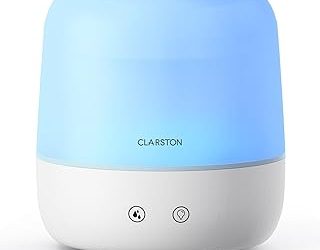
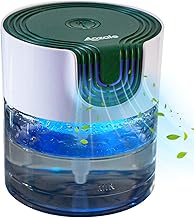
Clarston 2L Cool Mist Humidifier
At 24 dB with a 25-hour runtime, this hits the sweet spot for small to mid-size nurseries — quiet enough to sit three feet from a crib without registering, and the 360-degree nozzle lets you aim mist away from bedding and walls. The dimmable nightlight is a genuine convenience for nighttime feeds, though I’d keep it on its lowest setting to protect melatonin.
Homvana 3.6L Top-Fill Cool Mist Humidifier
The quietest unit here on paper at 23 dB, with a four-night capacity that makes it the low-maintenance choice for parents already short on bandwidth. It doubles as an oil diffuser — a feature I’d leave unused, since essential oils are not recommended around infants and young children.
Levoit 2.5L Top Fill Humidifier
Levoit has earned its reputation on tank access, and this model is a case study: the opening is wide enough for a bottle brush, which is the single biggest predictor of whether a humidifier stays sanitary past month three. Auto shut-off and 25-hour runtime round out a very sensible nursery pick.
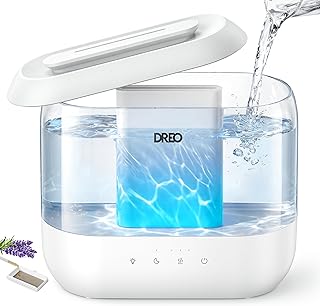
DREO 3L Humidifier (New Edition)
The standout feature is precise humidity control — you set a target percentage and the unit cycles to hold it, rather than running flat out until the room fogs. For congestion-prone infants, that steadiness matters more than raw output.
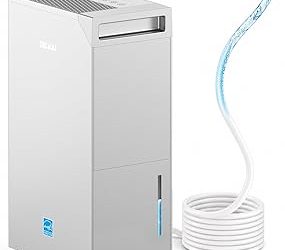
DREO 4L HM311 Humidifier
The pick for larger nurseries or shared rooms, with 36 hours of runtime and a BPA-free supersized tank that means refilling roughly every other day. At 28 dB it’s marginally louder than the Homvana, but still comfortably below the threshold where noise becomes a factor.
Frequently Asked Questions
Where should I place the humidifier in a nursery?
Three to six feet from the crib, on a hard surface at least a couple of feet off the floor, with the nozzle angled away from the mattress. Never place it inside the crib or where mist settles directly onto bedding.
Should I use tap water or distilled?
Distilled or demineralized water, if you can manage it. Tap water minerals create the fine white dust ultrasonic units are known for, which settles on surfaces and can be inhaled.
How often does it really need cleaning?
Empty and air-dry daily; descale with vinegar or a manufacturer-approved solution weekly. This is non-negotiable — a neglected humidifier makes air quality worse, not better.
Can a humidifier replace medical care for a congested baby?
No. It’s a comfort measure. Any labored breathing, fever in an infant under three months, poor feeding, or persistent symptoms warrants a call to your pediatrician.
Final Thoughts
For most nurseries, the Levoit 2.5L is the easiest recommendation — cleanable, quiet, and sensibly sized. Choose the Homvana 3.6L if the lowest possible noise floor and multi-night capacity are your priorities, or the DREO HM311 if you’re humidifying a larger or shared room and want to refill as rarely as possible. Pair whichever you pick with a five-dollar hygrometer, and you’ll be managing the air rather than guessing at it.