Key takeaways
- Noise floor, not average noise: Look for a quoted figure in the high 30s to low 40s dB range on sleep or eco mode. Anything above about 50dB will register as intrusive in a quiet bedroom, and inverter compressors are far kinder here than fixed-speed ones because they hum along steadily instead of slamming on and off.
- Match BTU to room volume, not floor area: UK ceilings vary wildly between a Victorian terrace and a new-build flat. As a rough guide, 8,000 BTU suits a single bedroom or study up to around 20m², while 12,000–14,000 BTU covers open-plan living space. Oversizing isn’t clever: the unit short-cycles, cools without dehumidifying properly, and leaves the air feeling clammy.
- Single hose versus dual hose: Single-hose units pull room air to cool the condenser, creating slight negative pressure that draws warm air in through gaps. Dual-hose designs are noticeably more efficient in poorly sealed rooms — worth the extra bulk if you’re cooling a leaky older property.
- Drainage and humidity handling: Auto-evaporation or drainage-free operation means no waking up to a full tank and a flashing error light. Given the UK’s damp summers, check the dehumidifier mode’s daily litre extraction too — it’s the feature you’ll use in September.
- Sleep programming and running cost: A genuine sleep mode should ramp the temperature up gradually and dim the display; a 24-hour timer lets you pre-cool the room before bed and shut off in the small hours. Inverter models draw meaningfully less power over a season, which matters at current UK unit rates.
What's inside
British bedrooms were built to hold heat in, not let it out. Solid brick, small windows, loft insulation added in a hurry — all brilliant in February, all working against you during a July night when the indoor temperature refuses to drop below 24°C. From a sleep-wellness perspective this matters more than most people realise: the body needs to shed roughly a degree of core temperature to fall asleep and stay in deep, restorative stages. When the room won’t cooperate, you get the familiar pattern of drifting off late, waking at 3am, and dragging yourself through the next day. Fitting fixed air conditioning is rarely practical in UK housing stock, especially in rentals, flats and listed properties — which is why portable units have become the default fix.
This guide looks at portable air conditioners through the lens of sleep quality rather than raw cooling power. That means weighing noise output at night settings, how gently a unit holds temperature once you’re asleep, whether it can be run without a nightly water-emptying ritual, and how much it will add to your electricity bill over a UK summer. Below you’ll find the units worth considering in 2026, a short buying framework, and answers to the questions that come up most often once the box is open.
As an Amazon Associate we earn from qualifying purchases.


How to Choose a/an Portable Air Conditioner In Uk (2026)
- Noise floor, not average noise: Look for a quoted figure in the high 30s to low 40s dB range on sleep or eco mode. Anything above about 50dB will register as intrusive in a quiet bedroom, and inverter compressors are far kinder here than fixed-speed ones because they hum along steadily instead of slamming on and off.
- Match BTU to room volume, not floor area: UK ceilings vary wildly between a Victorian terrace and a new-build flat. As a rough guide, 8,000 BTU suits a single bedroom or study up to around 20m², while 12,000–14,000 BTU covers open-plan living space. Oversizing isn’t clever: the unit short-cycles, cools without dehumidifying properly, and leaves the air feeling clammy.
- Single hose versus dual hose: Single-hose units pull room air to cool the condenser, creating slight negative pressure that draws warm air in through gaps. Dual-hose designs are noticeably more efficient in poorly sealed rooms — worth the extra bulk if you’re cooling a leaky older property.
- Drainage and humidity handling: Auto-evaporation or drainage-free operation means no waking up to a full tank and a flashing error light. Given the UK’s damp summers, check the dehumidifier mode’s daily litre extraction too — it’s the feature you’ll use in September.
- Sleep programming and running cost: A genuine sleep mode should ramp the temperature up gradually and dim the display; a 24-hour timer lets you pre-cool the room before bed and shut off in the small hours. Inverter models draw meaningfully less power over a season, which matters at current UK unit rates.
The Best Portable Air Conditioner In Uk (2026)s Reviewed
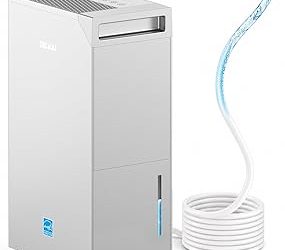
ZAFRO Smart Inverter 16,000 BTU (38dB Upgraded)
The quietest option here by a clear margin, and the one I’d point a light sleeper towards first — 38dB sits somewhere between a whisper and a fridge in a next-door room. Dual hoses and inverter control mean it holds a set temperature without the wake-inducing compressor kick, and drainage-free operation removes the nightly tank chore.
ZAFRO Smart Inverter 16,000 BTU (42dB)
Essentially the same well-engineered platform at a slightly higher noise figure, which is still comfortably below most fixed-speed rivals. App control is genuinely useful for nudging the temperature up at 4am from your phone rather than getting out of bed.
Garvee 14,000 BTU 3-in-1
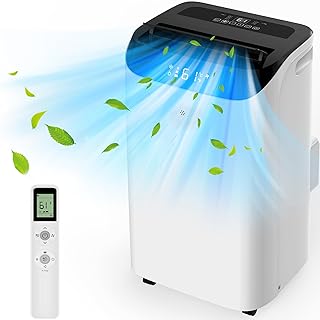
A strong choice for larger open-plan rooms, with enough capacity to pull a 750 sq ft space down quickly during a heatwave. The included window kit is straightforward to fit in sash and casement windows alike, and the timer plus sleep mode combination works well for pre-cooling a bedroom before you turn in.
8,000 BTU 4-in-1 Compact Unit
The most sensible pick for a single bedroom, box room or home office up to around 350 sq ft, where a larger unit would simply cycle noisily and waste electricity. Its dedicated dehumidifier and sleep modes make it a year-round appliance rather than a three-week-a-summer one.
14,000 BTU Smart WiFi with Voice Control
Auto-evaporation is the standout here — set it up and largely forget about it, which is exactly what you want from bedroom equipment. Voice control via a smart speaker means you can adjust cooling without turning on a light, a small detail that protects melatonin more than people expect.
Frequently Asked Questions
What temperature should I set for the best sleep?
Sleep research consistently points to roughly 16–19°C for most adults. Rather than chasing a low number all night, set your unit around 18°C and let sleep mode drift it upwards by a degree or two — your body’s temperature naturally rises again towards morning.
Do I have to keep the window open?
Yes, the exhaust hose must vent outdoors, but the opening should be sealed around the hose with the supplied window kit or foam. Leaving a wide gap undoes much of the cooling and, in a bedroom, invites street noise that disrupts sleep as much as the heat did.
Are portable air conditioners expensive to run in the UK?
A 12,000–14,000 BTU unit typically draws somewhere between 1kW and 1.4kW while the compressor is active. Because inverter models throttle back once the room is at temperature, they often use noticeably less over a full night than a fixed-speed unit running flat out and cycling.
Will the airflow give me a stiff neck or dry throat?
It can if the louvres point straight at the bed. Angle the vents towards the ceiling, use auto swing to disperse the air, and if you wake with a dry mouth, switch to a higher set temperature with fan-only circulation for part of the night.
Final Thoughts
If sleep is your priority, the ZAFRO Smart Inverter 16,000 BTU in its upgraded 38dB form is the unit I’d recommend without hesitation — quiet, steady and free of the nightly draining routine. For larger open-plan spaces the Garvee 14,000 BTU delivers the capacity you need at a sensible price, while the compact 8,000 BTU 4-in-1 remains the smartest buy for a single UK bedroom where restraint beats brute force.