Key takeaways
- Cooling mechanism: Evaporative coolers drop air temperature by a few degrees and raise humidity; refrigerant compressor units genuinely remove heat and dehumidify. For sleeping in a closed vehicle, humidity matters — a compressor unit vented outside is the only true air conditioner in this category.
- Noise floor: Anything above roughly 45 dB will fragment light sleep. Look for units advertising low-decibel or “silent” modes, and favor bladeless or brushless designs, which produce smoother broadband noise rather than a pulsing whine.
- Power source and runtime: A 5,000 mAh internal battery gives you a break-time nap, not a night. If you need overnight cooling, plan on a 12V socket with the ignition off (check your fuse rating) or a portable power station — a 400W compressor unit will drain a small battery bank fast.
- Tank capacity versus refills: Evaporative models consume water continuously. A 1,000–1,200 mL tank typically runs a few hours; a 1,500 mL tank buys you a full sleep cycle before you’re awake and refilling it.
- Mounting and airflow direction: Cooled air aimed at your face and neck delivers far more perceived relief than air pushed at the ceiling. Clip-on mounts with wide rotation let you redirect flow between driving position and reclined position.
What's inside
As someone who spends most of my working life talking to people about thermoregulation and sleep quality, I’ve noticed a pattern: the drivers who complain most about afternoon drowsiness are almost always the ones sitting in a hot cabin. Core body temperature drives alertness. When the air around you climbs past the mid-80s, your body diverts effort into cooling itself, blood pressure shifts, and the fog rolls in — which is precisely what you don’t want behind the wheel. Factory air conditioning solves this while the engine runs, but it does nothing for the parked delivery van, the campervan at 2 a.m., the truck cab during a mandated rest break, or the car whose compressor gave out in July.
That gap is where portable and personal car coolers earn their keep. This guide looks at six units built for vehicles in 2026 — evaporative personal coolers, battery-powered clip-on bladeless fans, and one genuine compressor-based tent unit — and explains which physics each one relies on, because that determines whether it will actually help you sleep or simply push warm air around. I’ve weighted my picks toward quiet operation, sensible runtime, and the humidity behavior that matters most if you plan to rest in the vehicle rather than just commute in it.
As an Amazon Associate we earn from qualifying purchases.




🛒 Best Price Today on Amazon
Prime members get fast, free shipping on everything above, plus member-only deals. New members get a 30-day free trial — cancel anytime.
How to Choose a Portable Air Conditioner For Car (2026)
- Cooling mechanism: Evaporative coolers drop air temperature by a few degrees and raise humidity; refrigerant compressor units genuinely remove heat and dehumidify. For sleeping in a closed vehicle, humidity matters — a compressor unit vented outside is the only true air conditioner in this category.
- Noise floor: Anything above roughly 45 dB will fragment light sleep. Look for units advertising low-decibel or “silent” modes, and favor bladeless or brushless designs, which produce smoother broadband noise rather than a pulsing whine.
- Power source and runtime: A 5,000 mAh internal battery gives you a break-time nap, not a night. If you need overnight cooling, plan on a 12V socket with the ignition off (check your fuse rating) or a portable power station — a 400W compressor unit will drain a small battery bank fast.
- Tank capacity versus refills: Evaporative models consume water continuously. A 1,000–1,200 mL tank typically runs a few hours; a 1,500 mL tank buys you a full sleep cycle before you’re awake and refilling it.
- Mounting and airflow direction: Cooled air aimed at your face and neck delivers far more perceived relief than air pushed at the ceiling. Clip-on mounts with wide rotation let you redirect flow between driving position and reclined position.
The Best Portable Air Conditioner For Car (2026)s Reviewed
2026 New 4-in-1 Portable AC with 1500ML Water Tank
The 1,500 mL reservoir is the headline here, and it’s the right priority — it’s the difference between a unit that runs through a rest break and one that runs through the night without waking you. Three speeds plus a dimmable seven-color LED means you can drop it to its quietest setting and kill the light entirely, which is exactly how I’d configure any bedside-adjacent device.
FLOWBREEZE 3-in-1 Portable Air Conditioner, 5400mAh
The internal 5,400 mAh cell is what sets this apart: it works with the engine off and no cable draped across the console, so it’s my pick for parked naps in cars without accessory power. Expect a few hours of meaningful output rather than all-night operation.
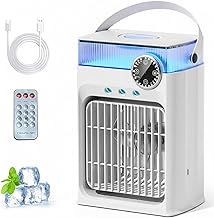
FLOWBREEZE 3-in-1 with Remote, Ice Packs & 7H Timer
The seven-hour timer and included ice packs make this the most sleep-literate design in the group — pre-chilling the water meaningfully improves output during the first hour, and the timer lets the unit taper off as ambient temperatures fall overnight. The remote means you don’t have to sit up and fumble to change settings.
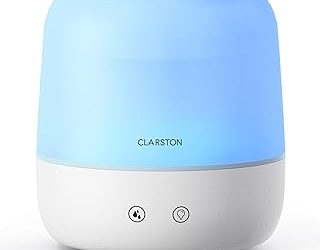
2026 Upgraded 4-in-1 Quiet AC with 1100ML Tank
A genuinely versatile evaporative cooler that moves comfortably between bedroom nightstand, desk, and vehicle, with quiet operation as its stated design goal. The 1,100 mL tank is modest, so treat it as an evening-and-early-night device unless you’re happy topping it up.
Clip On 360° Bladeless Car Fan, 199 Speeds
Strictly speaking this is air movement rather than air conditioning, but don’t dismiss it — directed airflow across skin accelerates evaporative heat loss and is often enough to make a warm cabin sleepable. The near-infinite speed adjustment lets you dial in the lowest setting that still feels cool, which is how you avoid trading heat for noise.
Frequently Asked Questions
Will an evaporative cooler actually lower the temperature in my car?
It will lower the temperature of the air stream reaching you, typically by several degrees, but it won’t cool the whole cabin the way a compressor unit does. It works best with a cracked window for airflow, and it works poorly in already-humid conditions.
Can I run one of these overnight while sleeping in my vehicle?
Yes, with caveats. Crack two windows for ventilation, use a timer if the unit offers one, and never run a fuel-burning or engine-dependent solution while asleep. Battery-powered and 12V units are safe; monitor your starter battery if you’re drawing from it directly.
Why does the cool air stop feeling cool after an hour?
Two reasons: the water in the tank has warmed to ambient temperature, and in a closed cabin the humidity has risen enough that evaporation slows. Pre-frozen ice packs and a slight cross-breeze both fix this.
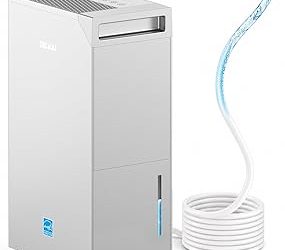
Is a 5,200 BTU tent unit overkill for a car?
For a sedan, yes. For a van conversion, RV, or truck sleeper where you’re conditioning a real volume of air and want true dehumidification, it’s the only category that delivers genuine air conditioning — just budget for the power to run it.
Final Thoughts
If your goal is restorative sleep in a parked vehicle, the FLOWBREEZE 3-in-1 with its seven-hour timer and ice packs is the most thoughtfully engineered choice, while the 4-in-1 with the 1500ML tank wins on sheer uninterrupted runtime. For van and RV dwellers who need real dehumidification rather than evaporative relief, step up to the 5200BTU portable tent air conditioner and pair it with a power station — it’s the only unit here that will genuinely change the climate you sleep in.