Key takeaways
- Rated capacity with headroom: Choose a chair rated at least 100 pounds above your body weight. Ratings describe static load, not the dynamic force of sitting down quickly, and that buffer is what keeps the cylinder and base from fatiguing over a few thousand cycles.
- Seat pan dimensions: Measure your hips while seated and add three to four inches. A pan under 20 inches wide pushes the thighs inward and pinches circulation; depth should leave two fingers between the seat edge and the back of your knee.
- Cushion architecture: Pocket-spring seats distribute load across independent coils and resist the permanent compression that flattens cheap foam. If you prefer mesh, insist on a molded or thick-padded seat rather than a stretched fabric sling.
- Base, cylinder, and casters: Look for a five-star steel or reinforced nylon base, a Class 4 gas lift, and rubber or PU wheels. Rubber casters roll quieter and grip harder — a genuine benefit if your desk shares a wall with a bedroom.
- Adjustable recline and lumbar: The ability to open your hip angle past 110 degrees and lock it there matters enormously. Periodic reclining offloads spinal discs, restores blood flow, and is the single easiest habit to build into a workday.
What's inside
Most people shopping for a bigger, sturdier desk chair are troubleshooting the wrong twelve hours of their day. As someone who spends most of my working life untangling why people sleep badly, I can tell you that the culprit is often something that happened long before lights out: eight or nine hours in a seat that was engineered for a 250-pound frame and quietly stopped supporting anyone heavier around month four. A collapsing cushion forces constant micro-adjustments. Those adjustments load the lumbar spine, compress the hips, and slow venous return through the legs. By evening you are carrying stiffness, low-grade ache, and swollen ankles into bed — and then wondering why you cannot settle.
A chair rated for real body weight is not a vanity purchase; it is a recovery tool. This guide looks at heavy-duty office chairs built for 400 to 750 pounds, with an eye on the details that actually hold up over years rather than weeks: steel frame geometry, seat pan width, cushion construction, cylinder class, and caster load. Below you will find the current standouts, a short buying framework, and answers to the questions I get asked most by clients who work long desk days.
As an Amazon Associate we earn from qualifying purchases.




🛒 Best Price Today on Amazon
Prime members get fast, free shipping on everything above, plus member-only deals. New members get a 30-day free trial — cancel anytime.
How to Choose an Office Chair For Obese Person (2026)
- Rated capacity with headroom: Choose a chair rated at least 100 pounds above your body weight. Ratings describe static load, not the dynamic force of sitting down quickly, and that buffer is what keeps the cylinder and base from fatiguing over a few thousand cycles.
- Seat pan dimensions: Measure your hips while seated and add three to four inches. A pan under 20 inches wide pushes the thighs inward and pinches circulation; depth should leave two fingers between the seat edge and the back of your knee.
- Cushion architecture: Pocket-spring seats distribute load across independent coils and resist the permanent compression that flattens cheap foam. If you prefer mesh, insist on a molded or thick-padded seat rather than a stretched fabric sling.
- Base, cylinder, and casters: Look for a five-star steel or reinforced nylon base, a Class 4 gas lift, and rubber or PU wheels. Rubber casters roll quieter and grip harder — a genuine benefit if your desk shares a wall with a bedroom.
- Adjustable recline and lumbar: The ability to open your hip angle past 110 degrees and lock it there matters enormously. Periodic reclining offloads spinal discs, restores blood flow, and is the single easiest habit to build into a workday.
The Best Office Chairs for Obese People (2026), Reviewed
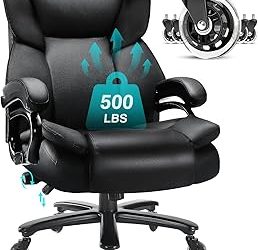
600LBS Heavy Duty Office Chair with 5D Flip Arms
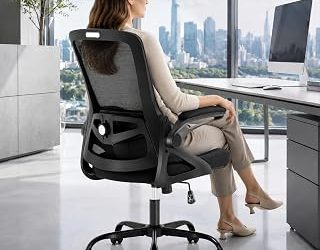
This is the most complete package on the list: a pocket-spring cushion that keeps its shape, genuine 5D arms that flip clear when you want to sit sideways, and dual rubber wheels that handle the load without shredding on hard floors. The high back and integrated lumbar make long reclining breaks comfortable rather than something you endure.
750lbs Big and Tall Office Chair with Wide Thick Seat Cushion
The highest capacity here, and the one I recommend when a chair has failed before — the wide, deeply padded pan and 4D armrests suit broader frames that find executive-style chairs constricting. Mesh backing keeps heat down through an eight-hour day, which quietly helps if you overheat easily.
500lbs Big and Tall High Back Executive Chair
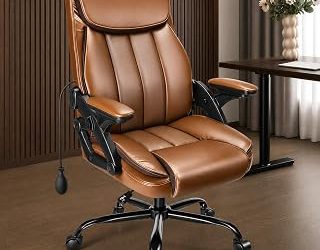
A more traditional executive build with adjustable lumbar depth, pocket-spring seating, and notably quiet rubber casters. It suits shared spaces and video-heavy roles where a squeaking chair becomes everyone’s problem.
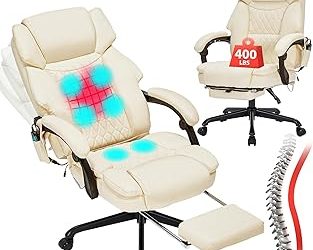
X100 Ergonomic Mesh Office Chair with Footrest
The retractable footrest is the standout feature, letting you shift into a semi-reclined position for short recovery breaks that ease lower-back load. Add 3D lumbar adjustment and flip-up arms and you have a versatile chair for people who alternate between focused work and downtime.
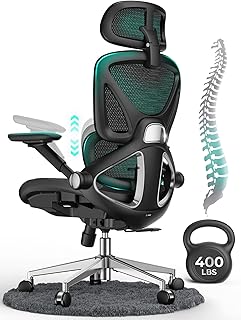
Ergonomic Mesh Office Chair with 4D Flip-Up Arms (400lbs)
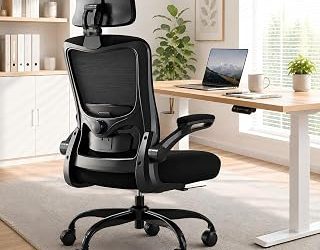
A lighter-duty but well-specified option with a three-level tilt lock and adjustable 3D headrest — useful for supporting the cervical spine during those recline intervals. Best for users comfortably under the 400-pound rating who want breathability over plush padding.
Frequently Asked Questions
How much weight capacity do I actually need?
Add a 100-pound margin to your weight and treat that as your minimum. Manufacturer ratings assume static, centered load, and real-world sitting involves leaning, rocking, and dropping into the seat.
Can a desk chair really affect my sleep?
Indirectly but meaningfully. Poor daytime seating drives musculoskeletal pain and lower-limb swelling, both of which are well-documented contributors to fragmented sleep and difficulty finding a comfortable position at night.
Is mesh or a padded cushion better for heavier users?
Mesh backs are excellent for ventilation, but the seat itself should be structured — pocket spring or high-density molded foam. Unsupported mesh seats deform under sustained heavy load and create pressure points at the edges.
How often should I get out of the chair?
Stand or walk for two to three minutes every 30 to 45 minutes. This restores circulation, resets spinal loading, and — because light movement supports healthy circadian signalling — makes winding down in the evening noticeably easier.
Final Thoughts
For most buyers, the 600LBS Heavy Duty Chair with 5D Flip Arms strikes the best balance of capacity, cushion quality, and adjustability, while the 750lbs Big and Tall model is the safer choice for anyone above 500 pounds or replacing a chair that has already failed. If breathability and a recovery-friendly recline matter most to you, the X100 Mesh Chair with Footrest is well worth the consideration — and your sleep may thank you for it.