Key takeaways
- Seat depth and pan width: Longer thighs need 19–21 inches of usable depth. You should be able to slide two to three fingers between the seat edge and the back of your knee — any less and the chair compresses the popliteal area, restricting circulation and leaving legs achy at bedtime.
- Backrest height above the shoulder line: Look for a backrest that reaches at least to the tops of your shoulders, ideally with a headrest that adjusts upward rather than one fixed at average height. A headrest sitting at your neck instead of your occiput trains a forward-head posture that persists on the pillow.
- Adjustable lumbar depth, not just height: Tall frames often have longer lumbar spans, so a pad that only slides up and down may never make real contact. Multi-axis (3D or 4D) lumbar mechanisms let you dial in both position and protrusion.
- Verified weight rating and cylinder quality: A higher capacity rating usually signals a thicker gas lift, reinforced base, and denser foam — all of which resist the slow sag that turns a good chair into a slouch machine after six months.
- Recline range and a footrest for genuine breaks: Micro-recovery matters. A chair that opens past 130 degrees with leg support gives you a legitimate ten-minute reset that reduces accumulated tension without becoming an accidental nap that steals from your night’s sleep drive.
What's inside
Height is one of the most overlooked variables in workstation design. Most task chairs are engineered around a 50th-percentile body — roughly 5’9″ — which means anyone over about 6’1″ ends up with a seat pan that cuts into the back of the thighs, a lumbar curve that lands somewhere near the kidneys, and a backrest that stops before the shoulder blades do. From a sleep-wellness perspective, this matters more than people realize: unsupported hours in a chair create low-grade muscular tension in the hip flexors, thoracic spine, and neck that doesn’t switch off at 10 p.m. It follows you into bed, where it shows up as restlessness, frequent position changes, and that frustrating sense of lying down tired but not settled.
This guide approaches tall-friendly seating the way I’d approach a mattress consultation — looking at how the body is held over long stretches, not just how a product feels in the first ten minutes. Below you’ll find current options that genuinely accommodate longer femurs, higher shoulder lines, and heavier frames, followed by a practical selection framework, honest notes on each contender, and answers to the questions I hear most often from clients whose daytime posture is quietly sabotaging their nights.
As an Amazon Associate we earn from qualifying purchases.


🛒 Best Price Today on Amazon
Prime members get fast, free shipping on everything above, plus member-only deals. New members get a 30-day free trial — cancel anytime.
How to Choose a/an Ergonomic Office Chair For Tall Person (2026)
- Seat depth and pan width: Longer thighs need 19–21 inches of usable depth. You should be able to slide two to three fingers between the seat edge and the back of your knee — any less and the chair compresses the popliteal area, restricting circulation and leaving legs achy at bedtime.
- Backrest height above the shoulder line: Look for a backrest that reaches at least to the tops of your shoulders, ideally with a headrest that adjusts upward rather than one fixed at average height. A headrest sitting at your neck instead of your occiput trains a forward-head posture that persists on the pillow.
- Adjustable lumbar depth, not just height: Tall frames often have longer lumbar spans, so a pad that only slides up and down may never make real contact. Multi-axis (3D or 4D) lumbar mechanisms let you dial in both position and protrusion.
- Verified weight rating and cylinder quality: A higher capacity rating usually signals a thicker gas lift, reinforced base, and denser foam — all of which resist the slow sag that turns a good chair into a slouch machine after six months.
- Recline range and a footrest for genuine breaks: Micro-recovery matters. A chair that opens past 130 degrees with leg support gives you a legitimate ten-minute reset that reduces accumulated tension without becoming an accidental nap that steals from your night’s sleep drive.
The Best Ergonomic Office Chair For Tall Person (2026)s Reviewed
750lbs Big and Tall Mesh Office Chair with 4D Armrests
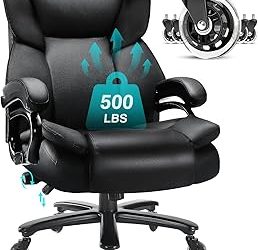
This is the most structurally serious option here, and the wide, thickly padded seat cushion is the reason: it distributes load across a broad surface rather than concentrating it under the sit bones, which is what makes eight-hour days sustainable for larger and taller frames. The 4D armrests are the standout feature, letting you support the forearms at true elbow height so the trapezius can finally let go.
X100 Ergonomic Mesh Chair with Footrest and 5D Arms
The combination of a tall mesh back, adjustable 3D lumbar support, and a retractable footrest makes this the best all-rounder for someone who needs both upright work posture and genuine recovery positions. Mesh also runs cooler than foam or leather, which is a real consideration if you tend to overheat and want to avoid carrying that thermal load into the evening.
X100 Mesh Office Chair (First Light)
Mechanically the same well-conceived platform as its sibling, with the lighter First Light finish suiting brighter home offices where a black executive chair would dominate the room. Worth choosing on aesthetics alone if you want a workspace that reads as calm rather than corporate — a small but legitimate factor in winding down at the end of a workday.
Mimoglad High Back Ergonomic Desk Chair
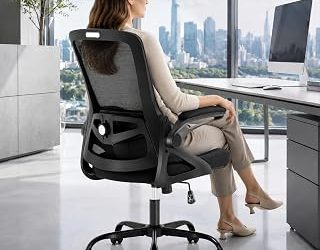
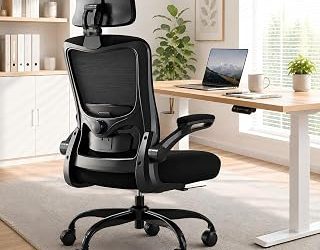
An adjustable headrest plus adjustable lumbar support at this scale is unusually good value, and the flip-up armrests are genuinely useful if you play an instrument or pull in close to a keyboard tray. Taller users at the very upper end of the range may want to confirm seat depth suits their leg length before committing.
6-Point Massage Executive Chair with Heat and Footrest
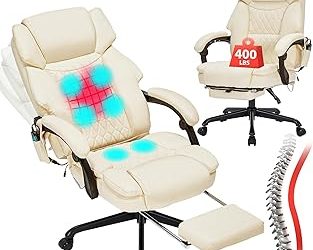
The heat function and six-point massage are more than novelties — gentle warmth applied to the lumbar region in the late afternoon can meaningfully reduce the paraspinal tightness that interferes with settling at night. Pair it with the reclining footrest for a structured evening decompression routine rather than using it as background stimulation all day.
Frequently Asked Questions
How tall do you need to be before a standard chair stops working?
Problems typically begin around 6’0″ and become pronounced past 6’3″, though torso-to-leg proportion matters more than total height. If your knees sit noticeably higher than your hips with the chair at its lowest comfortable setting, or the backrest ends below your shoulder blades, you’ve outgrown the standard sizing.
Can office chair posture really affect how well I sleep?
Indirectly but reliably, yes. Sustained flexion and unsupported loading create protective muscle tone in the hips, thoracic spine, and neck, and that tone doesn’t dissipate simply because you’ve lain down — it shows up as fidgeting, discomfort on turning, and longer time to fall asleep.
Is mesh or padded upholstery better for long sessions?
Mesh wins on thermal regulation and is preferable if you’re a warm sleeper or work in an unairconditioned room, since a lower core temperature at day’s end supports easier sleep onset. Padded and leather seating offers more initial cushioning, which some heavier users prefer over long periods.
Should I use the recline and footrest during the workday?
Use it deliberately, in short blocks of five to fifteen minutes, and preferably before mid-afternoon. Frequent, brief postural changes reduce cumulative strain, but extended reclining late in the day can drift into dozing and erode the sleep pressure you need at bedtime.
Final Thoughts
For most tall users, the X100 Ergonomic Mesh Chair with Footrest offers the best balance of vertical support, adjustable 3D lumbar depth, and true recovery positioning, with the First Light version identical where a lighter finish suits the room. If you’re a larger frame putting in genuinely long days, the 750lbs Big and Tall chair with 4D armrests is the more durable investment, while the 6-Point Massage Executive Chair is the pick for anyone who wants built-in heat and recline to actively unwind accumulated tension before the evening.