Key takeaways
- Recline angle over recline count: A seat that stops at 120 degrees is a TV chair. For genuine rest, look for a deep recline that lifts the knees toward heart level — that leg elevation is what reduces circulatory strain and lets muscles fully release. Power mechanisms let you stop anywhere in the arc, which matters when you’re chasing the one position that finally works.
- Adjustable headrests are a sleep feature, not a luxury: Fixed backs push the chin forward and narrow the airway, which worsens snoring and interrupted breathing. An independently adjustable power headrest lets you set neutral neck alignment instead of fighting for it with throw pillows.
- Heat retention and airflow: Core body temperature has to drop slightly for sleep to begin. Non-perforated faux leather traps heat against the skin and can stall that process; genuine leather breathes better, and woven fabrics best of all. If you run warm, weigh upholstery ahead of aesthetics.
- Noise, vibration, and light: Test the motor’s volume and the console’s rattle before you commit, and check whether LED accent lighting can be switched off entirely. Ambient blue-toned light suppresses melatonin, so an always-on strip under the console is working against you.
- Frame rating and wall clearance: Confirm the per-seat weight capacity rather than the sofa total, and measure your wall gap honestly. Wall-hugger designs typically need three to six inches, versus the foot or more a standard mechanism demands.
What's inside
Most people shop for a loveseat recliner thinking about movie nights, but the truth is that a reclining sofa quietly becomes one of the most-used sleep surfaces in the house. Naps land there. So do the 2 a.m. stretches when a partner’s snoring drives someone out of the bedroom, the post-surgery weeks when lying flat hurts, and the long evenings when reflux makes an upright angle the only comfortable option. That dual role is exactly where cheap recliners fail: a frame tuned for twenty minutes of TV becomes a spine-punishing trap over four hours of actual sleep.
This guide evaluates six current loveseat recliners through a sleep-quality lens as well as a comfort one — recline geometry and how close a seat gets to true zero-gravity, lumbar and headrest support, how much motor noise or vibration might rouse a light sleeper, cushion breathability and heat retention, and the small design details (console depth, port placement, LED glare) that decide whether a rest space feels restorative or restless. Weight capacity, wall clearance, and upholstery durability are factored in too, because a sofa that sags in eighteen months is a sleep problem waiting to happen.
As an Amazon Associate we earn from qualifying purchases.


🛒 Best Price Today on Amazon
Prime members get fast, free shipping on everything above, plus member-only deals. New members get a 30-day free trial — cancel anytime.
How to Choose a Loveseat Recliner (2026)
- Recline angle over recline count: A seat that stops at 120 degrees is a TV chair. For genuine rest, look for a deep recline that lifts the knees toward heart level — that leg elevation is what reduces circulatory strain and lets muscles fully release. Power mechanisms let you stop anywhere in the arc, which matters when you’re chasing the one position that finally works.
- Adjustable headrests are a sleep feature, not a luxury: Fixed backs push the chin forward and narrow the airway, which worsens snoring and interrupted breathing. An independently adjustable power headrest lets you set neutral neck alignment instead of fighting for it with throw pillows.
- Heat retention and airflow: Core body temperature has to drop slightly for sleep to begin. Non-perforated faux leather traps heat against the skin and can stall that process; genuine leather breathes better, and woven fabrics best of all. If you run warm, weigh upholstery ahead of aesthetics.
- Noise, vibration, and light: Test the motor’s volume and the console’s rattle before you commit, and check whether LED accent lighting can be switched off entirely. Ambient blue-toned light suppresses melatonin, so an always-on strip under the console is working against you.
- Frame rating and wall clearance: Confirm the per-seat weight capacity rather than the sofa total, and measure your wall gap honestly. Wall-hugger designs typically need three to six inches, versus the foot or more a standard mechanism demands.
The Best Loveseat Recliners (2026) Reviewed
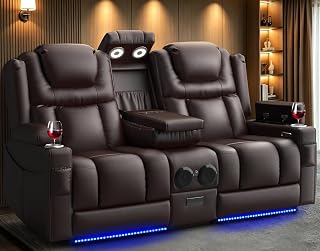
Watson & Whitely Genuine Leather Wall Hugger Power Recliner Loveseat
The standout for anyone who actually sleeps on their loveseat: genuine leather breathes far better than vinyl alternatives, and the adjustable power headrests allow proper cervical alignment instead of a forced forward head position. The wall-hugger mechanism and USB-C charging make it the most practical pick for tight rooms and RVs alike.
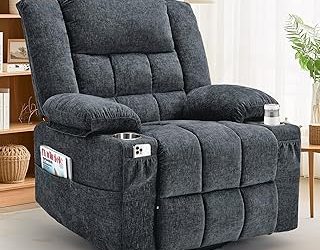
Reclining Massage Loveseat with Console and USB-C
Heavy-duty weight capacity and a genuinely useful console make this a strong all-rounder, and the massage function can help downshift the nervous system before rest. Use the lower vibration settings in the evening — intense massage is stimulating rather than sedating.
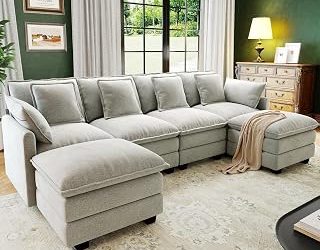
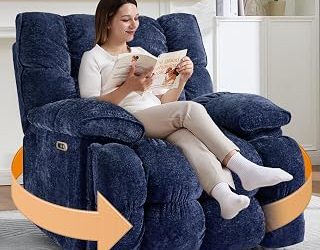
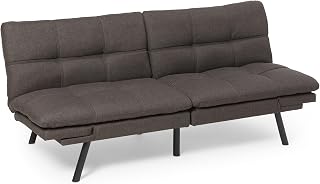
Extra Wide Overstuffed Fabric Dual Manual Recliner
The breathable woven fabric is the sleep-conscious choice here, wicking heat instead of trapping it, and the extra-wide seats give side sleepers room to curl. Manual levers mean nothing to wake a partner and nothing that can fail electrically.
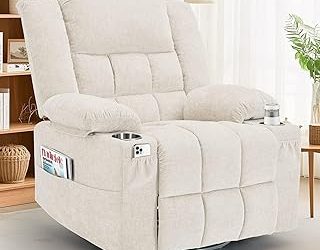
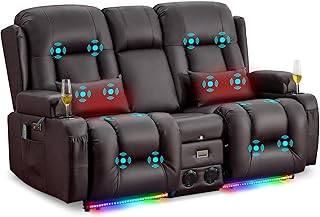
URRED Power Loveseat Recliner with Massage and Heat
The heat function is legitimately valuable for stiff lower backs and pre-sleep muscle release, and infinite power positioning helps you dial in a true reclined-rest angle. Just switch the LED lighting off after dark so it doesn’t interfere with melatonin production.
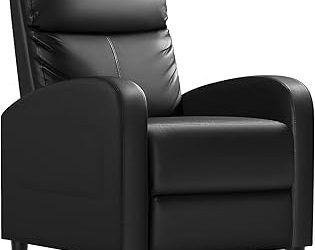
Faux Leather Manual Loveseat Recliner with Center Console
A sensible budget entry with hidden storage and cup holders, well suited to guest rooms and basements. The faux leather runs warm during long sessions, so pair it with a breathable throw if you plan to nap there regularly.
Frequently Asked Questions
Is sleeping in a recliner bad for you?
Occasional recliner sleep is fine, and for reflux, sleep apnea, congestion, or post-surgical recovery it can be better than lying flat. Problems arise from poor positioning — an unsupported neck or a seat too shallow to elevate the legs — rather than from reclining itself.
Power or manual for overnight comfort?
Power, if it fits the budget. Infinite adjustment lets you fine-tune position without getting up, which prevents the full waking that manual lever repositioning usually causes.
Do massage and heat functions actually improve sleep?
Indirectly. Gentle warmth and low-intensity vibration promote muscle relaxation and a calmer pre-sleep state, but both should be timed to switch off before you drift off rather than running through the night.
How much wall clearance is required?
Wall-hugger models generally need three to six inches; conventional mechanisms may need twelve or more. Always measure from the finished baseboard, not the drywall.
Final Thoughts
For rest-quality performance, the Watson & Whitely genuine leather power loveseat leads on breathability and adjustable headrest support, while the URRED power recliner with massage and heat is the best therapeutic option for stiff backs. If you prefer to stay cool and keep things mechanically simple, the extra-wide overstuffed fabric manual recliner remains the smartest value in the group.