Key takeaways
- Confirm the base before anything else: Ceiling fans use three common threads — E26 medium, E12 candelabra, and E17 intermediate — and they are not interchangeable. Unscrew one existing bulb and measure the threaded portion, or photograph it beside a tape measure, before ordering a six-pack you cannot use.
- Match color temperature to the room’s purpose: 5000K daylight reads crisp and energizing, which suits kitchens, laundry rooms, garages, and home offices. In bedrooms and lounge areas, 4000K or lower is kinder to your evening wind-down, and pairing any bright overhead with a warm 2700K lamp gives you a low-glare option after dark.
- Look for CRI 85 or higher: Color rendering index describes how faithfully a bulb reveals color. Below CRI 80, skin tones turn ashen and fabrics look muddy. CRI 85+ costs almost nothing extra and makes a genuine difference in how comfortable a room feels to sit in.
- Check dimmer compatibility honestly: Most ceiling fan bulbs in this category are non-dimmable. On a dimmer circuit they will flicker, hum, or fail early. If your fixture runs through a wall dimmer or a pull-chain multi-step switch, verify compatibility rather than assuming.
- Respect the shade size and fixture wattage: A15 and G14 shapes exist because standard A19 bulbs simply do not fit inside most fan glass. Choose the compact shape, keep total draw well under the fixture’s rating, and avoid enclosed-fixture heat buildup that shortens LED lifespan.
What's inside
Ceiling fan bulbs occupy a strange blind spot in home lighting. They sit directly overhead in the rooms where we wind down, yet most people buy them by base size alone — grabbing whatever fits the socket and hoping for the best. The result is a fixture that either buzzes faintly, throws a flat clinical wash across the ceiling, or takes a full second to wake up. From a sleep-wellness standpoint, that overhead position matters more than almost any other lamp in the house: light entering the upper visual field has an outsized influence on how alert the brain feels, which is exactly why a poorly chosen fan bulb can quietly work against your evening routine.
This guide approaches ceiling fan bulbs the way I approach any light source in a bedroom or living space — as part of a daily rhythm rather than a hardware spec. Below you will find the strongest picks for 2026 across the three base types that trip buyers up most (E26 medium, E12 candelabra, and E17 intermediate), plus guidance on color temperature, color rendering, vibration tolerance, and how to pair bright daylight bulbs with the rest of your lighting so your fan fixture works for you at 9 a.m. and at 9 p.m.
As an Amazon Associate we earn from qualifying purchases.


🛒 Best Price Today on Amazon
Prime members get fast, free shipping on everything above, plus member-only deals. New members get a 30-day free trial — cancel anytime.
How to Choose a Light Bulbs For Ceiling Fan (2026)
- Confirm the base before anything else: Ceiling fans use three common threads — E26 medium, E12 candelabra, and E17 intermediate — and they are not interchangeable. Unscrew one existing bulb and measure the threaded portion, or photograph it beside a tape measure, before ordering a six-pack you cannot use.
- Match color temperature to the room’s purpose: 5000K daylight reads crisp and energizing, which suits kitchens, laundry rooms, garages, and home offices. In bedrooms and lounge areas, 4000K or lower is kinder to your evening wind-down, and pairing any bright overhead with a warm 2700K lamp gives you a low-glare option after dark.
- Look for CRI 85 or higher: Color rendering index describes how faithfully a bulb reveals color. Below CRI 80, skin tones turn ashen and fabrics look muddy. CRI 85+ costs almost nothing extra and makes a genuine difference in how comfortable a room feels to sit in.
- Check dimmer compatibility honestly: Most ceiling fan bulbs in this category are non-dimmable. On a dimmer circuit they will flicker, hum, or fail early. If your fixture runs through a wall dimmer or a pull-chain multi-step switch, verify compatibility rather than assuming.
- Respect the shade size and fixture wattage: A15 and G14 shapes exist because standard A19 bulbs simply do not fit inside most fan glass. Choose the compact shape, keep total draw well under the fixture’s rating, and avoid enclosed-fixture heat buildup that shortens LED lifespan.
The Best Light Bulbs For Ceiling Fan (2026)s Reviewed
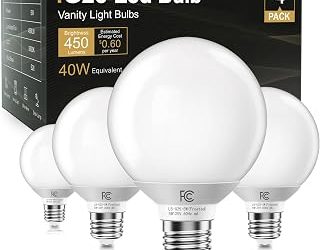
A15 LED E26 5000K Daylight, 6-Pack
A clean, no-nonsense E26 option that delivers 600 lumens on 6 watts with CRI 85+, so colors hold up under bright daylight output. The compact A15 envelope slips into tight fan shades where a standard A19 would bind, and instant-on behavior means no lag when you flip the switch.
Cotanic E26 4000K Natural Daylight, 6-Pack
My pick for bedrooms and living rooms, because 4000K sits in a genuinely comfortable middle ground — bright enough to feel awake under, without the blue-forward edge that 5000K brings into an evening space. Same 600-lumen output and CRI 85+ rendering, just a more livable tone overhead.
E12 LED Ceiling Fan Bulbs 5000K, 6-Pack
Older and mid-range fans very often use the narrow E12 candelabra thread, and this set covers it properly with a full 600 lumens rather than the dim 300-lumen output common to decorative candelabra bulbs. Eye-friendly CRI 85+ output and a low 6-watt draw make a four- or five-socket fan trivially cheap to run.
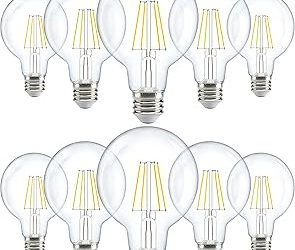
E17 Intermediate Base G14 Globe 5000K, 6-Pack
The E17 intermediate base is the one that sends most people back to the hardware store empty-handed, so it is worth keeping a spare pack on hand. The rounded G14 globe shape diffuses light more evenly than a bare A-shape, which softens the hard shadow lines that overhead fixtures tend to cast.
MAXvolador E12 5000K Candelabra, 6-Pack
A well-built E12 alternative from a brand with a solid track record in small-base LEDs, rated at 600 lumens with CRI 85+ and a sturdy housing that shrugs off the constant low-level vibration a spinning fan produces. Non-dimmable, so keep it on a plain switch.
Frequently Asked Questions
Are 5000K daylight bulbs a bad idea in a bedroom?
Not inherently, but they should not be your only option. Bright, cool light overhead in the hour before bed can delay the natural drop in alertness that precedes sleep. Keep the daylight bulbs for daytime tasks and add a warm bedside lamp you can switch to in the evening.
Why do my ceiling fan bulbs burn out so quickly?
Two usual culprits: vibration loosening the filament or driver contact, and heat trapped inside an enclosed glass shade. Quality LEDs solve the first problem; for the second, avoid overloading the fixture and choose low-wattage bulbs like these 6W models.
Can I mix color temperatures in the same fan?
I would not. Mismatched temperatures in a multi-socket fixture create a visibly uneven, slightly green-and-pink cast that most people find subtly unpleasant without knowing why. Replace all sockets at once — which is why six-packs make sense.
Will non-dimmable bulbs work with a pull-chain fan?
Standard on-off pull chains are fine. Some fans use a multi-step chain that reduces voltage rather than switching sockets, and those behave like dimmers — check your fan’s manual if the light currently has brightness levels.
Final Thoughts
For most standard fixtures, the A15 LED E26 5000K six-pack is the straightforward buy, and the Cotanic E26 4000K set is the one I would put in a bedroom or lounge where evening comfort matters as much as daytime brightness. If your fan takes the narrower candelabra thread, the MAXvolador E12 pack delivers full 600-lumen output with reliable build quality — and stocking a spare six-pack now saves you a frustrating trip later.