Key takeaways
- Motor type: DC motors draw roughly 60–70% less power than AC equivalents and, more importantly for sleep, run without the low-frequency electrical hum that AC windings produce at reduced speeds. If the fan will run all night in a bedroom, treat DC as a requirement rather than an upgrade.
- Light color temperature: Look for 3CCT switching (typically 3000K/4000K/5000K) or tunable white. A 2700–3000K setting in the evening keeps circadian signaling intact; reserve 5000K for daytime tasks. A single fixed 5000K panel in a bedroom is the most common mistake buyers make.
- Dimming floor: Stepless or deep dimming matters more than peak brightness. A fixture that only drops to 30% still functions as a light source at bedtime, while stepless models can act as a genuine wind-down glow or a safe path light for a 3 a.m. trip down the hall.
- Mounting height: Flush-mount or hugger designs suit ceilings under 8.5 feet and eliminate the pendulum wobble that downrods introduce. If you have 9 feet or more, a standard downrod mount improves circulation and keeps blades well clear of the sightline from bed.
- Control method and timers: A sleep timer that spins the fan down after 1–8 hours prevents the pre-dawn chill that wakes people at the end of a sleep cycle. App and voice control add convenience; memory function, which restores your last speed and light setting after a power blip, is the underrated feature here.
What's inside
Most people shopping for a bedroom ceiling fan are really shopping for better sleep, whether they realize it or not. Core body temperature has to drop roughly a degree for sleep to begin and stay consolidated, and a stagnant 74-degree bedroom actively fights that process. But the fix has a catch: the same fan that moves air also introduces a mechanical hum, a wobble you notice at 2 a.m., and — increasingly — a bright LED panel throwing blue-tinted light across the room right when melatonin should be ramping up. A 42-inch fan is the sweet spot for the 10×12 to 12×14 rooms most bedrooms fall into, but the wrong 42-inch fan can undo the benefit it was bought for.
This guide evaluates 42-inch ceiling fans with integrated lighting through a sleep-quality lens alongside the usual airflow and installation criteria. I’ve focused on motor acoustics, color-temperature control, low-end dimming behavior, and how each fan handles the low-and-slow overnight speeds that matter far more than maximum output. Below you’ll find current standouts, a short buying framework, and answers to the questions that come up most often once the box is open.
As an Amazon Associate we earn from qualifying purchases.




🛒 Best Price Today on Amazon
Prime members get fast, free shipping on everything above, plus member-only deals. New members get a 30-day free trial — cancel anytime.
How to Choose a 42-Inch Ceiling Fan With Light (2026)
- Motor type: DC motors draw roughly 60–70% less power than AC equivalents and, more importantly for sleep, run without the low-frequency electrical hum that AC windings produce at reduced speeds. If the fan will run all night in a bedroom, treat DC as a requirement rather than an upgrade.
- Light color temperature: Look for 3CCT switching (typically 3000K/4000K/5000K) or tunable white. A 2700–3000K setting in the evening keeps circadian signaling intact; reserve 5000K for daytime tasks. A single fixed 5000K panel in a bedroom is the most common mistake buyers make.
- Dimming floor: Stepless or deep dimming matters more than peak brightness. A fixture that only drops to 30% still functions as a light source at bedtime, while stepless models can act as a genuine wind-down glow or a safe path light for a 3 a.m. trip down the hall.
- Mounting height: Flush-mount or hugger designs suit ceilings under 8.5 feet and eliminate the pendulum wobble that downrods introduce. If you have 9 feet or more, a standard downrod mount improves circulation and keeps blades well clear of the sightline from bed.
- Control method and timers: A sleep timer that spins the fan down after 1–8 hours prevents the pre-dawn chill that wakes people at the end of a sleep cycle. App and voice control add convenience; memory function, which restores your last speed and light setting after a power blip, is the underrated feature here.
The Best 42-Inch Ceiling Fans With Lights, Reviewed (2026)
42-Inch Reversible DC Ceiling Fan, 3CCT Dimmable with Timer
This is the most complete sleep-oriented package in the group: a genuinely quiet reversible DC motor, three-step color temperature so you can drop to warm white after dark, and a built-in timer for overnight spin-down. ETL listing for damp locations also makes it viable on a covered porch or sunroom.
Fanbulous 42-Inch Low Profile Fan with App & Remote
The stepless LED dimming is the standout — it fades to a low amber-adjacent glow rather than clunking down in fixed steps, which is exactly what you want in the last hour before bed. Flush mounting plus memory function makes it a strong fit for low-ceilinged bedrooms where you don’t want to reprogram settings after every outage.
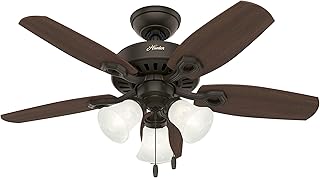
Hunter Builder 42-Inch LED Fan, New Bronze
The traditionalist’s pick and the one I recommend to renters and anyone wary of electronics: a proven AC motor, five blades, pull chains, and included bulbs, with Hunter’s warranty behind it. You give up the timer, remote, and color tuning, so pair it with a warm smart bulb if the room is used for sleeping.
Sofucor 42-Inch Smart Ceiling Fan, 5 ABS Blades
Alexa and Google Assistant support means you can automate the fan into a bedtime routine — lights warm and dim, fan drops to speed two — without ever reaching for a remote. Six DC speeds give you fine control at the low end, where most fans are either too still or too breezy.
42-Inch Flush Mount Fan, 3CCT with 6 Speeds
A well-balanced hugger that combines the two features I care most about — 3CCT color switching and a six-speed noiseless DC motor — in a clean white profile that disappears into most ceilings. The indoor/outdoor ETL rating adds flexibility if you’re outfitting a patio at the same time.
Frequently Asked Questions
Is a 42-inch fan big enough for my bedroom?
Yes, for rooms up to roughly 144 square feet. Above that, airflow at the corners falls off and you’ll be tempted to run the fan faster than is comfortable — step up to 52 inches instead of overdriving a smaller blade span.
Should the fan run clockwise or counterclockwise for sleep?
Counterclockwise (viewed from below) in warm months, which pushes air down and creates the cooling wind-chill effect that helps core temperature drop. Reverse it to clockwise in winter to redistribute warm air from the ceiling without a direct draft on the bed.
Does sleeping with a ceiling fan on cause problems?
For most people, no — the white noise and air movement are net positives. If you wake with a dry throat, stiff neck, or aggravated allergies, aim the airflow away from the bed’s head, run a lower speed, and vacuum the blades monthly since they collect dust that gets recirculated.
Can I install a flush-mount fan myself?
If there’s an existing fan-rated electrical box in the ceiling, most homeowners can manage it in an hour or two. A standard light-only box is not rated for the dynamic load of a spinning fan, so that job needs an electrician.
Final Thoughts
For a bedroom where sleep quality is the priority, the 42-Inch Reversible DC fan with 3CCT and a timer covers every base that matters, and the Fanbulous low-profile model is the better choice if deep stepless dimming and a tight ceiling clearance are your constraints. If you’d rather have mechanical simplicity and a long warranty than app control, the Hunter Builder remains the dependable classic.