Key takeaways
- Frame species and grade: FAS-grade oak and solid rubberwood are the honest performers at this capacity. Both resist the seasonal shrink-and-swell cycle that loosens joints, which is what actually kills a chair long before the wood itself fails.
- Joinery over hardware: Mortise-and-tenon or dowelled corner blocks distribute load into the wood; chairs held together by four long bolts concentrate it into four small points. Ask what happens at the seat-to-leg junction, because that is where 400 lb ratings are won or lost.
- Back geometry, not back height: A curved back that meets you around the lower ribs supports the pelvis and lets the spine stack naturally. A tall, flat back looks substantial and encourages slumping — the posture most likely to leave you stiff by bedtime.
- Seat depth and edge shape: Look for 17 inches or more of usable depth with a softened front edge. A shallow seat with a hard lip compresses the back of the thigh and restricts circulation, which is the single most common reason people cut a meal short and start fidgeting.
- Cushion recovery: High-density foam should rebound within a second or two of standing. Anything that holds a visible dent will bottom out within a year, at which point you are effectively sitting on plywood with fabric over it.
What's inside
Most people shopping for heavy-duty dining chairs are not chasing a design trend — they are quietly tired of a small daily indignity. The creak on sitting down. The wobble that appears three months in. The stretcher rail that separates from the leg and gets “fixed” with a bracket from the garage. When a chair cannot honestly carry the person sitting in it, the body compensates: you perch forward, brace with your thighs, keep your core half-engaged through the whole meal. As someone who spends most of my working life on sleep quality, I notice what that does downstream. A guarded, half-braced evening meal is a poor handoff into the wind-down hours, and low-grade lumbar tension at 7 p.m. has a way of reappearing at 2 a.m. as restlessness you blame on the mattress.
This guide looks at dining chairs rated to a genuine 400 lb capacity — the point where hardwood frames, properly seated joinery, and real seat depth stop being marketing language and start being engineering. I have prioritized frame material, back geometry, and how a chair behaves after a long sit rather than after a five-minute showroom test. Below you will find selection criteria worth memorizing, reviews of the strongest current sets, and answers to the questions that come up most often once the boxes arrive.
As an Amazon Associate we earn from qualifying purchases.



🛒 Best Price Today on Amazon
Prime members get fast, free shipping on everything above, plus member-only deals. New members get a 30-day free trial — cancel anytime.
How to Choose a/an Heavy Duty Dining Room Chairs 400 Lbs (2026)
- Frame species and grade: FAS-grade oak and solid rubberwood are the honest performers at this capacity. Both resist the seasonal shrink-and-swell cycle that loosens joints, which is what actually kills a chair long before the wood itself fails.
- Joinery over hardware: Mortise-and-tenon or dowelled corner blocks distribute load into the wood; chairs held together by four long bolts concentrate it into four small points. Ask what happens at the seat-to-leg junction, because that is where 400 lb ratings are won or lost.
- Back geometry, not back height: A curved back that meets you around the lower ribs supports the pelvis and lets the spine stack naturally. A tall, flat back looks substantial and encourages slumping — the posture most likely to leave you stiff by bedtime.
- Seat depth and edge shape: Look for 17 inches or more of usable depth with a softened front edge. A shallow seat with a hard lip compresses the back of the thigh and restricts circulation, which is the single most common reason people cut a meal short and start fidgeting.
- Cushion recovery: High-density foam should rebound within a second or two of standing. Anything that holds a visible dent will bottom out within a year, at which point you are effectively sitting on plywood with fabric over it.
The Best Heavy Duty Dining Room Chairs 400 Lbs (2026)s Reviewed
Mid Century Modern Walnut Dining Chairs, Set of 4
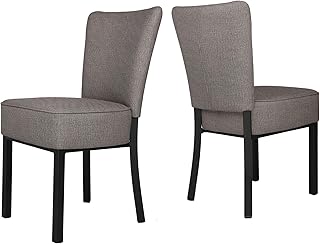
FAS-grade oak with a solid curved back and a smoked brown upholstered seat — the rare set where commercial-grade construction is not visually obvious. The back curvature is the standout feature here: it does the postural work for you, so a two-hour dinner ends without the lower-back tightness that follows you upstairs.
POWERSTONE Wood Dining Chairs, Set of 4
A solid rubberwood frame and high back make these the most reassuring chairs on the list for anyone who has broken a dining chair before. Rubberwood’s dimensional stability means the joints stay tight through humid summers and dry winters, and the taller back suits larger frames without feeling institutional.
Solid Oak Wood Dining Chairs, Set of 6
The best value for a full table, and a natural finish that lets the oak grain do the decorating. Assembly is genuinely straightforward, but tighten the stretchers in stages rather than one at a time — even the best joinery seats poorly if you torque one corner fully before the others.
Black Patterned Dining Chairs, Set of 4
Fabric upholstery, nailhead trim, and solid wood legs give these a farmhouse look that outperforms its price bracket. The high back is more upright than sculpted, so they reward good posture rather than correcting poor posture — an excellent fit for shorter, more formal meals.
RNKSFX Upholstered Dining Chairs, Set of 6
Oversized, rounded, and finished in a blue upholstery that reads as intentional rather than safe, on walnut wood legs. The generous seat and curved back make this the most forgiving set here for long, lingering dinners where nobody is in a rush to stand up.
Frequently Asked Questions
Is a 400 lb rating a real number or marketing?
It is meaningful when paired with a stated frame material and commercial-grade claim, as with the FAS-grade oak and rubberwood sets above. Treat an unsupported capacity figure on an unspecified “wood” frame with skepticism.
Does dining chair comfort really affect sleep?
Indirectly but consistently. Sustained postural tension raises muscular tone and sympathetic arousal in the evening, and the body does not shed that state instantly at lights-out. Comfortable, well-supported evening sitting is a small, cheap contributor to easier sleep onset.
Should I buy upholstered or bare wood at this capacity?
Upholstered, if you sit for more than half an hour at a time — pressure distribution matters more than surface hardness for circulation. Choose bare oak for durability, spill resistance, and homes with pets.
How often should heavy-duty chairs be retightened?
Check every fastener at six months, then annually. Ten minutes with the supplied hex key prevents the slow joint loosening that turns a 400 lb chair into a 200 lb chair.
Final Thoughts
If you want one set to stop thinking about, the Mid Century Modern Walnut chairs in FAS-grade oak offer the best combination of true load capacity and genuinely supportive back curvature. For six-seat tables, the Solid Oak Set of 6 is the value benchmark, while the RNKSFX Set of 6 is the one to choose if long, unhurried dinners are the point — and if you would rather end those dinners relaxed than relieved.