Key takeaways
- Film vs. penetrating: Polyurethane builds a plastic layer on top of the wood and wins on spill and heat resistance. Oils soak in, leave the grain feeling like wood, and repair invisibly — but they need reapplication and won’t shrug off a puddle of olive oil.
- Water-based vs. oil-based: Water-based formulas dry in hours, stay crystal clear, and produce far less odor. Oil-based versions add warm amber depth and slightly better abrasion resistance, at the cost of longer cure times and heavier fumes.
- Sheen honesty: Semi-gloss is the sweet spot for dining tables — enough sheen to wipe clean easily, matte enough to hide the fine scratches that gloss magnifies under a pendant light.
- Food contact and kids: If the table doubles as a prep surface or a toddler’s chewing target, pure tung oil and hardwax-style finishes are the safest bet once fully cured. Check that the product is genuinely 100% tung oil, not a “tung oil finish” blend.
- Repairability: Ask yourself what happens in year four. Oiled tops can be spot-sanded and re-oiled in twenty minutes. A damaged polyurethane film usually means sanding the entire top back and starting over.
What's inside
A dining table lives a harder life than almost any other piece of furniture in the house. It absorbs spilled wine and hot casserole dishes, gets scrubbed nightly, and sits under a window that bleaches one end of it a shade lighter every summer. Most people don’t start researching finishes until something has already gone wrong — a white ring from a sweating glass, a cloudy haze where a cleaner stripped the topcoat, or a tabletop that suddenly feels tacky in humid weather. By then the question isn’t just “what looks good,” it’s “what will actually survive.”
The other thing buyers rarely factor in: a dining table is a large surface curing inside your living space, often a room that connects to bedrooms. Solvent-heavy finishes can off-gas for days, and that lingering odor is a genuine consideration if you’re sensitive to air quality or sleep nearby. This guide sorts the realistic options into three camps — penetrating oils, film-forming polyurethanes, and maintenance products — explains where each one belongs, and flags which ones you can apply on a Saturday without evacuating the house.
As an Amazon Associate we earn from qualifying purchases.


🛒 Best Price Today on Amazon
Prime members get fast, free shipping on everything above, plus member-only deals. New members get a 30-day free trial — cancel anytime.
How to Choose a Finish For Wood Dining Table (2026)
- Film vs. penetrating: Polyurethane builds a plastic layer on top of the wood and wins on spill and heat resistance. Oils soak in, leave the grain feeling like wood, and repair invisibly — but they need reapplication and won’t shrug off a puddle of olive oil.
- Water-based vs. oil-based: Water-based formulas dry in hours, stay crystal clear, and produce far less odor. Oil-based versions add warm amber depth and slightly better abrasion resistance, at the cost of longer cure times and heavier fumes.
- Sheen honesty: Semi-gloss is the sweet spot for dining tables — enough sheen to wipe clean easily, matte enough to hide the fine scratches that gloss magnifies under a pendant light.
- Food contact and kids: If the table doubles as a prep surface or a toddler’s chewing target, pure tung oil and hardwax-style finishes are the safest bet once fully cured. Check that the product is genuinely 100% tung oil, not a “tung oil finish” blend.
- Repairability: Ask yourself what happens in year four. Oiled tops can be spot-sanded and re-oiled in twenty minutes. A damaged polyurethane film usually means sanding the entire top back and starting over.
The Best Finishes for a Wood Dining Table (2026), Reviewed
100% Pure Tung Oil, 64 oz
This is the choice for anyone who wants a table that feels like timber rather than glass, and the food-grade credentials make it ideal for tops that see cutting boards and bare hands. Budget several thin coats over a couple of weeks — thick applications stay gummy — and expect to refresh high-traffic zones annually.
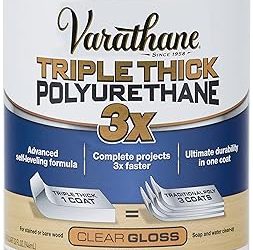
Varathane Triple Thick Polyurethane, Semi-Gloss
One coat here does the work of roughly three ordinary coats, and the self-leveling formula largely eliminates the brush marks that plague dining table refinishes. It’s the most forgiving option for a first-time DIYer who wants near-bulletproof protection on a heavily used surface.
Varathane Water-Based Ultimate Polyurethane, Semi-Gloss
My default recommendation for tables finished indoors: it stays genuinely clear over pale woods like maple and ash, recoats in a few hours, and the low odor means you can finish a top in the dining room without the smell reaching the bedrooms overnight. A quart covers most six-seaters with room for three coats.
Varathane Total Control Gel Stain, Dark Walnut
Gel stain is the tool for problem wood — blotchy pine, existing sealed finishes, or table legs and aprons where liquid stain runs. The thick water-based body sits where you put it, builds color in controllable passes, and won’t fill the room with solvent fumes.
Howard Feed-N-Wax Beeswax Polish & Conditioner
Not a finish in its own right, but the best maintenance layer for oiled or previously waxed tables, feeding the surface and reviving dulled areas in minutes. Use it as upkeep, never as protection on raw wood.
Frequently Asked Questions
How long before I can eat off a newly finished table?
Dry to the touch is not cured. Water-based polyurethane needs about a week before heavy use; oil-based and tung oil need two to four weeks to fully harden and stop smelling.
Will polyurethane handle hot dishes?
It resists warm plates but not cookware straight from the oven, which can soften and imprint the film. Trivets remain non-negotiable with any finish.
How do I clean a finished dining table?
Damp cloth and a mild, silicone-free cleaner such as Guardsman Clean & Polish. Avoid silicone sprays — they build haze and sabotage any future recoating.
Can I put polyurethane over an oiled table?
Only after the oil has cured for several weeks and the surface has been scuff-sanded, and water-based products are especially unreliable over oil. Testing an underside area first is worth the ten minutes.
Final Thoughts
For most households, Varathane Water-Based Ultimate Semi-Gloss delivers the best balance of durability, clarity, and low-odor application, with Triple Thick Polyurethane the faster route to a heavy-duty film. If you’d rather have a warm, tactile, endlessly repairable surface — and don’t mind annual upkeep with Howard Feed-N-Wax — 100% pure tung oil is the finish that ages most gracefully.