Key takeaways
- Measure the walkable channel, not the wall: Leave 4–6 inches of bare floor on each long side so the runner reads as intentional, and stop the runner short of any door swing. Note doorway thresholds and radiator feet before committing to a length.
- Prioritise low pile for night-time safety: A pile under roughly a quarter-inch won’t catch a sleepy toe or a walker wheel. Thick shag looks plush in photos but becomes a trip hazard in the dark and traps far more debris.
- Insist on machine washability: Hallways collect the most soil per square foot of anywhere in the house. A runner you can fold into a domestic machine gets cleaned monthly; one that needs professional treatment gets cleaned never.
- Interrogate the backing: Bonded rubber or a dense TPR grid grips without adhesive residue. Sparse dot-printed latex loosens after a few washes — plan on a separate breathable underlay if you have polished hardwood or underfloor heating.
- Think about acoustics and glare: Denser flat-weaves absorb impact noise outside bedroom doors, and matte, mid-tone colours scatter light rather than bouncing hall lamps into someone’s eyes on a night-time crossing.
What's inside
Hallways are the connective tissue of a home, and they are also where sleep quietly goes wrong. As a sleep-wellness practitioner, I spend a surprising amount of my consultation time talking about corridors: the 2 a.m. trip to the bathroom on cold laminate, the creak of a floorboard outside a nursery door, the partner leaving for an early shift while everyone else is still in slow-wave sleep. Bare hallway flooring amplifies footfall into a percussive event, and that sound travels straight through hollow-core bedroom doors. Buyers usually shop for a runner because their entryway looks unfinished, then discover the harder problems: the length never matches the corridor, the backing slides underfoot, and within a season the traffic lane is grey with tracked-in grit.
This guide approaches hallway runners the way I’d approach any bedroom-adjacent surface — as acoustic and sensory infrastructure first, decor second. Below you’ll find the options I’d shortlist for real corridors in 2026, from awkward 14-foot galleys to 20-foot upstairs landings, with an emphasis on washability, low-profile safety, and genuine footstep dampening. I’ve flagged which pick suits which layout, what to measure before you order, and where a cheap rubber backing will cost you more than it saves.
As an Amazon Associate we earn from qualifying purchases.



🛒 Best Price Today on Amazon
Prime members get fast, free shipping on everything above, plus member-only deals. New members get a 30-day free trial — cancel anytime.
How to Choose a/an Hallway Runner (2026)
- Measure the walkable channel, not the wall: Leave 4–6 inches of bare floor on each long side so the runner reads as intentional, and stop the runner short of any door swing. Note doorway thresholds and radiator feet before committing to a length.
- Prioritise low pile for night-time safety: A pile under roughly a quarter-inch won’t catch a sleepy toe or a walker wheel. Thick shag looks plush in photos but becomes a trip hazard in the dark and traps far more debris.
- Insist on machine washability: Hallways collect the most soil per square foot of anywhere in the house. A runner you can fold into a domestic machine gets cleaned monthly; one that needs professional treatment gets cleaned never.
- Interrogate the backing: Bonded rubber or a dense TPR grid grips without adhesive residue. Sparse dot-printed latex loosens after a few washes — plan on a separate breathable underlay if you have polished hardwood or underfloor heating.
- Think about acoustics and glare: Denser flat-weaves absorb impact noise outside bedroom doors, and matte, mid-tone colours scatter light rather than bouncing hall lamps into someone’s eyes on a night-time crossing.
The Best Hallway Runner (2026)s Reviewed
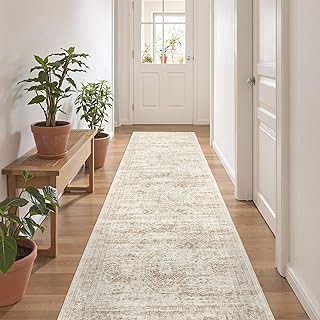
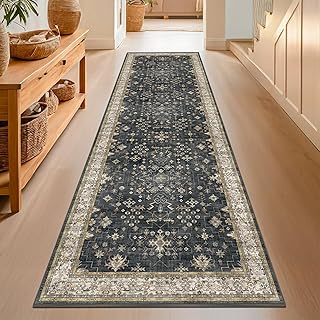
Hallway Washable Runner Rug 2’6″x14′ (Beige)
The 14-foot length solves the classic problem of a long galley hallway that two stacked 6-foot runners never quite cover, and the soft vintage pattern hides tracked-in grit between washes. At 2’6″ wide it suits narrow corridors where a full 3-foot runner would crowd the skirting.
2×8 Washable Runner Rug, Beige
My default recommendation for a short landing or the stretch between bedroom and bathroom: thin enough to sit under a door with no clearance issues, and neutral enough to disappear rather than draw the eye at night. Stain resistance here is genuinely useful in an entry zone.
Madane 3×10 Washable Runner (Beige/Blue)
The wide 3-foot cut and low-pile farmhouse weave give this one the best footfall dampening of the group, which matters if the corridor runs past a nursery. The blue-and-beige palette is muted enough to stay restful under warm hall lighting.
3×20 ft Long Hallway Runner (Cream/Beige)
For genuinely long upstairs corridors, a single 20-foot run beats chaining shorter pieces — no mid-hall seams to curl or shift when someone hurries past. Confirm your washing machine capacity first, as a runner this size is a laundromat job.
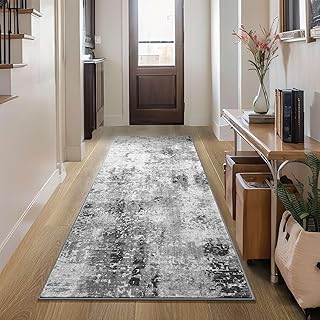
Dark Washable Runner 2’6″x8′ (Ashen/Multi)
The darker boho colourway is the pragmatic choice for households with pets, muddy boots, or a side door that doubles as the main entrance. Rubber backing keeps it planted on tile, and the tone reduces the visual glare of a bright hall.
Frequently Asked Questions
Will a hallway runner actually reduce noise outside bedrooms?
Meaningfully, yes — for impact noise. A flat-weave runner with rubber backing softens the sharp transient of a heel strike, which is the frequency most likely to pull a light sleeper out of a sleep cycle. It won’t block conversation through a door.
What length should I buy for an awkward corridor?
Measure end to end, subtract any door swing arcs, then choose the nearest size below that figure. Ending 6–12 inches short of a threshold looks deliberate; a runner that buckles against a doorframe does not.
Do washable runners survive repeated laundering?
Low-pile washable constructions handle cold, gentle cycles well. Skip fabric softener, which coats fibres and degrades grip, and air-dry flat rather than tumbling on high heat to protect the backing.
Do I still need a rug pad?
On hardwood, I’d add a thin breathable pad even with rubber backing — it prevents plasticiser transfer to the finish and adds a small amount of extra sound absorption.
Final Thoughts
For most homes, the Madane 3×10 is the best all-round pick, pairing genuine footstep dampening with a restful palette; the 2’6″x14′ washable runner is the smarter buy for narrow galley hallways, and the 3×20 cream runner is the only sensible option for a long upstairs landing you’d rather cover in one continuous piece.