Key takeaways
- Match size to purpose: A 50″x60″ throw is right for a sofa, a reading chair, or draping over your lap at a desk. If you want genuine bed coverage, step up to a full-size 72″x84″ model — a throw on a bed leaves cold gaps at the shoulders and edges, which defeats the point.
- Prioritize heat-level resolution: Ten heat levels sound like overkill until you realize the difference between “pleasant” and “sweating” on a cheap five-level controller is one click. More increments let you find the setting that warms your skin without raising core temperature, which is the setting that actually helps you sleep.
- Insist on a real auto-off timer: Look for staged options (1/2/4/6/8 hours, or up to 10–12) rather than a single fixed shutoff. Ideally you want warmth for the first 30–60 minutes as you fall asleep, then a cooling bed — sustained heat overnight fragments sleep and dries out your airway.
- Confirm ETL or UL certification plus overheat protection: This is non-negotiable. Certification means the wiring, controller, and thermal cutoffs were tested by an independent lab. Skip any listing that’s vague about it, regardless of price.
- Check washability and cord length: Detachable controller and machine-washable construction will determine whether you still own this blanket in three years. And measure the distance to your outlet — an 8+ foot cord is the difference between using it nightly and resenting it.
What's inside
Cold feet at 11 p.m. are more than an annoyance — they’re a genuine obstacle to falling asleep. Your body initiates sleep by shedding core heat through the hands and feet, and that process stalls when your extremities are constricted from the cold. So people crank the thermostat, which warms the room but keeps the core too warm to drift off, or they pile on quilts that trap heat unevenly and get kicked off by 2 a.m. Meanwhile the electric bill climbs and the sleep quality doesn’t.
A well-chosen heated blanket solves this more elegantly and for a fraction of the running cost: warm the surface touching your skin, let the room stay cool, and let your body do the rest. The catch is that the budget end of this category is crowded with near-identical listings, and the differences that matter — timer granularity, heat-level resolution, safety certification, whether the thing survives a wash — aren’t obvious from the thumbnails. Below are the best-value heated blankets and throws for 2026, assessed the way I’d assess them for a client: on thermal behavior, controller design, and real-world durability rather than on marketing copy.
As an Amazon Associate we earn from qualifying purchases.



🛒 Best Price Today on Amazon
Prime members get fast, free shipping on everything above, plus member-only deals. New members get a 30-day free trial — cancel anytime.
How to Choose a Heated Blanket (2026)
- Match size to purpose: A 50″x60″ throw is right for a sofa, a reading chair, or draping over your lap at a desk. If you want genuine bed coverage, step up to a full-size 72″x84″ model — a throw on a bed leaves cold gaps at the shoulders and edges, which defeats the point.
- Prioritize heat-level resolution: Ten heat levels sound like overkill until you realize the difference between “pleasant” and “sweating” on a cheap five-level controller is one click. More increments let you find the setting that warms your skin without raising core temperature, which is the setting that actually helps you sleep.
- Insist on a real auto-off timer: Look for staged options (1/2/4/6/8 hours, or up to 10–12) rather than a single fixed shutoff. Ideally you want warmth for the first 30–60 minutes as you fall asleep, then a cooling bed — sustained heat overnight fragments sleep and dries out your airway.
- Confirm ETL or UL certification plus overheat protection: This is non-negotiable. Certification means the wiring, controller, and thermal cutoffs were tested by an independent lab. Skip any listing that’s vague about it, regardless of price.
- Check washability and cord length: Detachable controller and machine-washable construction will determine whether you still own this blanket in three years. And measure the distance to your outlet — an 8+ foot cord is the difference between using it nightly and resenting it.
The Best Value Heated Blankets (2026) Reviewed
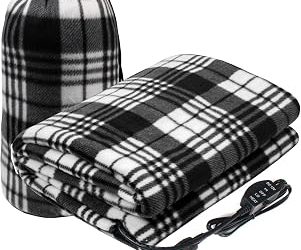
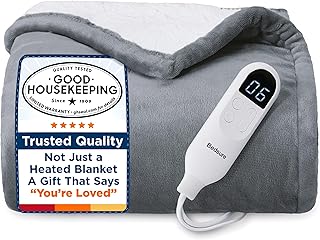
Bedsure Heated Throw with Preheat Function
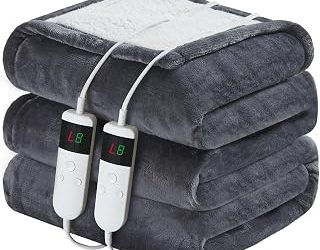
The preheat feature is the standout here: it drives the blanket to temperature quickly so you’re not lying under something lukewarm waiting for it to catch up. With six heat levels and six timer settings up to ten hours, it’s the most flexible controller in this price bracket, and the flannel face is soft enough to use without a top sheet.
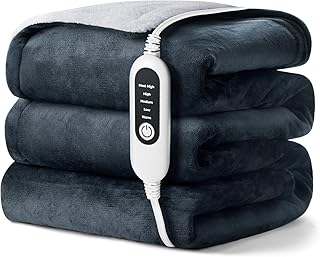
Homemate Heated Electric Throw (Flannel Sherpa)
Ten heat levels and staged 2/4/6/8-hour shutoffs give you unusually fine control for the money, and the flannel-and-sherpa build holds warmth well between heating cycles. ETL certification and overheat protection are both present, making this the sensible default pick for desk, sofa, or a cold guest room.
Wapaneus Heated Blanket, Full 72″ x 84″
This is the one to buy if you want your actual bed covered rather than your lap — full-size coverage eliminates the cold shoulder gap that throws create. The 12-hour timer range and ten heat levels mean cold sleepers and couples with different thermal preferences can both find a workable setting.
Heated Throw Blanket, 5 Heat Settings & 3-Hour Timer
A pared-back option with rapid heating, a generous 8.5-foot cord, and a soft flannel-sherpa pairing. The three-hour maximum timer is arguably a feature rather than a limitation: it enforces the taper-off pattern that supports better sleep architecture.
Electric Heated Blanket with Double-Sided Heating
Double-sided heating distributes warmth more evenly than single-face designs, which is useful if you tend to cocoon or fold the blanket over. Five temperature levels, machine-washable fabric, and ETL certification cover the essentials without inflating the price.
Frequently Asked Questions
Is it safe to sleep with a heated blanket on all night?
Better practice is to use the timer. Warm the bed for 30–60 minutes before and after lights-out, then let it shut off — your body needs to cool by roughly one to two degrees to reach deep sleep, and continuous heat interferes with that.
How much does a heated blanket cost to run?
Most throws in this range draw well under 100 watts, so a few hours of nightly use typically costs pennies. Heating your body instead of your house is almost always the cheaper path.
Can heated blankets be washed?
Most of these are machine washable — but unplug and detach the controller first, wash cold on a gentle cycle, and air dry. Never dry clean, wring, or iron a heated blanket.
Who should avoid using one?
Anyone with reduced sensation in the skin — including people with diabetic neuropathy — plus infants, and anyone unable to operate the controls independently. If you’re pregnant or have an implanted medical device, check with your clinician first.
Final Thoughts
For most buyers, the Bedsure Heated Throw with Preheat offers the best blend of fast warm-up and timer flexibility, while the Homemate Flannel Sherpa Throw delivers the finest temperature control for the price. If you want full bed coverage rather than a lap throw, go straight to the Wapaneus Full-Size Heated Blanket — and whichever you pick, set the timer rather than the thermostat.