Key takeaways
- Depth before width: Measure your hallway and subtract at least 36 inches for walking clearance. Anything deeper than 12 inches in a narrow corridor turns into a hip-bruiser you’ll resent within a week — the 9 to 10 inch tables exist for a reason.
- One drawer per habit: Open shelves invite visual clutter; closed drawers hide it. Decide what actually needs concealing (cables, keys, dog leads, medication) and buy that many drawers rather than defaulting to maximum storage.
- Height at 29 to 32 inches: This range lets you set things down without bending, which matters more than it sounds when you’re carrying groceries or coming home exhausted. Below 28 inches and you’ll stoop; above 33 and it reads as a bar.
- Lamp-ready surface: Look for a top thick and stable enough to carry a warm, low-wattage table lamp. A single 2700K bulb near the door means you can navigate your home at night without triggering the bright overhead light that suppresses melatonin.
- Assembly and anchoring: Check whether the design uses a full back panel or cross-bracing. Narrow, tall consoles are tip-prone, so confirm the kit includes an anti-tip strap — non-negotiable if children or large dogs live with you.
What's inside
Most people think of their bedroom as the only room that affects how they sleep. In practice, the wind-down process starts the moment you walk through the front door. Sleep researchers talk about “zeitgebers” — the environmental cues that tell your body where it is in the 24-hour cycle — and the entryway is the first one you meet each evening. If that first cue is a pile of mail, a tangle of chargers, and keys you have to hunt for at 6:45 in the morning, you are effectively starting and ending every day in a low-grade state of alert. Cortisol does not care that the mess is small.
A good entryway table solves a surprisingly specific problem: it gives the day a physical endpoint. Phone goes in the bowl, bag goes on the shelf, shoes go underneath, and the transition from “on” to “off” begins somewhere other than your mattress. This guide looks at the console tables I’d actually recommend for that job in 2026 — sized honestly, built to hold weight without wobbling, and designed so the surface stays clear instead of becoming a shelf for tomorrow’s stress. Below you’ll find current picks, followed by a sizing framework, reviews, and answers to the questions I get asked most.
As an Amazon Associate we earn from qualifying purchases.



🛒 Best Price Today on Amazon
Prime members get fast, free shipping on everything above, plus member-only deals. New members get a 30-day free trial — cancel anytime.
How to Choose an Entryway Table (2026)
- Depth before width: Measure your hallway and subtract at least 36 inches for walking clearance. Anything deeper than 12 inches in a narrow corridor turns into a hip-bruiser you’ll resent within a week — the 9 to 10 inch tables exist for a reason.
- One drawer per habit: Open shelves invite visual clutter; closed drawers hide it. Decide what actually needs concealing (cables, keys, dog leads, medication) and buy that many drawers rather than defaulting to maximum storage.
- Height at 29 to 32 inches: This range lets you set things down without bending, which matters more than it sounds when you’re carrying groceries or coming home exhausted. Below 28 inches and you’ll stoop; above 33 and it reads as a bar.
- Lamp-ready surface: Look for a top thick and stable enough to carry a warm, low-wattage table lamp. A single 2700K bulb near the door means you can navigate your home at night without triggering the bright overhead light that suppresses melatonin.
- Assembly and anchoring: Check whether the design uses a full back panel or cross-bracing. Narrow, tall consoles are tip-prone, so confirm the kit includes an anti-tip strap — non-negotiable if children or large dogs live with you.
The Best Entryway Tables of 2026, Reviewed
Huuger 47.2″ Industrial Console Table
The O-shaped frame and open shelving make this the most practical pick for households with a genuine drop-zone problem: baskets fit underneath, shoes go on the lower tier, and the surface stays free. At just under four feet it suits a standard hallway without dominating it.
Tribesigns Modern Console with Geometric Base
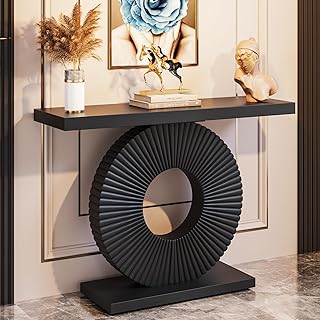
A 40-inch footprint and sculptural black base make this the choice for smaller entries where the table needs to look intentional rather than functional. The single-surface design enforces discipline — there is nowhere to hide clutter, which some people find genuinely helpful.
Tribesigns 63″ Long Console Table
The wood-grain rectangular top is the most versatile format here, working equally well against an entry wall or behind a sofa in an open-plan space. Its length comfortably accommodates a lamp at one end and a tray for daily carry items at the other.
VASAGLE Thick-Top Farmhouse Console
The standout feature is the substantial tabletop, which feels considerably more solid underhand than the thin panels common at this price. In honey brown it reads warm rather than stark — a small thing that matters in a space you pass through when winding down.
VASAGLE LIRY Narrow Console with 3 Drawers
At 9.4 inches deep and 63 inches long, this is the specialist solution for tight corridors, and the three drawers make it my top recommendation for anyone whose entryway chaos is primarily small-object chaos. Keys, cables, and sunglasses each get a home.
Frequently Asked Questions
Can an entryway table really affect my sleep?
Not directly, but indirectly and measurably. Reducing the number of unresolved small tasks you encounter in the evening lowers pre-sleep cognitive arousal, which is one of the better-documented contributors to difficulty falling asleep.
What depth works in a narrow hallway?
Aim for 9 to 12 inches and keep a minimum 36-inch walking path. The VASAGLE LIRY at 9.4 inches is about as slim as a functional console gets.
Should I put a lamp on it?
Yes, ideally a warm dimmable one. A low-level light source near the door lets you avoid harsh overhead lighting during late-evening and overnight trips through the house.
Do these require anchoring to the wall?
Any narrow console taller than it is deep should be strapped, particularly the longer models. It takes ten minutes and eliminates a real tipping risk.
Final Thoughts
If you want maximum storage in minimum depth, the VASAGLE LIRY narrow console with three drawers is the most intelligent design on this list. For open-shelf drop-zone duty in a family hallway, the Huuger 47.2-inch industrial console earns its keep, while the Tribesigns 63-inch long console is the best all-rounder for larger entries and open-plan rooms. Whichever you choose, give the surface one job and protect it — a clear table by the door is a quiet, daily signal that the day is finished.