
Key takeaways
- Item Dimensions D x W x H: 46"D x 16.7"W x 17.2"H
- Material: Superior Alloy Steel
The pectorals grow from two things: meaningful load and a hand path that lets them shorten under that load. A barbell bench solves the first and a cable crossover solves the second, which is why a commercial gym feels so effective and why a spare bedroom often doesn’t. Push-ups are a legitimate starting point, but the math stops flattering you quickly — a standard push-up loads roughly 60 to 70 percent of bodyweight, so a 180-pound lifter is pressing about 120 pounds and has no obvious way to make it 130. Feet on a chair, hands on books, slower tempo: these are workarounds, not progression.
The good news is that a home chest setup doesn’t require a rack and a 45-pound barbell. It requires three capabilities. First, a way to press external load that increases in small steps. Second, the ability to change the angle of that press so the upper and lower pec fibers both get work. Third, some form of tension at the end range, where the arms come together and free weights offer almost nothing. Below are the pieces of equipment that cover those three jobs, what each one actually costs you in floor space, and where each one runs out of road.
Our top picks
 NICEPEOPLE Adjustable Weight Bench for Home Gym
- Item Dimensions D x W x H: 46"D x 16.7"W x 17.2"H
- Material: Superior Alloy Steel
 Exercise Roller Ab Exercise Abdominal Roller Wheel
- Tension Supported: 150
- Item Dimensions L x W x H: 6.78"L x 5.5"W x 6.78"H
- Maximum Weight Recommendation: 330 Pounds
 Twister Arm Trainer
- Controls Type: Push Button
- Handle Type: BlackFoam
- Number of Resistance Levels: 4
| Product | Key specs | |
|---|---|---|
| NICEPEOPLE Adjustable Weight Bench for Home Gym | Item Dimensions D x W x H: 46"D x 16.7"W x 17.2"H Material: Superior Alloy Steel | Check price |
| Exercise Roller Ab Exercise Abdominal Roller Wheel | Tension Supported: 150 Item Dimensions L x W x H: 6.78"L x 5.5"W x 6.78"H Maximum Weight Recommendation: 330 Pounds | Check price |
| Twister Arm Trainer | Controls Type: Push Button Handle Type: BlackFoam Number of Resistance Levels: 4 | Check price |
 Twister Arm Trainer Twister Arm Trainer | Number of Resistance Levels: 15 Material Type: Metal Maximum Weight Recommendation: 440 Pounds | Check price |
 Abahub Twister Arm Exerciser Abahub Twister Arm Exerciser | Warranty Description: 2 Year Tension Supported: 440 lbs Strap Type: Hydraulic | Check price |
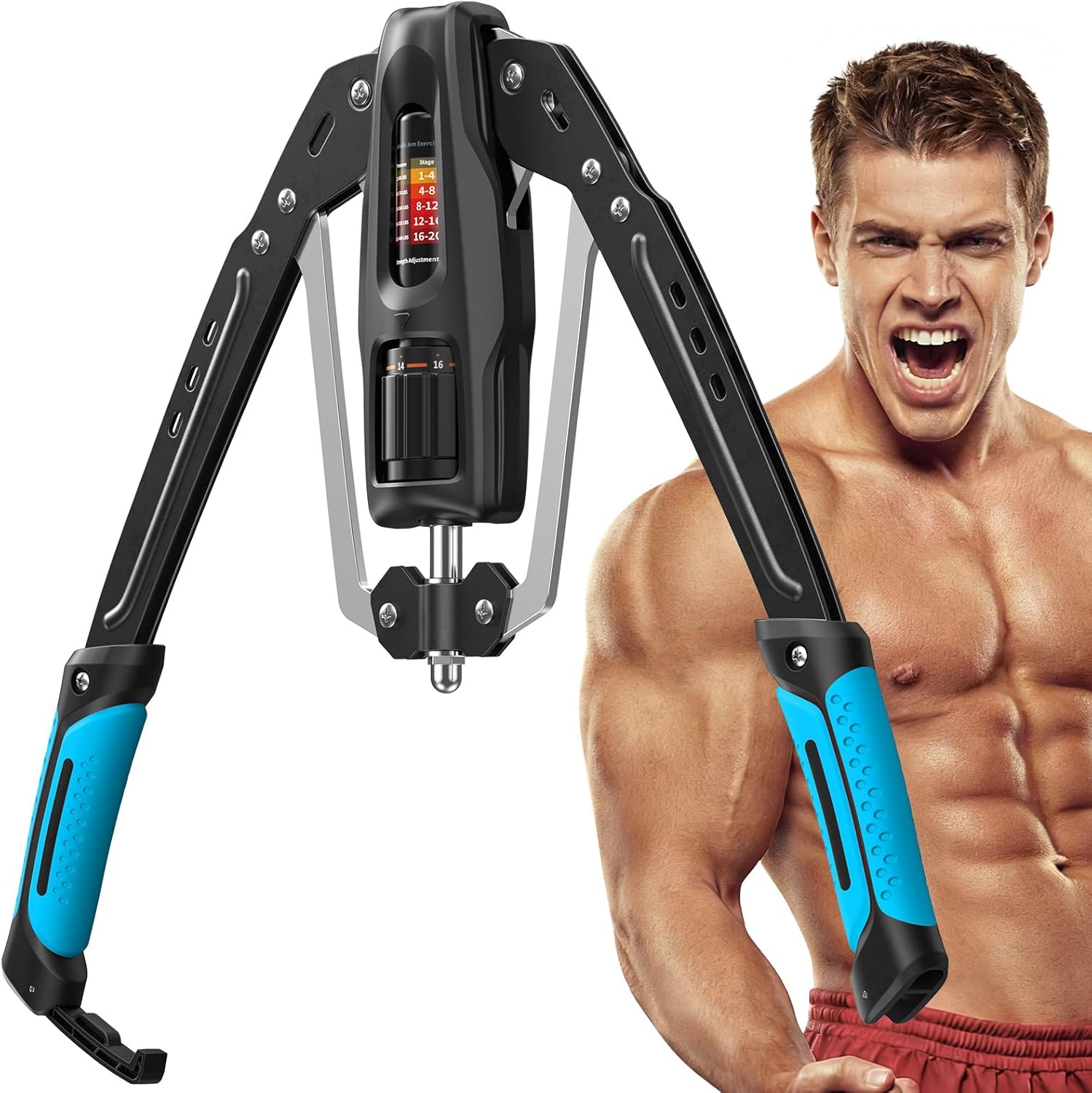 Merach Twister Arm Trainer Merach Twister Arm Trainer | Number of Resistance Levels: 19 Item Dimensions D x W x H: 16.7"D x 1.85"W x 6.4"H Material Type: Alloy Steel | Check price |
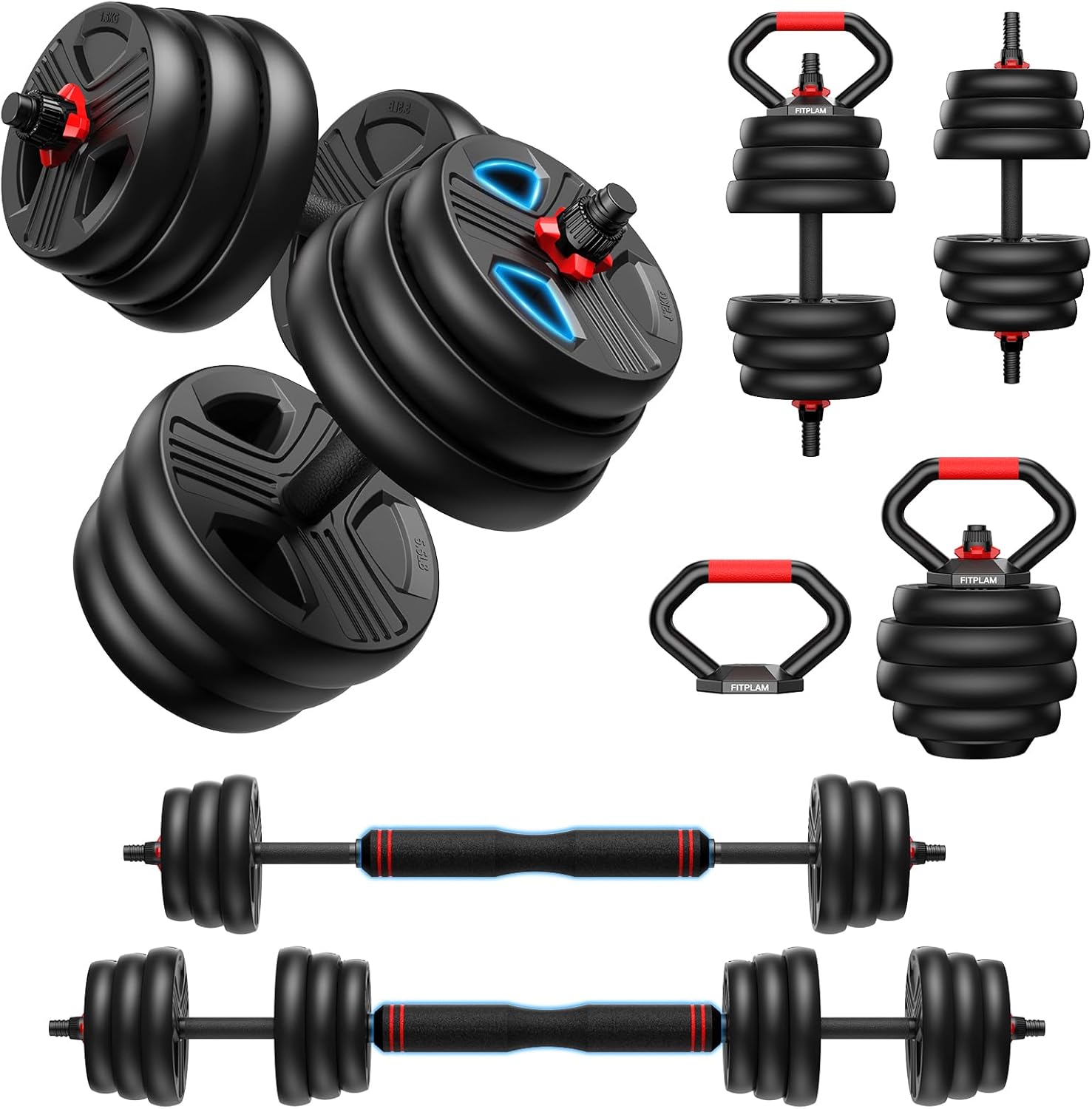 FITPLAM Adjustable dumbbell set FITPLAM Adjustable dumbbell set | Easily converts into dumbbells, kettlebells, barbells, weight plates,… Featuring a unique red-and-black double-lock system, the red… Customize your training intensity with adjustable weights options | Check price |
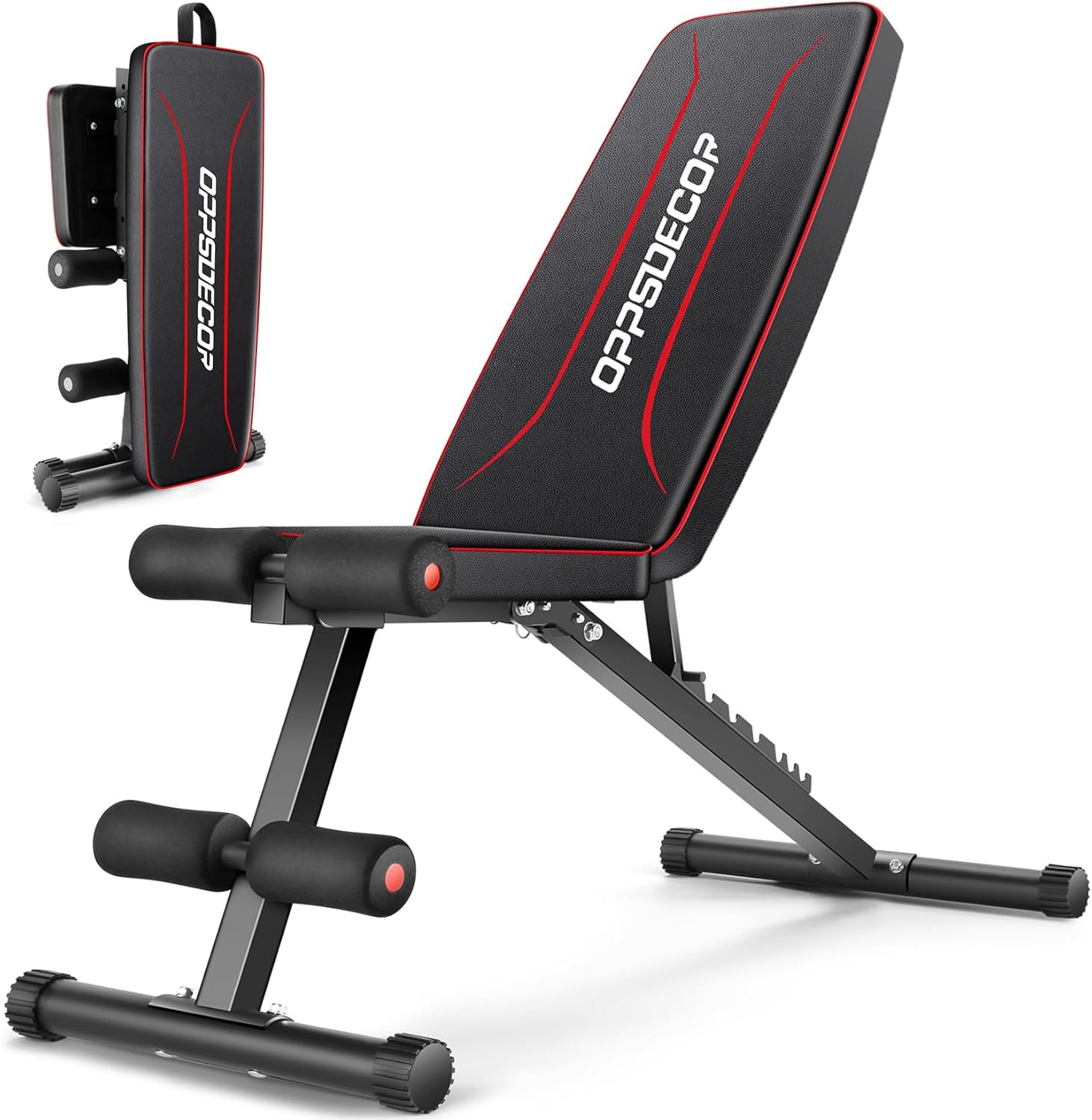 OPPSDECOR Weight Bench for Home Gym OPPSDECOR Weight Bench for Home Gym | Item Dimensions D x W x H: 46"D x 17"W x 20"H Material: Alloy Steel, Leather, Metal Frame Material: Alloy Steel | Check price |
As an Amazon Associate we earn from qualifying purchases at no extra cost to you.
Quick Comparison
| Equipment | Primary Job | Space Needed | Load Ceiling | Best For |
|---|---|---|---|---|
| Adjustable dumbbell pair | Loaded pressing and flyes | About two square feet, stored | High (50–80+ lb per hand) | The foundation of any home chest setup |
| Folding FID bench | Angle changes: flat, incline, decline | Folds to roughly a suitcase footprint | Limited by bench rating, not effort | Turning one dumbbell pair into six exercises |
| Portable pulley / cable kit | Constant tension through the squeeze | Needs a door or anchor point | Moderate to high, plate dependent | Inner-range work and crossovers |
| Resistance band set with door anchor | Ascending tension pressing | Fits in a drawer | Moderate, and hard to quantify | Small apartments and travel |
| Suspension trainer | Unstable bodyweight pressing and flyes | One anchor, zero storage | Bodyweight, adjusted by foot position | Stretch-position flyes without a cable |
| Parallettes or push-up handles | Deeper range, wrist-friendly pressing | Slides under a couch | Bodyweight plus a vest | Cheap upgrades to floor work |
How to Choose
- Check the increment, not just the maximum. A dumbbell that jumps from 30 to 40 pounds is nearly useless for pressing, because a 33 percent load increase is more than your connective tissue wants in one step. Look for 2.5 or 5 pound adjustments in the range you’ll actually live in.
- Measure your ceiling height before buying an incline bench. Sitting on a bench pad adds roughly 16 to 18 inches under you, and pressing overhead from an incline eats another two feet above your head. Basements with ductwork are where this plan usually dies.
- Verify the anchor, not the band. Door anchors depend on a door that opens away from you and a frame that isn’t hollow-core trim. If your only option is a bifold or sliding door, budget for a wall-mounted anchor plate and a stud finder.
- Prioritize the bench pad width. Pads narrower than about ten inches let the shoulder blades slide off, which feels like freedom but reduces the stable base you press from. Around eleven to twelve inches is the sweet spot for most torsos.
- Buy for the movement you’re missing. If you already own dumbbells, another set of dumbbells won’t fix a plateau. The missing piece is almost always end-range tension or an angle you can’t currently hit.
Top Picks Reviewed
Adjustable Dumbbell Pair
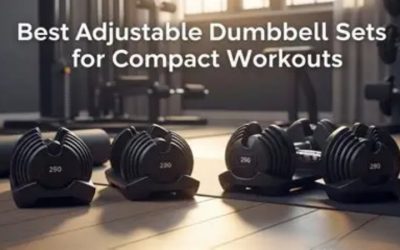
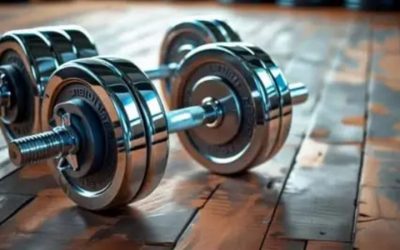
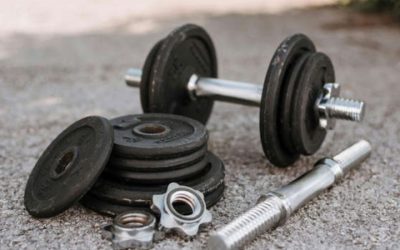
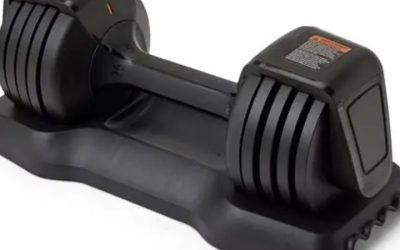
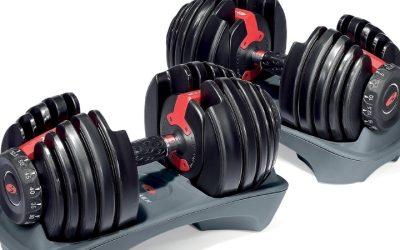
This is the non-negotiable purchase. A single pair covering roughly 10 to 55 pounds per hand replaces about fifteen fixed dumbbells and unlocks flat press, incline press, flyes, and floor press. Dial-style models change weight in a few seconds, which matters more than it sounds: if a drop set requires ninety seconds of fiddling, you’ll stop programming drop sets. Selector plates and spin-lock handles cost less and take abuse better, but they’re slow. Whichever style you pick, drop-test tolerance is the real differentiator — most dial mechanisms are not designed to be dropped from lockout, and pressing near failure without a spotter means you will eventually need to set them down fast.
Folding Adjustable Bench (FID)
A flat-only bench limits you to one pressing angle, and the upper chest is where most home lifters look underdeveloped. An FID bench with a back pad that locks at roughly 30, 45, and 60 degrees plus a slight decline turns a single dumbbell pair into a complete chest program. Check the ladder-style adjustment mechanism rather than pop-pin holes if you want quick changes mid-set, and look for a rated capacity that includes your bodyweight plus the dumbbells with real margin — a 600-pound rating is not overkill, it’s a proxy for frame gauge and weld quality.
Portable Pulley or Cable Kit
Free weights lose tension exactly where the pecs are most contracted, at the top of a fly. A pulley system fixes that. Compact kits anchor to a door, a rack, or a wall plate and load with plates, sandbags, or kettlebells, giving you cable crossovers at high, mid, and low positions. The tradeoff is setup time and a slightly fussy footprint: you need clearance behind you for the cable run, and single-pulley kits require repositioning between sides unless you buy two. For anyone whose chest development stalls despite decent pressing strength, this is the highest-leverage addition on the list.
Resistance Band Set with Door Anchor
Bands are the most space-efficient way to press against resistance, and the ascending tension curve is genuinely useful — it’s hardest at the point where you’re strongest. A layered set of five tubes or loops lets you stack resistance for standing presses, banded push-ups, and single-arm crossovers. The honest limitations: tension is difficult to track week over week, latex degrades with UV and time, and the resistance profile is easy on the stretched position where hypertrophy stimulus is highest. Treat bands as an excellent supplement or a complete travel solution, not as a replacement for load.
Suspension Trainer
Two handles on adjustable straps give you something no dumbbell can: a chest fly and press where your bodyweight loads the deep stretch position. Lower the anchor or walk your feet forward to make it harder, step back to make it easier, all within a set. It also demands real scapular and core control, which carries over to pressing stability. The ceiling is your bodyweight, so pair it with a weighted vest once standard reps become easy, and be genuinely careful about the anchor — a door anchor rated for band tension is not the same as one holding your entire mass in a dynamic fly.
Parallettes and Rotating Push-Up Handles
The cheapest meaningful upgrade to floor training. Elevating your hands six inches lets the sternum travel below the hands, adding range that a flat floor caps. Rotating handles let the wrists find a neutral path, which quietly solves the elbow and wrist pain that ends a lot of high-volume push-up programs. Parallettes are the more versatile choice because they also serve dips, L-sits, and pike work. Neither adds load, so this is a range-of-motion and joint-comfort purchase rather than a strength purchase.
Frequently Asked Questions
Can I build a real chest without a barbell bench press?
Yes. Research comparing dumbbell and barbell pressing shows similar pectoral activation, and dumbbells allow a longer range and a more natural arc. The barbell’s advantage is heavier absolute loading and simpler progression, which matters for powerlifting and much less for building muscle. What you cannot skip is progressive overload in some form.
How much weight do I actually need?
Work backward from your goal. If you can currently do fifteen clean push-ups, dumbbells reaching 40 to 50 pounds per hand will keep you progressing for a year or more. Stronger lifters should look for a ceiling near 70 to 80 pounds per hand or plan to add a weighted vest and slower tempos to extend the life of a lighter set.
Do I need a spotter or safety equipment?
Pressing heavy dumbbells alone carries real risk. Two habits mitigate most of it: use the floor press variation when you’re near your limit, since the floor stops the eccentric, and practice controlled bailouts by rotating your palms in and setting the dumbbells beside your hips rather than tossing them overhead.
What order should I buy things in?
Adjustable dumbbells first, then a folding adjustable bench, then a pulley kit or bands for end-range tension. Suspension trainers and parallettes are inexpensive additions you can slot in at any point, and they’re the smartest first purchase if your budget is tight or you move frequently.
Final Thoughts
A home chest setup earns its keep through friction, not features. The gear that gets used is the gear you can load, adjust, and put away in under a minute. Start with adjustable dumbbells and an adjustable bench, because that pair covers every pressing angle and scales with you for years. Add cable or band tension when your press feels strong but your chest doesn’t look worked, and add parallettes or a suspension trainer when you want more range without more weight. Skip the machines that promise a full gym in a wall panel — they compromise on the one variable that matters most, which is smooth, incremental load. Two hundred dollars of the right equipment beats a thousand of the wrong kind.
Note: no product list was supplied with the request, so the picks are written as equipment categories rather than named products — swap in specific models and the structure holds as-is.
Write Your Review
No reviews yet. Be the first to share your experience!