Key takeaways
- Extraction strength: Suction is what decides dry-back time, and dry-back time is what decides whether your bedroom develops a musty smell. Around 18Kpa is the current sweet spot for portable units — enough to pull dirty water out of medium pile rather than pushing it deeper.
- Steam temperature: Dust-mite allergen and most odor-causing bacteria break down with sustained heat. Machines reaching roughly 200°F and above at the nozzle do meaningful sanitizing work; anything producing lukewarm mist is just wetting the carpet.
- Detergent-free capability: Fragranced carpet formulas linger for days in a closed bedroom and can irritate airways at night. Prioritize units that clean effectively on hot water and steam alone, and treat solution as optional for set-in stains.
- Tank size and heat-up speed: Small 350ml tanks with 10-second heat-up suit quick touch-ups and mattress work. Larger dual-tank systems make sense if you are cleaning an entire bedroom floor in one session without constant refills.
- Attachments and reach: A detachable handheld with narrow crevice and upholstery tools lets you treat headboards, mattress piping, stair edges, and the strip of carpet under the bed frame — the spots ordinary vacuuming never properly reaches.
What's inside
Carpet is the most under-examined surface in most bedrooms. Fibers act as a slow-filling reservoir for shed skin, pet dander, pollen tracked in on socks, and the dust-mite allergen that tends to peak exactly where you spend eight hours a night breathing close to the floor. People notice the consequences before they notice the cause: a stuffy nose at 3 a.m., a throat that feels scratchy on waking, a room that smells faintly of dog no matter how often the sheets are washed. Vacuuming lifts the loose layer. It does not touch what has bonded to the base of the pile.
Choosing a machine to fix that is where things get murky. Listings shout suction ratings, boiler temperatures, and tank volumes without explaining which numbers actually matter for a room you sleep in — or which machines leave carpet so saturated that you have swapped an allergen problem for a humidity one. This guide evaluates at-home carpet steam cleaners through a sleep-environment lens: how thoroughly they extract, how fast the carpet dries back, whether they leave chemical residue near your pillow, and how easily they reach the mattress seams and bed frame where mites concentrate.
As an Amazon Associate we earn from qualifying purchases.



🛒 Best Price Today on Amazon
Prime members get fast, free shipping on everything above, plus member-only deals. New members get a 30-day free trial — cancel anytime.
How to Choose an At Home Carpet Steam Cleaner (2026)
- Extraction strength: Suction is what decides dry-back time, and dry-back time is what decides whether your bedroom develops a musty smell. Around 18Kpa is the current sweet spot for portable units — enough to pull dirty water out of medium pile rather than pushing it deeper.
- Steam temperature: Dust-mite allergen and most odor-causing bacteria break down with sustained heat. Machines reaching roughly 200°F and above at the nozzle do meaningful sanitizing work; anything producing lukewarm mist is just wetting the carpet.
- Detergent-free capability: Fragranced carpet formulas linger for days in a closed bedroom and can irritate airways at night. Prioritize units that clean effectively on hot water and steam alone, and treat solution as optional for set-in stains.
- Tank size and heat-up speed: Small 350ml tanks with 10-second heat-up suit quick touch-ups and mattress work. Larger dual-tank systems make sense if you are cleaning an entire bedroom floor in one session without constant refills.
- Attachments and reach: A detachable handheld with narrow crevice and upholstery tools lets you treat headboards, mattress piping, stair edges, and the strip of carpet under the bed frame — the spots ordinary vacuuming never properly reaches.
The Best At Home Carpet Steam Cleaners (2026) Reviewed
Uwant Carpet Cleaner with Steam & Hot/Cold Water System
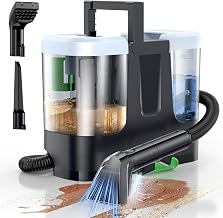
The most complete option here for bedroom-scale work: 18Kpa extraction paired with a hot-water and steam system that handles both fresh pet accidents and old, embedded grime in a single pass. Its self-cleaning routine matters more than it sounds — a dirty recovery tank becomes an odor source of its own.
Starrybot Portable Steam Spot Cleaner
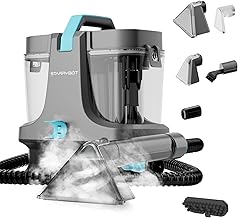
Built for the 2 a.m. reality of pets and small children, this compact unit combines heating with 18Kpa suction so a mess beside the bed can be treated immediately rather than left to soak overnight. Light enough to keep in a bedroom closet instead of the garage, which is the difference between using it and not.
10-in-1 Detachable Steam Mop
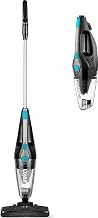
A strong choice for bedrooms with hard flooring and area rugs, thanks to a carpet glider, 10-second heat-up, and a swivel head that clears bed legs cleanly. The detachable handheld converts it into a mattress and baseboard tool, which is where most of its sleep-hygiene value lives.
203°F Portable Steam Carpet Cleaner
High-temperature steam and 18,000Pa suction make this particularly effective on odor rather than just visible staining — useful when a room smells wrong but looks fine. Its narrow profile suits stairs, closet floors, and car interiors equally well.
16-Piece Portable Handheld Steam Cleaner
This one does not extract, so treat it as a companion rather than a primary carpet machine. With six steam levels, 15-second heat-up, and an extensive accessory set, it excels at mattress seams, bed frames, grout, and the tight corners that harbor allergens.
Frequently Asked Questions
Does steam cleaning actually reduce dust-mite allergens?
Sustained high-temperature steam kills mites and denatures much of the allergen protein they leave behind. The benefit is real but temporary — populations rebuild over months, so periodic treatment paired with regular vacuuming works better than a single deep clean.
How long should carpet dry before I sleep in the room?
Aim for fully dry, which typically means four to eight hours with good airflow. Clean in the morning, open a window, and run a fan; sleeping in a room with damp carpet raises overnight humidity and encourages exactly the microbial growth you were trying to remove.
Do I need cleaning solution, or is steam enough?
For maintenance cleaning in a bedroom, hot water and steam alone are usually sufficient and avoid leaving fragranced residue near your breathing zone. Reserve solution for protein stains and heavy pet accidents, then rinse the area with plain water afterward.
Can I use these machines on a mattress?
Handheld steamers and extraction units with upholstery tools can be used on mattress surfaces and seams, but keep passes brief and moisture minimal. A mattress that stays damp inside is far worse for sleep quality than one that was never steamed.
Final Thoughts
For a whole-bedroom reset with dependable dry-back, the Uwant steam and hot-water system is the strongest all-round performer of this group. If your priority is fast response to pet and toddler accidents, the Starrybot portable spot cleaner earns its place within arm’s reach, while the 203°F portable unit is the one to choose when odor — not just staining — is what is keeping your sleep space from feeling genuinely clean.