Key takeaways
- Barrier construction: Look for a thin polyurethane film laminated to a knit face fabric rather than sheeting or vinyl. Film-backed knits block liquid at the membrane level while still allowing vapor transfer, which is what keeps a foam bed from becoming a heat trap.
- Fiber face: Viscose from bamboo, Tencel, and long-staple cotton all move moisture off the skin faster than polyester microfiber. On a foam mattress, where airflow beneath you is minimal, that surface wicking does most of the cooling work.
- Stretch and pocket depth: Memory foam beds are often 12–14 inches, and adding a topper pushes them past 16. Choose a skirt rated to at least 16–18 inches with four-way stretch; a taut fit prevents the ripples that show through fitted sheets.
- Acoustics: Crinkle is the most common return reason in this category. Quiet designs bond the film to fabric on both sides or use an ultrasonic weld rather than a stiff coated layer. If a listing avoids the word noiseless, assume it isn’t.
- Certification and washability: OEKO-TEX or GREENGUARD Gold documentation matters more here than in most bedding, since the barrier sits inches from your airway all night. Confirm the protector tolerates a full warm wash cycle — quarterly laundering is the actual allergen control, not the fabric claim.
What's inside
Memory foam sleeps warmer and reacts differently to moisture than an innerspring bed, and that changes what a protector needs to do. Foam is a closed-cell material: perspiration that would once have dissipated into a coil unit now sits at the surface, where it degrades the foam’s rebound over time and gives dust mites a foothold. The instinctive fix — a thick vinyl-backed sheet — traps the heat that memory foam already holds, and sleepers wake up damp, restless, and convinced their expensive mattress was a mistake. It usually wasn’t. The protector was.
This guide approaches the category from a sleep-physiology standpoint rather than a fabric-spec one. Thermoregulation drives sleep continuity: core temperature needs to fall roughly one to two degrees for deep sleep to consolidate, and a barrier that blocks that drop will fragment the night regardless of how plush the bed feels at lights-out. Below, we look at protectors and pads that shield foam from fluids, skin cells, and allergens without insulating the sleeper, plus a couple of hybrid pads for anyone who wants protection and a change in surface feel from one purchase.
As an Amazon Associate we earn from qualifying purchases.


How to Choose a Memory Foam Mattress Protector
- Barrier construction: Look for a thin polyurethane film laminated to a knit face fabric rather than sheeting or vinyl. Film-backed knits block liquid at the membrane level while still allowing vapor transfer, which is what keeps a foam bed from becoming a heat trap.
- Fiber face: Viscose from bamboo, Tencel, and long-staple cotton all move moisture off the skin faster than polyester microfiber. On a foam mattress, where airflow beneath you is minimal, that surface wicking does most of the cooling work.
- Stretch and pocket depth: Memory foam beds are often 12–14 inches, and adding a topper pushes them past 16. Choose a skirt rated to at least 16–18 inches with four-way stretch; a taut fit prevents the ripples that show through fitted sheets.
- Acoustics: Crinkle is the most common return reason in this category. Quiet designs bond the film to fabric on both sides or use an ultrasonic weld rather than a stiff coated layer. If a listing avoids the word noiseless, assume it isn’t.
- Certification and washability: OEKO-TEX or GREENGUARD Gold documentation matters more here than in most bedding, since the barrier sits inches from your airway all night. Confirm the protector tolerates a full warm wash cycle — quarterly laundering is the actual allergen control, not the fabric claim.
The Best Memory Foam Mattress Protectors Reviewed
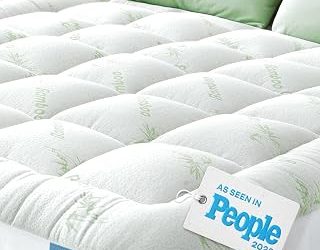
PlushDeluxe Bamboo Waterproof Protector (King)
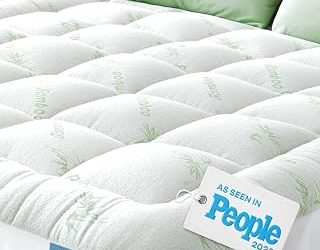
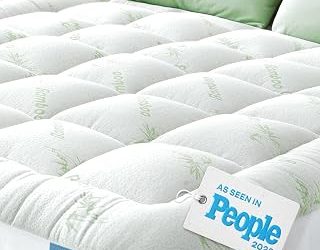
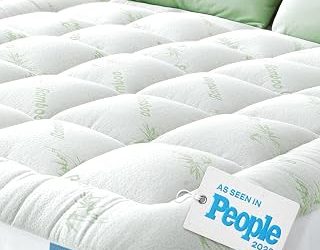
The viscose-from-bamboo face has a cool, faintly slick hand that pulls sweat away quickly, and the laminate stays genuinely silent through the night — a rare combination at this price. Its 18-inch pocket handles a tall foam bed plus a topper without strain.
Memory Foam Protector with Organic Cotton and Kool-Flow
Purpose-built for plush foam beds, this one pairs an organic cotton face with a breathable stretch back panel so the barrier vents rather than seals. If you sleep hot on memory foam and have already returned two protectors, start here.
BEDLORE Waterproof Mattress Protector (Queen)
A straightforward, quiet film-and-knit build with deep pockets spanning 6 to 18 inches, making it the most flexible choice across guest rooms and mismatched mattress heights. Dependable overnight protection without added loft.
Utopia Bedding Quilted Fitted Mattress Pad (Queen)
Not waterproof, but the quilted fill adds a soft buffer over firm foam and absorbs the nightly moisture that otherwise reaches the core. The 16-inch stretch skirt holds tight, and it launders well enough for weekly rotation.
BDEUS Dual Layer 5-Inch Topper (King)
This is a comfort intervention rather than a protector: two inches of gel memory foam under a 1450 GSM quilted pillow top, which meaningfully softens an over-firm bed. Pair it with a thin waterproof protector on top so the foam layer stays clean.
Frequently Asked Questions
Will a protector void my mattress warranty?
The opposite, usually. Most foam manufacturers void coverage for staining, so a documented protector is your best defense during a claim.
Does a waterproof protector always sleep hot?
No. Heat comes from thick coatings and polyester faces, not from waterproofing itself. A thin membrane behind a wicking natural fiber is close to thermally neutral.
How often should I wash it?
Every four to eight weeks for most sleepers, monthly if you have allergies, and immediately after any spill. Warm water, low heat or line dry — hot dryers delaminate barrier films.
Protector, pad, or topper?
A protector defends the mattress, a pad adds mild cushioning and absorbency, and a topper changes firmness. Only the protector is essential.
Final Thoughts
For most memory foam owners, the PlushDeluxe Bamboo protector delivers the best balance of silence, breathability, and fit, while the organic cotton Kool-Flow protector is the stronger pick for confirmed hot sleepers who need maximum vapor transfer. If your bed is simply too firm, layer the BDEUS dual-layer topper underneath a thin protector and address both problems at once.