Key takeaways
- Confirm your base geometry first: A single-motion queen takes a standard queen sheet; a split queen or split king base needs either two Twin XL/Twin sheets or a purpose-built split-top design. Measure the seam and note whether your mattress splits fully down to the foot or only 34–36 inches from the head.
- Measure the mattress with the topper on: Add the topper’s thickness to your mattress height, then choose a pocket at least two inches deeper. A 16-inch pocket on a 14-inch stack gives the elastic the slack it needs to hold through repeated articulation.
- Prioritize full-perimeter elastic and corner straps: Corner-only elastic is the number one cause of overnight blowouts on a hinged base. All-around elastic distributes tension as the deck bends; anchoring straps add a second line of defense for restless sleepers.
- Match the fiber to your thermal profile: Long-staple Egyptian cotton and bamboo viscose move heat and moisture efficiently for warm sleepers, while brushed microfiber traps a little more air — welcome if you run cold or keep the bedroom below 65°F.
- Look for orientation cues and honest certifications: Foot-side indicators eliminate the 2 a.m. guessing game on asymmetrical sheets, and OEKO-TEX or organic-growing verification tells you the finish touching your skin for eight hours has been screened for residual chemistry.
What's inside
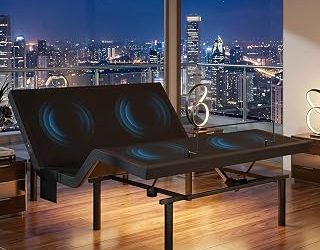
An adjustable base solves problems your old flat mattress never could — elevated head for reflux, raised legs for circulation, zero-gravity for lower back pressure. Then you make the bed, hit the remote, and watch the corner of your fitted sheet snap loose like a sail in a squall. It’s the single most common complaint I hear from clients within the first month of upgrading their sleep setup, and it isn’t a fluke: a sheet engineered for a static rectangle is being asked to flex through a hinged surface hundreds of times a year.
The fix is mechanical, not cosmetic. You need adequate pocket depth for the mattress plus any topper, elastic that wraps the full perimeter rather than gathering only at the corners, and — if you sleep on a split base with two independently moving halves — a construction that accommodates that split without exposing a cold strip of mattress down the middle. Below I’ve assembled the sheets I recommend most often in 2026, spanning single-motion queens, Twin XL halves, split-head flex tops, and true split configurations, with a buying framework so you can match the sheet to your specific base rather than guessing.
As an Amazon Associate we earn from qualifying purchases.


![Bella Coterie Bamboo Viscose 34" Split Top King Sheets, Organically Grown | Single 34" Split Fitted Sheet | Sleep Number & Adjustable Bed | Cooling | 18" Deep Pocket w/ Corner Straps [Charcoal Grey]](https://m.media-amazon.com/images/I/71-EVmvEnGL._AC_UL320_.jpg)

How to Choose a/an Fitted Sheet For Adjustable Bed (2026)
- Confirm your base geometry first: A single-motion queen takes a standard queen sheet; a split queen or split king base needs either two Twin XL/Twin sheets or a purpose-built split-top design. Measure the seam and note whether your mattress splits fully down to the foot or only 34–36 inches from the head.
- Measure the mattress with the topper on: Add the topper’s thickness to your mattress height, then choose a pocket at least two inches deeper. A 16-inch pocket on a 14-inch stack gives the elastic the slack it needs to hold through repeated articulation.
- Prioritize full-perimeter elastic and corner straps: Corner-only elastic is the number one cause of overnight blowouts on a hinged base. All-around elastic distributes tension as the deck bends; anchoring straps add a second line of defense for restless sleepers.
- Match the fiber to your thermal profile: Long-staple Egyptian cotton and bamboo viscose move heat and moisture efficiently for warm sleepers, while brushed microfiber traps a little more air — welcome if you run cold or keep the bedroom below 65°F.
- Look for orientation cues and honest certifications: Foot-side indicators eliminate the 2 a.m. guessing game on asymmetrical sheets, and OEKO-TEX or organic-growing verification tells you the finish touching your skin for eight hours has been screened for residual chemistry.
The Best Fitted Sheet For Adjustable Bed (2026)s Reviewed
Ultra Soft Queen Fitted Sheet, 16″ Deep Pocket (Grey)
A sensible default for anyone on a single-motion queen base who wants deep-pocket security without a linen-closet investment: the cotton-like polyester weave sheds wrinkles, resists fading through frequent washing, and carries OEKO-TEX certification. Snug all-around elastic keeps it seated through nightly incline changes, and it’s the one I suggest for guest rooms and secondary bedrooms.
Twin XL Egyptian Cotton Fitted Sheet (Navy Blue)
If your split king or split queen uses two independent Twin XL mattresses, buy these in pairs — the 100% Egyptian cotton breathes genuinely well for hot sleepers, and the 16-inch pocket handles a mattress plus a modest topper. The foot-side indicator is a small touch that saves real frustration on laundry day.
Split Head Flex Queen Fitted Sheet, 600TC Egyptian Cotton (Light Blue)
My top recommendation for couples who want independent head articulation on a shared mattress: one sheet, split 36 inches down from the top, so there’s no seam or gap under your torsos. At 600 thread count with an 18-inch pocket, it’s the most luxurious option here and the most forgiving of thick hybrid builds.
Split Queen Brushed Microfiber Fitted Sheets (Navy Blue)
Purpose-cut for split queen bases and priced for practicality, the brushed microfiber has a soft, slightly insulating hand that cooler sleepers tend to prefer. It’s also the low-maintenance pick — machine wash, tumble dry, no ironing, no shrink surprises.
Bella Coterie Bamboo Viscose 34″ Split Top King (Charcoal Grey)
The standout for warm sleepers on a split-top king or Sleep Number base: bamboo viscose from organically grown stock moves moisture off the skin faster than cotton at comparable weights, and the 18-inch pockets with corner straps hold firm through aggressive articulation. Worth the premium if night sweats are your primary complaint.
Frequently Asked Questions
Do I actually need a special sheet for an adjustable bed?
On a single-motion base, a deep-pocket standard sheet with all-around elastic is usually sufficient. On a split base where each side moves independently, you do need split-compatible bedding — otherwise the sheet fights the two halves and pulls free within a night or two.
What’s the difference between split-top and fully split?
A split-top (or “flex top”) sheet is divided roughly 34–36 inches from the head only, leaving the lower two-thirds intact so there’s no seam beneath your hips. A fully split configuration means two entirely separate sheets on two separate mattresses, as with the Twin XL and split queen options above.
How deep should my pockets be?
Measure your mattress plus any topper or protector, then add two inches of margin. Most 2026 hybrids land between 12 and 15 inches, which is why 16- and 18-inch pockets have become the practical standard rather than a specialty item.
Why does my sheet still pop loose at the corners?
Usually one of three causes: pocket depth too shallow for the stack, elastic that gathers only at the corners, or a mattress that has been used without a protector long enough to develop grip-reducing surface wear. Corner straps and elastic bands underneath the mattress solve most stubborn cases.
Final Thoughts
For most couples sharing an articulating base, the Split Head Flex Queen in 600-thread-count Egyptian cotton is the sheet that disappears from your attention entirely — which is exactly the goal. Hot sleepers on a split-top king should spend up for the Bella Coterie Bamboo Viscose, and anyone on a straightforward single-motion queen will be well served by the OEKO-TEX certified 16-inch Ultra Soft Fitted Sheet at a fraction of the cost.