Key takeaways
- Anchoring. Traditional wall beds must be bolted into studs or a solid wall. Freestanding “cabinet beds” that fold out of a chest avoid this but use a tri-fold foam mattress instead of a regular one.
- Mattress limits. Most mechanisms specify a maximum mattress thickness (often 10–12 in) and weight. A heavy hybrid can overpower a piston set.
- Delivery weight. A queen wall-bed cabinet commonly ships in several boxes totaling 250–450 lb; check stair turns and elevator size.
- Brands. Bestar, Murphy bed kit makers and custom closet companies all sell in this category; more expensive options typically add side cabinets, shelving or a fold-down desk.
The best fold-out bed for a small space depends on how often someone sleeps on it: for nightly use, a wall bed (Murphy bed) or a quality sleeper sofa with a real mattress wins; for occasional guests, a chair bed, futon or folding rollaway gives you a bed without giving up the room. The key number is not the closed size but the open footprint plus walking space, because every fold-out bed needs roughly 80–90 inches of floor length once it is down and at least 24 inches beside it to get in and out.
Our top picks

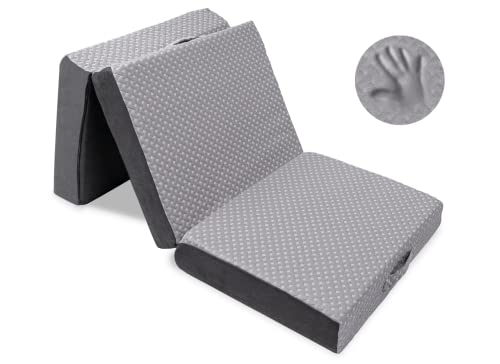
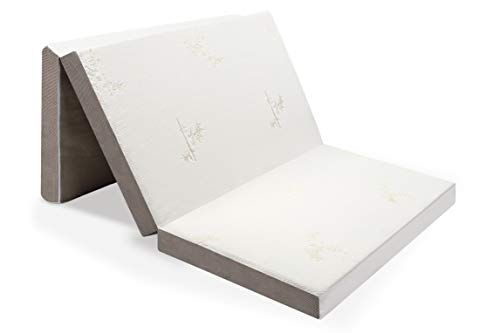
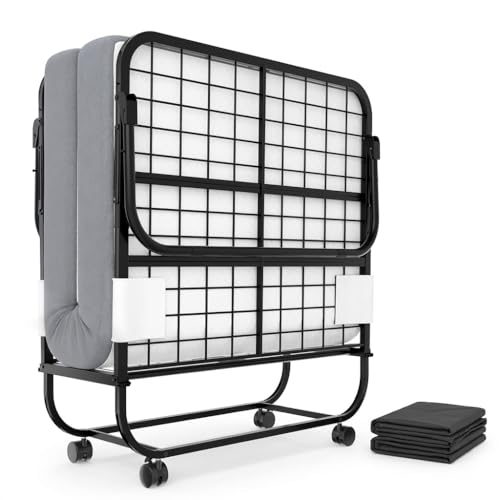
As an Amazon Associate we earn from qualifying purchases at no extra cost to you. Ratings are shown as listed on Amazon.
Open Footprint by Fold-Out Bed Type
Closed dimensions sell these beds; open dimensions decide whether they work. The table below uses typical ranges for each category so you can tape out the shape on your floor before shopping.
| Type | Closed depth | Open length (from wall) | Sleeping size | Typical mattress | Usual price range |
|---|---|---|---|---|---|
| Vertical wall bed, queen | 16–24 in | 84–90 in | 60 x 80 in | Your choice, 8–12 in | $1,500–$5,000+ with cabinet |
| Horizontal wall bed, full or twin | 16–22 in | 56–64 in | 54 x 75 in / 38 x 75 in | Your choice, 6–10 in | $1,200–$4,000 |
| Sleeper sofa, queen | 36–40 in | 86–92 in | 60 x 72–75 in | 4.5–6 in, built-in | $800–$3,000 |
| Futon, full | 32–36 in | 44–54 in (bed is sideways) | 54 x 75 in | 6–8 in futon pad | $250–$900 |
| Chair bed, twin | 30–38 in | 75–84 in | 30–38 x 72–78 in | Foam cushions | $300–$1,200 |
| Folding rollaway, twin | 12–18 in (stored) | 75–80 in | 31–38 x 75 in | 4–6 in foam | $150–$450 |
| Ottoman / cube bed | 16–20 in cube | 72–78 in | About 24–30 x 72 in | Folding foam | $150–$400 |
Add at least 24 inches of walkway on the open side of any bed and about 30 inches at the foot if a door or closet swings there. In a 10 x 10 ft room, that means a queen wall bed on the 10 ft wall leaves about 3 ft at the foot, which is tight but workable; a queen sleeper sofa in the same spot leaves slightly less because sofa beds extend farther than their mattress length.
Which Type Fits Your Situation
| Situation | Best fit | Avoid |
|---|---|---|
| Studio, bed used every night | Vertical wall bed with full-size mattress | Sleeper sofa (thin mattress, bar in back) |
| Home office that hosts guests a few times a year | Wall bed with desk, or horizontal wall bed under a window | Futon (takes room every day) |
| Living room, need a sofa anyway | Sleeper sofa or click-clack futon | Rollaway (nowhere to store it) |
| Kid’s room for sleepovers | Chair bed or ottoman bed | Heavy wall bed kids can pull down |
| Renter who cannot anchor to walls | Freestanding wall-bed cabinet, sleeper sofa, futon | Traditional Murphy bed that must bolt to studs |
| Ceiling under 7 ft 6 in | Horizontal wall bed, chair bed | Vertical queen wall bed (cabinet is 84–90 in tall) |
| Guest with back pain | Wall bed or rollaway with a thicker foam mattress | Thin innerspring sofa bed |
Wall Beds: Most Bed, Least Floor
A wall bed is the only fold-out option that takes a normal mattress, which is why it is the realistic choice for daily sleeping. The cabinet sits 16–24 inches off the wall when closed, and quality mechanisms use either piston (gas spring) or coil spring counterbalances. Piston systems are quieter and common in mid-range kits; spring systems are adjustable to the mattress weight and favored in heavier, long-life models.
Things to plan for:
- Anchoring. Traditional wall beds must be bolted into studs or a solid wall. Freestanding “cabinet beds” that fold out of a chest avoid this but use a tri-fold foam mattress instead of a regular one.
- Mattress limits. Most mechanisms specify a maximum mattress thickness (often 10–12 in) and weight. A heavy hybrid can overpower a piston set.
- Delivery weight. A queen wall-bed cabinet commonly ships in several boxes totaling 250–450 lb; check stair turns and elevator size.
- Brands. Bestar, Murphy bed kit makers and custom closet companies all sell in this category; more expensive options typically add side cabinets, shelving or a fold-down desk.
Sleeper Sofas and Futons: Seating First
If you need a sofa every day and a bed occasionally, a sleeper sofa or futon earns its space twice. The trade-off is the mattress. Pull-out sofa mattresses are usually 4.5–6 inches thick and sit on a metal deck or webbing, so the support bar under the thighs or the fold line is the common complaint. Memory-foam sleeper mattresses help; so does a 2–3 inch topper stored with the bedding.
Futons are simpler mechanically. A click-clack or bi-fold futon lies flat with no hidden bar, and the open bed is only about 4–5 feet deep because the mattress runs parallel to the wall. That makes a futon a better fit for narrow rooms than a sleeper sofa, which projects straight out. The downside is that futon pads compress, especially cotton-only pads; foam-core or innerspring futon mattresses hold their shape longer.
Chair Beds, Rollaways and Ottoman Beds: Occasional Guests
These are the smallest fold-out options and the easiest to move. Chair beds unfold their seat and back cushions into a twin-width bed, so they sit in a reading corner most of the time. Folding rollaway beds use a steel frame on casters with a foam mattress folded in half; they store upright in a closet about 12–18 inches deep. Ottoman or cube beds are the tightest of all and fold out into a low floor-level mattress, best for kids or short stays.
Expect comfort to drop with thickness. A 4 inch foam mattress is fine for a night or two; a 6 inch high-density foam (around 1.8 lb per cubic foot or denser) is noticeably more supportive for adults. Check weight limits too; many folding rollaways are rated around 250–300 lb.
Durability Notes
- Sleeper sofa mechanisms wear at the hinges and at the fabric deck; occasional use extends life, nightly use shortens it.
- Futon frames loosen at bolted joints; retighten every few months, especially on pine frames.
- Wall-bed pistons lose force over years; a bed that starts drifting down or feels heavy usually needs replacement pistons, not a new bed.
- Rollaway casters and center hinges are the weak points; locking casters matter on hard floors.
How to Choose in Three Steps
- Decide on frequency: nightly, weekly or a few times a year.
- Tape the open footprint and walkway on your floor with painter’s tape.
- Pick the type from the matrix above, then compare mattress thickness and weight limits within that type before style or color.