Key takeaways
- Membrane material: A thin TPU (thermoplastic polyurethane) film is the only barrier worth buying — its microscopic pores block liquid while letting water vapour escape. Vinyl and PVC backings are cheaper, seal completely, and are the single biggest cause of overheating complaints.
- Surface fibre: Bamboo viscose and Tencel lyocell wick perspiration into the fibre itself, so the skin-contact surface stays dry. 3D and 4D spacer knits work differently, using raised polyester channels to hold a cushion of moving air. Fibre feels softer; mesh moves more air.
- Pocket depth and skirt tension: Measure your mattress with any topper already in place, then add an inch. Most quality protectors stretch to 17–21 inches. A skirt that constantly pops a corner will bunch, wrinkle, and trap heat exactly where your hips sit.
- Acoustics: “Noiseless” is a marketing word, not a standard. Bonded membranes stay quiet; laminated ones stiffen after five or six washes. If you can, press and crumple a corner — the crinkle you hear in the shop is the crinkle you’ll hear at 2 a.m.
- Laundering and certification: Look for OEKO-TEX Standard 100 certification and a wash tolerance of at least 60°C, which is the temperature that kills dust mites. Skip fabric softener entirely; it clogs the membrane’s pores and kills breathability faster than anything else.
What's inside
Falling asleep is, at its core, a cooling event. Body temperature has to drop by a degree or two before the brain will commit to deep sleep, and that heat leaves through the hands, feet, and the broad surface of the back — much of it travelling straight down into the mattress. Which is why so many people invest in a cooling mattress, seal it under a bargain waterproof cover, and still wake up damp and irritable at 3 a.m. A protector is the layer sitting between the sleeper and every cooling feature they paid for. Choose badly and it behaves like a raincoat.
This guide focuses on protectors that block liquid without strangling airflow. The criteria that matter: what the waterproof film is actually made of, how quickly the top fabric moves vapour off skin, whether it rustles when you roll over, and how it holds up to a monthly hot wash. Below are the current picks, followed by a short buying framework and answers to the questions readers send most often.
As an Amazon Associate we earn from qualifying purchases.

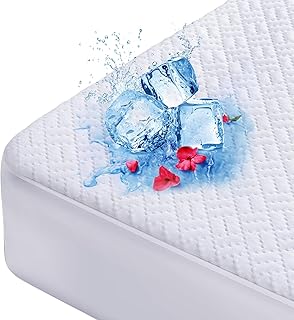


🛒 Best Price Today on Amazon
Prime members get fast, free shipping on everything above, plus member-only deals. New members get a 30-day free trial — cancel anytime.
How to Choose a Cooling Mattress Protector
- Membrane material: A thin TPU (thermoplastic polyurethane) film is the only barrier worth buying — its microscopic pores block liquid while letting water vapour escape. Vinyl and PVC backings are cheaper, seal completely, and are the single biggest cause of overheating complaints.
- Surface fibre: Bamboo viscose and Tencel lyocell wick perspiration into the fibre itself, so the skin-contact surface stays dry. 3D and 4D spacer knits work differently, using raised polyester channels to hold a cushion of moving air. Fibre feels softer; mesh moves more air.
- Pocket depth and skirt tension: Measure your mattress with any topper already in place, then add an inch. Most quality protectors stretch to 17–21 inches. A skirt that constantly pops a corner will bunch, wrinkle, and trap heat exactly where your hips sit.
- Acoustics: “Noiseless” is a marketing word, not a standard. Bonded membranes stay quiet; laminated ones stiffen after five or six washes. If you can, press and crumple a corner — the crinkle you hear in the shop is the crinkle you’ll hear at 2 a.m.
- Laundering and certification: Look for OEKO-TEX Standard 100 certification and a wash tolerance of at least 60°C, which is the temperature that kills dust mites. Skip fabric softener entirely; it clogs the membrane’s pores and kills breathability faster than anything else.
The Best Cooling Mattress Protectors of 2026, Reviewed
PlushDeluxe Bamboo Waterproof Protector (King)
The bamboo-derived viscose face has a cool, almost sateen hand that disappears under a fitted sheet, and the membrane stayed genuinely silent through repeated laundering. With an 18-inch pocket and hypoallergenic construction, it’s the strongest all-round choice for warm sleepers who want fabric feel rather than mesh texture.
Utopia Bedding Bamboo Viscose Protector
A fitted-style protector with unusually forgiving stretch pockets to 17 inches, and by some distance the best value in this group. The viscose surface doesn’t feel quite as plush as premium rivals, but it wicks well and survives frequent washing — ideal for kids’ rooms and spare beds.
Luxury Tencel Mattress Protector (Queen)
Tencel lyocell manages moisture faster than cotton or standard viscose, releasing vapour before it can pool against the skin. If you deal with night sweats, hormonal flushes, or a partner who runs hot, this is the one I’d recommend first, and the 18-inch pocket handles most pillow-top builds.
3D Air Fabric Cooling Protector
Instead of wicking fibre, this one uses an open spacer knit that keeps a thin layer of air circulating beneath you. It’s the coolest-sleeping option here in absolute terms, and the 8–21 inch pocket range accommodates thick mattress-and-topper stacks that defeat slimmer covers.
Premium 4D Air Fabric Protector (300GSM)
At 300GSM with a vinyl-free membrane and a high-tension elastic skirt, this is the most robust of the mesh-faced designs — it stays taut on the corners instead of migrating overnight. A sensible pick for households with pets, toddlers, or anyone who needs the barrier to actually work under pressure.
Frequently Asked Questions
Does a waterproof protector always sleep hot?
No — but a vinyl-backed one will. Breathable TPU films transmit water vapour at rates high enough that most sleepers notice no difference at all, provided the top fabric wicks properly.
Bamboo viscose, Tencel, or 3D air mesh?
Tencel handles heavy perspiration best, bamboo viscose offers the nicest surface feel, and spacer mesh maximises raw airflow. If you sweat heavily, prioritise fibre; if you simply run warm, prioritise mesh.
How often should I wash it?
Every four to six weeks under normal use, and immediately after any spill. Wash warm, tumble on low, and never iron the membrane side.
Will it replace a cooling topper?
No. A protector removes a barrier to heat loss; a topper or pad actively adds a cooling layer. The protector’s job is to avoid undoing what your mattress already does well.
Final Thoughts
For most buyers, the PlushDeluxe bamboo protector strikes the best balance of softness, silence, and breathability, while the Luxury Tencel option is the clear choice for anyone contending with genuine night sweats. If budget is the deciding factor, the Utopia Bedding bamboo viscose cover delivers the essentials — quiet, waterproof, and cool — for a fraction of the price.