
Key takeaways
- Target Audience: Adult
- Recommended Uses For Product: Endurance, Exercise and Fitness, Speed
- Item Length: 280 Centimeters
The thing that stops most people skipping indoors is not fitness, it is geometry. A rope needs roughly your height plus 18 to 24 inches of vertical clearance to pass overhead cleanly, which means a standard 8-foot ceiling leaves a 5-foot-8 jumper with only a few inches of margin once you add the arc of the cable. Add a ceiling fan, a light fixture, or a basement duct and the usable zone shrinks to nothing. Most people discover this by whipping a plaster ceiling on rep four and quietly retiring the rope to a drawer.
Working within those constraints is entirely possible, but it changes what you should buy. Shorter cable settings, thinner and lighter cables that decelerate quickly, and handles that let you cut the rope length precisely all matter more than top-end speed. The six ropes here span a featherweight speed cable, two adjustable all-rounders, a bulk set for a household, and two weighted ropes. Below is which of them survive a low ceiling and a 6-by-6-foot patch of floor, and which need a garage.
Our top picks
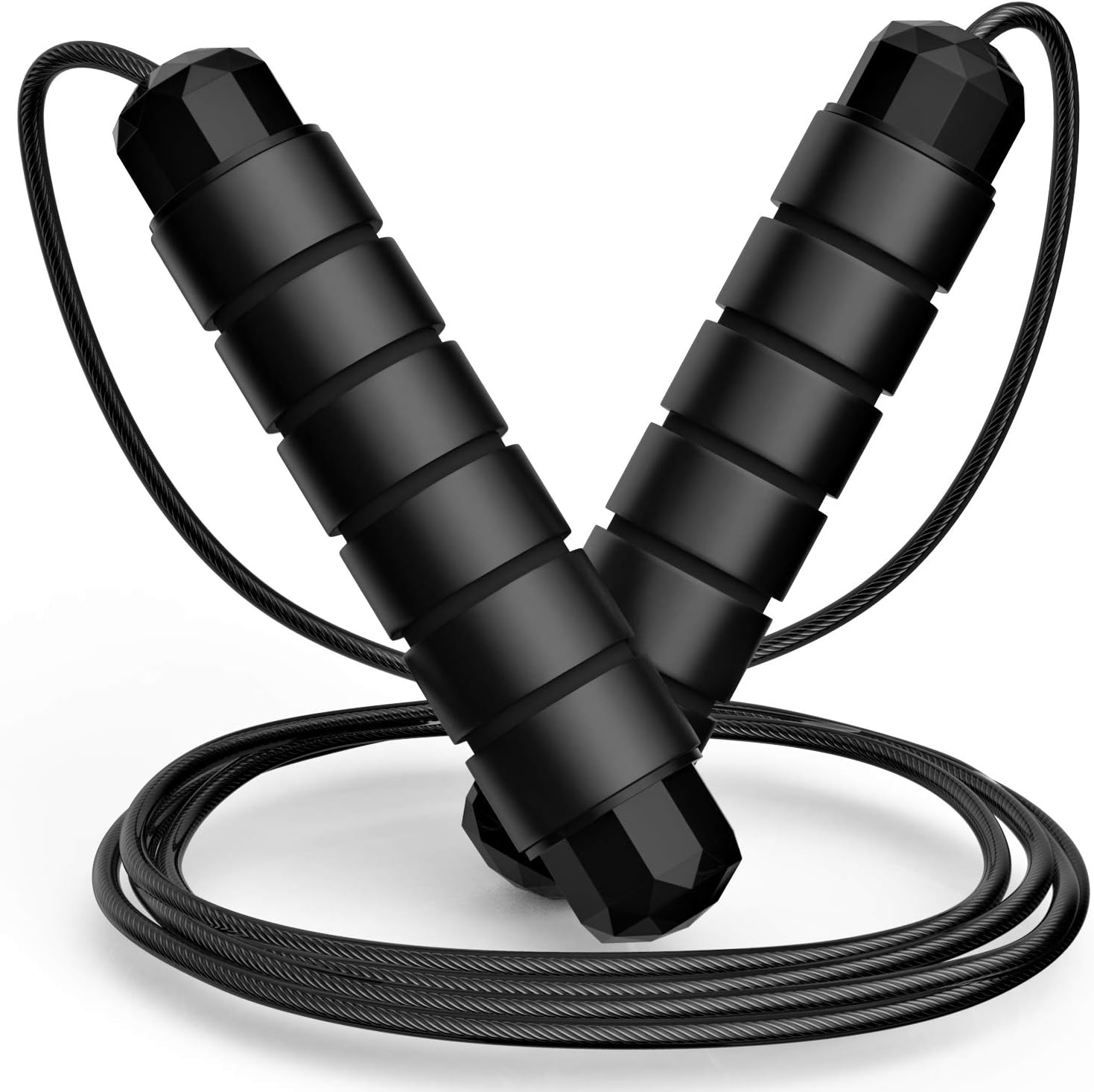 Jump Rope
- Target Audience: Adult
- Recommended Uses For Product: Endurance, Exercise and Fitness, Speed
- Item Length: 280 Centimeters
 BOOMIBOO Jump Rope
- Target Audience: Adult, Kid
- Recommended Uses For Product: Exercise and Fitness
- Item Length: 9.2 Feet
 Adjustable Jump Rope for Fitness
- Target Audience: Adult
- Recommended Uses For Product: Speed and Endurance
- Item Length: 9.2 Feet
| Product | Key specs | |
|---|---|---|
| Jump Rope | Target Audience: Adult Recommended Uses For Product: Endurance, Exercise and Fitness, Speed Item Length: 280 Centimeters | Check price |
| BOOMIBOO Jump Rope | Target Audience: Adult, Kid Recommended Uses For Product: Exercise and Fitness Item Length: 9.2 Feet | Check price |
| Adjustable Jump Rope for Fitness | Target Audience: Adult Recommended Uses For Product: Speed and Endurance Item Length: 9.2 Feet | Check price |
 SPORTBIT Adjustable Jump Rope for Fitness and | Check price | |
 Jump Rope | Self-Locking Exciting? Definitely Faster and Smoother - Premium grade 360-degree ball… Adjustable Rope - We provide 1 steel cable… | Check price |
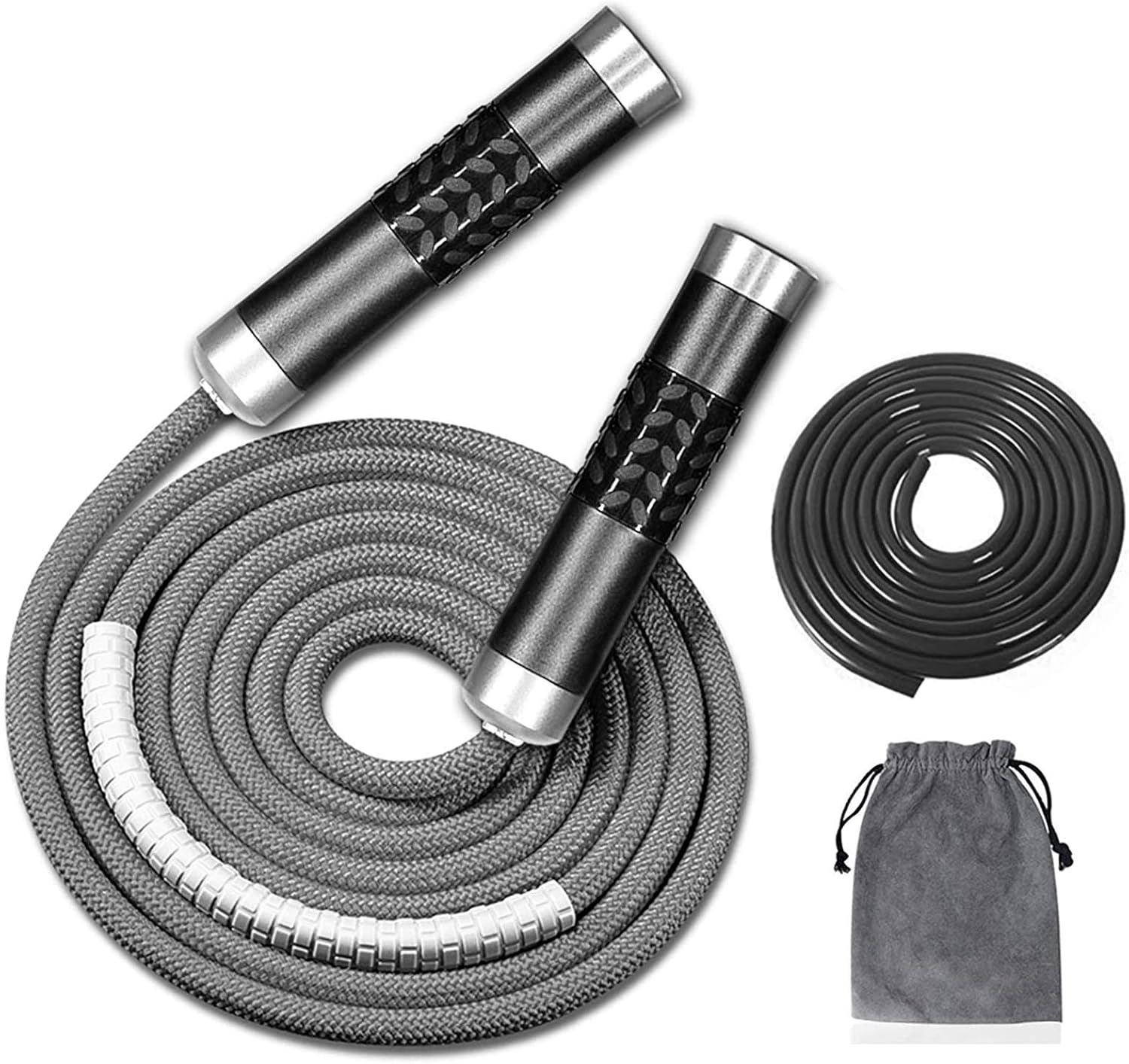 Redify Weighted Jump Rope for Workout Fitness | Target Audience: Adult Item Length: 120 Inches Handle Diameter: 1 inches | Check price |
 12 Pieces Jump Rope for Fitness with | Target Audience: Adult Recommended Uses For Product: Exercise and Fitness Item Length: 110 Inches | Check price |
 SPORTBIT Adjustable Jump Rope for Fitness and | Target Audience: Adult Recommended Uses For Product: Exercise and Fitness Item Length: 124 Inches | Check price |
As an Amazon Associate we earn from qualifying purchases at no extra cost to you.
Quick Comparison
| Product | Best For | Standout Feature | Watch Out For |
|---|---|---|---|
| Tangle-Free Speed Rope | Tight indoor spaces and fast footwork | Ball-bearing swivels keep the arc compact | Thin cable stings bare legs on a miss |
| BOOMIBOO Adjustable Rope | Shared use at different heights | Quick length adjustment without tools | Excess cable must be trimmed or it whips |
| 40-Piece Bulk PVC Set | Classes, clubs and large families | Fixed 9.2 ft length ready to use | Too long for most low-ceiling rooms |
| SPORTBIT Adjustable Rope | General fitness in a spare bedroom | Comfortable handles at a modest price | Plastic swivel is slower than bearings |
| High Speed Weighted Rope | Adding intensity without more space | Screw-free self-locking length system | Heavier cable needs a slightly wider arc |
| Redify Weighted Rope (1 lb) | Boxing and MMA conditioning | One pound of load builds shoulder endurance | Demands full ceiling clearance to swing safely |
How to Choose
- Measure your ceiling first: Stand where you plan to jump, raise one arm, and note the gap. Under 12 inches of headroom above your fingertips means you need a short cable setting and a low, wrist-driven turn rather than a full shoulder swing.
- Set length by the armpit test: Step on the cable’s midpoint, pull the handles up, and the tops should reach your armpits. Longer feels forgiving but forces a wider arc, which is exactly what a small room cannot accommodate.
- Prefer a thin cable indoors: A 2 to 3 mm coated steel cable moves through a compact arc and slows quickly when it clips something. Thick PVC and weighted ropes carry more momentum and cover more airspace per rotation.
- Check the adjustment mechanism: Screw-free locking systems let you dial in length repeatedly as you improve. Ropes that require cutting are precise but permanent, which is a poor match for a household with two jumpers of different heights.
- Plan the landing surface: A 4-by-6-foot rubber mat or a low-pile rug protects both the cable and your floor. Bare concrete shreds coated cables within weeks and gives your knees nothing back.
Top Picks Reviewed
Best for Low Ceilings: Tangle-Free Speed Rope
Ball-bearing swivels let this cable rotate from a small wrist motion, which keeps the arc tight and the elbows tucked. In a room with a fan or a low soffit, that compact envelope is the difference between a workout and a repair job.
The cable is thin and unforgiving. Missed reps sting against bare shins, so wear long socks for the first few weeks while your timing settles.
Best Shared Rope: BOOMIBOO Adjustable Rope
Length changes take seconds, which matters when a 5-foot-3 and a 6-foot user share the same rope. It is quick enough that nobody skips the adjustment and jumps on a badly sized cable.
If you leave a long tail of excess cable coiled at the handle, it flails and throws off the balance of the turn. Trim it or tuck it properly.
Best Household Supply: 40-Piece Bulk PVC Set
For a family, a homeschool group, or a community class, buying forty lightweight ropes at once removes the argument about whose rope is whose. The PVC cable is durable on gym floors and cheap to replace.
At a fixed 9.2 feet these are long for indoor use by anyone under about six feet. Expect to use them outdoors or in a room with high ceilings.
Best Everyday Value: SPORTBIT Adjustable Rope
Comfortable handles, an easy adjustment range, and a price that makes it painless to keep one rope in a gym bag and another at home. For steady cardio work it does everything asked.
The swivel is plastic rather than bearing-mounted, so at very high cadence it develops a slight hitch. For double-unders and speed work, spend more.
Best Intensity in Small Rooms: High Speed Weighted Rope
The self-locking, screw-free adjustment is the standout: you can shorten the cable in seconds to suit a tighter space, and the added cable weight raises effort without needing more floor area.
Weight also widens the natural arc slightly. If your ceiling clearance is marginal, set it shorter than you think you need and build up.
Best for Fight Conditioning: Redify Weighted Rope
A full pound of load turns three minutes into a genuine shoulder and forearm burn, which is why this style is a staple in boxing gyms. Bearing-mounted swivels keep it smooth despite the mass.
This is the rope least suited to a low-ceiling basement. The momentum is real, and a clipped light fixture will not end well for the fixture or the cable.
What to Look For in a Jump Rope for a Small Room
Rope Length and Ceiling Clearance
Sizing is simple: stand on the middle of the cable and pull the handles up. For most skipping styles the handle ends should reach roughly armpit height, and many size charts place someone around 5-foot-8 in the neighborhood of a 9-foot rope. Ropes that are too long slap the floor in front of you and need a bigger arc, so shortening the cable is the quickest way to save headroom. Using the clearance figures from the intro, a 5-foot-8 jumper needs about 86 to 92 inches of vertical space, while an 8-foot ceiling provides 96 inches. That leaves between 4 and 10 inches of margin, which is why a fixture or fan can end a session.
Cable Material and Weight
- PVC cable: Cheap, flexible, and forgiving on hard floors, but it can kink and tangle if coiled tightly.
- Coated steel cable: Spins faster and stays straighter, which suits speed work. The coating protects floors but wears down on rough concrete.
- Weighted handles or cable: Add resistance and slow the rotation, which makes timing easier to learn but loads the shoulders and forearms more.
Handles and Bearings
Shorter handles keep your hands closer to your body, which shrinks the arc in tight spaces. Swivel bearings reduce twist in the cable, so a smoother spin means fewer snags. Adjustable-length screws or clips matter most when several people share one rope.
Which Rope Should You Buy?
| If you… | Choose… |
|---|---|
| Have a low ceiling or a basement with ducts | Tangle-Free Speed Rope |
| Share one rope across a household with different heights | BOOMIBOO Adjustable Rope |
| Need many ropes for a class, a team, or giveaways | 40-Piece Bulk PVC Set |
| Want a plain, adjustable rope for regular workouts | SPORTBIT Adjustable Rope |
| Want a harder cardio session without extra floor space | High Speed Weighted Rope |
| Train for boxing or martial arts conditioning | Redify Weighted Rope |
Quick Room Check Before You Skip
- Stand in the exact spot where you plan to jump and raise your hands overhead, as if holding a rope at full arc.
- Look for fans, light fixtures, sprinkler heads, and ducts within an arm’s length of that arc.
- Check the floor to the sides, since a rope swings wider than your shoulders and can catch furniture.
- Clear about two feet on each side and lay down a mat if the surface is concrete or tile.
- Do a few slow turns without jumping to confirm the cable clears everything before you build speed.
Matching the Rope to Your Goal
| Goal | Rope style that fits |
|---|---|
| Learning basic timing | Lightweight adjustable rope |
| Fast intervals and double-unders | Thin, fast-spinning speed cable |
| Extra upper-body work | Weighted rope, added gradually |
| Group classes or kids | Inexpensive PVC ropes in bulk |
Common Mistakes When Buying a Jump Rope
- Guessing the length. Measure by standing on the cable before you trim or tie anything off.
- Ignoring ceiling fixtures. Measure to the lowest obstruction in your skipping zone, not to the bare ceiling.
- Starting with a heavy rope. Weighted ropes are better once your timing is steady, since poor form plus extra load strains the shoulders.
- Jumping on a hard surface. Concrete chews up thin cable and punishes the shins. A mat or wood floor helps both.
- Coiling the cable tightly. Tight loops create kinks that never fully relax, so hang the rope loosely instead.
Setting Up Your Rope Before the First Jump
Most sizing advice agrees on one starting point, and it takes under a minute. Work through these steps once for each person who will use the rope, then adjust as skill grows.
- Lay the cable flat. Straighten it on the floor so there are no twists or coils under your foot.
- Stand on the middle. Place one foot at the center of the cable and pull both handles straight up along your body.
- Read the handle height. Beginners are usually advised to start with the handle ends reaching the armpits, or just below. The extra length makes a wider arc, which gives timing more room for error.
- Trim the slack at the handle. On an adjustable rope, shorten the cable at the handle end and keep the excess out of the loop path. Loose tails can slap the floor or your shins.
- Shorten gradually. As timing improves over weeks, intermediate jumpers commonly move to mid-chest and advanced jumpers a little lower. Shorter ropes spin faster but forgive less.
- Do a ten-jump check. If the cable brushes the ceiling, step slightly away from the low point or shorten it a notch before changing anything else.
Long handles on a smooth plastic cable usually call for a slightly longer rope than short handles on a beaded one, so re-check the fit whenever you switch models.
Form Cues That Save Headroom
Technique matters more in a tight room than rope choice. A smaller, quieter jump keeps your head lower, which is the same as adding clearance.
- Turn from the wrists. Keep elbows near the ribs and hands roughly at hip height, a little out to the sides. Big arm circles lift the cable path toward the ceiling.
- Jump only as high as the cable needs. Coaches commonly teach a low hop, just enough for the rope to pass underneath. Higher jumps cost energy and raise your head.
- Land softly on the balls of the feet. Let the heels stay light and the knees stay slightly bent. A flat, stiff landing is a frequent source of shin soreness.
- Keep your eyes forward. Looking down tips the torso and shifts the rope off center.
- Stop on a miss. Reset the rope behind you rather than chasing the rhythm. Cable that whips the floor repeatedly wears faster.
A Four-Week Starter Progression
The table below is an example structure, not a medical program. It uses short work intervals and generous rests so form stays clean before volume rises. Anyone with joint problems or a health condition should check with a clinician first.
| Week | Session layout | Focus |
|---|---|---|
| 1 | 10 rounds of 20 seconds jumping, 40 seconds rest, three days | Wrist-only turning, low hops, finding the ceiling limit |
| 2 | 10 rounds of 30 seconds jumping, 30 seconds rest, three days | Steady rhythm, softer landings |
| 3 | 8 rounds of 45 seconds jumping, 30 seconds rest, three to four days | Longer sets without stopping on a miss |
| 4 | 6 rounds of 60 seconds jumping, 30 seconds rest, plus one lighter day | Consistency before adding speed or a heavier rope |
Rest days between sessions are part of the plan. Calves and the Achilles tendon adapt more slowly than breathing does, and soreness there is a signal to hold the level for another week rather than push on.
Floor Surface Changes Both Comfort and Rope Life
Guidance aimed at jumpers broadly agrees that dense, unyielding floors are the hardest on legs, and that they also wear cables faster. Most of this comes from coaching and equipment publishers rather than clinical studies, so treat it as practical consensus.
| Surface | Comfort | Effect on the rope |
|---|---|---|
| Sprung or ordinary wood floor | Generally the preferred option; some give underfoot | Low wear; a mat is optional and mainly protects the floor |
| Dense rubber mat | Reduces landing stress compared with bare concrete | Gentle on cables; very soft foam can slow rhythm |
| Laminate or vinyl | Acceptable for short sessions | Smooth, but can be slippery in socks |
| Carpet | Cushioned but uneven | Can catch the cable and break timing |
| Bare concrete (basement, garage) | Least forgiving; keep volume low | Abrasive, so coated cables scuff quickly |
Cushioned athletic shoes with a flat, stable sole suit most rooms. Bare feet on a hard floor and heavy trail shoes both tend to make landings louder, which is a useful warning sign.
Matching Sessions to Each Rope Style
Different cable types suit different routines. This pairing follows how each style is described by its name and category, not any measured performance.
- Tangle-Free Speed Rope: Quick turning suits the short intervals in weeks one and two, and low-ceiling days when you want a small, fast loop.
- BOOMIBOO Adjustable Rope and SPORTBIT Adjustable Rope: Adjustment makes them practical for routines shared across heights, since each person resets the length before starting.
- 40-Piece Bulk PVC Set: Better suited to group sessions, classroom use or a household with many jumpers than to a single dedicated trainee.
- High Speed Weighted Rope and Redify Weighted Rope: Add them after the four-week base, when form is steady, and start with shorter rounds than usual.
Care, Storage, and When to Replace
A rope that is cared for lasts longer and stays safer. Wiping the cable after use and coiling it loosely, rather than cramming it into a drawer, prevents the kinks that make a cable whip unpredictably.
- Check the coating. Frayed or flaking patches near the ends, or flat spots from concrete, mean the cable is wearing through.
- Look for handle play. Wobble, grinding or a loose screw means the bearing or the cable lock needs attention.
- Retire permanent kinks. A bend that will not straighten alters the arc and catches your feet at the same point every rotation.
- Keep it out of heat. Parked cars and sunny windowsills can soften plastic and speed up cracking.
- Replace a snapped cable instead of knotting it. A knot adds a bump that stings on contact and throws off the arc.
Frequently Asked Questions
What is the minimum room size for skipping?
About 6 feet square of clear floor and roughly 12 inches of headroom above your raised fingertips. Less than that and you should shorten the cable and keep the turn low and wrist-driven.
Why does my rope keep hitting the ceiling?
Almost always because the cable is too long, the elbows are flaring out, or the shoulders are driving the turn. Shorten the rope by two inches and keep your hands at hip height in front of the body.
Are weighted ropes harder on the shoulders?
They load the shoulders and forearms more, which is the point, but they also punish sloppy form faster. Build a few weeks of clean skipping on a light cable before adding a pound.
How do I stop damaging the cable?
Skip on wood, rubber matting, or short-pile carpet rather than concrete or asphalt. Abrasive surfaces are what kill coated steel cables, not the jumping itself.
Final Thoughts
Skipping indoors is a spatial problem before it is a fitness problem. Measure the headroom, size the cable to your armpits, and choose a thin bearing-mounted rope if the room is tight. Save the weighted options for a garage or a high-ceilinged space, and put a mat down on day one so the floor and the cable both survive the habit you are trying to build.
More from Amazon
Programs that pair well with the guide above. Offers and eligibility are set by Amazon and may change.
Collect the home and kitchen items you want in one registry that guests can shop from.
Create a wedding registrySet up recurring deliveries of everyday items on eligible products. Terms and savings are set by Amazon.
Explore Subscribe & SaveFree shipping on eligible items, Prime Video and more. Eligible new members can start with a free trial.
Start a Prime free trialAudiobooks and podcasts to listen to on the go. Eligible new members can start with a free trial.
Try Audible freeAs an Amazon Associate we earn from qualifying purchases.

Write Your Review
No reviews yet. Be the first to share your experience!