Key takeaways
- Track mattress dimensions after unpacking and after the maker’s expansion period, using consistent endpoints and a clear record for support questions.
What's inside
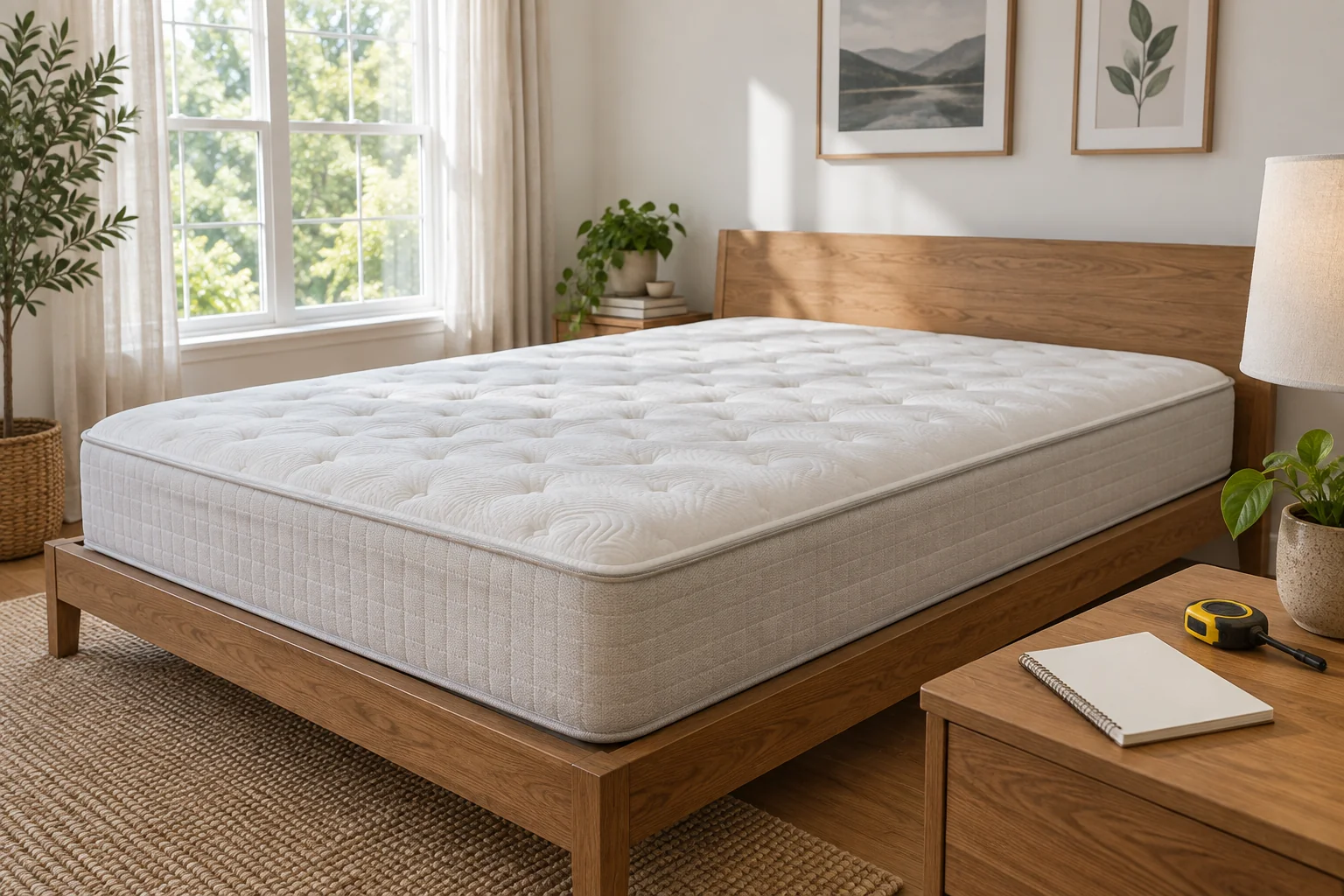
Compare mattress dimensions before and after expansion by recording when each measurement was taken and following the manufacturer’s setup and expansion instructions. A newly unpacked mattress and the same mattress after its specified expansion period are different observation states. Comparing them without dates or conditions can make a normal change look like a sizing error.
“Before” should mean an initial observation after unpacking as instructed, not treating the shipping box or tightly compressed roll as the mattress’s finished dimensions. Keep packaging measurements separate from the dimensions of the sleeping surface.
Find the instructions for the exact mattress
Record the model, ordered size and the maker’s published dimensions. Save the relevant unpacking and expansion guidance for that product and market. Do not substitute a generic waiting period from a roundup when the actual manufacturer gives different instructions.
Casper’s current FAQ, for example, distinguishes its general foam and hybrid expansion guidance from a longer stated period for its Snow mattresses. This shows why one timing rule should not be applied to every product, even within one brand. Use the instructions for the mattress you received rather than treating this example as your own schedule.
Keep separate any guidance about when the mattress may be used and when its dimensions should be evaluated. Those may not be the same milestone. Ask support if the product information leaves that distinction unclear.
Record the starting state
Note the unpacking date and time, setup location and support surface used under the manufacturer’s instructions. Retain the product identity and any relevant delivery observations. If the package or mattress appears damaged, follow the seller’s reporting process rather than assuming expansion will resolve every visible issue.
Take an initial measurement only when the mattress is positioned as instructed and it can be measured without unsafe handling. Do not lift a heavy mattress alone, climb on unstable furniture or remove its cover to reach an internal layer. Mark a measurement unavailable if it cannot be obtained appropriately.
| Observation | Record | Keep consistent |
|---|---|---|
| Time | Date and elapsed time since unpacking | One clearly identified starting event |
| Length and width | Actual endpoints and units | Same method and edge references |
| Height | Measurement position and method | Same support and surface condition |
| Condition | Visible folds or uneven areas without diagnosis | Photographs from comparable positions |
| Source | Manufacturer’s evaluation instructions | Exact model and revision where available |
Use a repeatable measurement method
Follow any measuring method supplied by the maker. If none is provided and a dimension appears wrong, ask support how it should be measured before treating your result as a formal claim. Rounded edges, piping and a quilted surface can make the endpoints less obvious than they appear.
Record where the tape begins and ends and avoid pulling the mattress into shape for the photograph. Use the same units throughout. A number without its method is difficult for another person to interpret, especially when one observation follows the top contour and another uses the outermost edge.
Compare like with like at the stated time
Repeat the observation at the point the manufacturer’s instructions identify for evaluation. Keep the support arrangement and measuring references consistent. Note any unavoidable change, such as moving to a different permitted foundation, rather than presenting the two observations as identical conditions.
Do not add heat, jump on the mattress or manipulate it to accelerate expansion unless the manufacturer specifically instructs a particular action. The purpose of the record is to describe what happened under the approved setup, not to create a home performance experiment.
A fictional dimension record
Imagine a mattress ordered with a stated width of 150 centimeters. An initial observation after instructed unpacking records 146 centimeters using named edge references. At the maker’s evaluation time, the same method records 149 centimeters. The arithmetic change is three centimeters.
That change alone does not establish whether the final size is acceptable. The household still needs the maker’s measurement method and any applicable product tolerance. They send the observations to support rather than inventing a universal one-centimeter allowance or deciding that every mattress must match a nominal number exactly.
If a support representative requests a different method, keep the earlier readings but label them accordingly. Do not silently replace one number with another while preserving the old timestamp. An honest sequence is more useful than a tidy table that hides how the measurements changed.
Separate expansion from other mattress questions
A mattress becoming taller does not prove that it will feel comfortable, resolve pain or fit the support system correctly. Keep those questions outside the dimension record. Likewise, a subjective impression of firmness is not a measurement of expansion.
If dimensions remain concerning after the instructed period, contact the seller or manufacturer with the model, dates, method and photographs. Follow its response and retain the reference. Your finished record should let another person understand the observed change without guessing at timing, measurement technique or an unsupported defect diagnosis.