Key takeaways
- No firmness rating or a vague “universal comfort” label with no number.
- Memory foam comfort layers of 4 inches or more on a mattress marketed to combination sleepers; you will feel stuck.
- Trials under 30 nights. Foam needs longer than that to break in.
- Unusually low weight for the size, under 60 pounds for a Queen hybrid, which signals thin coils and low-density foam.
- Warranty language that excludes sagging under 2 inches. A 2-inch dip is already a bad mattress.
- Reviews that mention a strong odor lasting more than a week, or a mattress that never reached its stated height.
What's inside
Combination sleepers make two predictable mistakes when they shop for a mattress. The first is buying for the position they fall asleep in, usually their side, and ending up with a mattress too soft for the hours they spend on their back or stomach. The second is going firm to be safe and waking up with a sore shoulder and hip from side sleeping on a surface that does not give. A combination sleeper needs a mattress that is medium-firm enough to keep the spine level on the back, soft enough at the surface to cushion the shoulder on the side, and responsive enough that rolling from one to the other does not feel like climbing out of a hole. That last point, responsiveness, is the one most buyers forget.
Decide These 3 Things First
Your dominant position. Track a week of mornings. If you wake on your side most days, lean toward medium, a 5 to 6 on the 10-point firmness scale. If you wake on your back or stomach most days, lean toward medium-firm, a 6 to 7.
As an Amazon Associate we earn from qualifying purchases at no extra cost to you. Product prices and availability are accurate as of the date shown and are subject to change.



Your body weight. Under 130 pounds, everything feels firmer than labeled, so drop half a point. Over 230 pounds, everything feels softer, so add a point and favor coil support.
Whether you share the bed. A partner who does not move much will feel every position change on an all-foam mattress. Hybrids with pocketed coils isolate motion better and rebound faster.
Firmness Scale
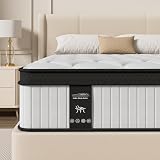
Firmness is rated 1 to 10, with 1 being a pile of pillows and 10 a floor. Most adults sleep between 5 and 7. Combination sleepers should target 5.5 to 6.5, marketed as medium or medium-firm. A 12-inch hybrid labeled medium firm, like the King Size 12 Inch Hybrid Mattress in a Box at $349.99, typically lands around 6 to 6.5. Firm pillow tops such as the Serta Perfect Sleeper Ultimate 14.5 inch at $629.99 sit closer to 7 and suit combination sleepers who spend more time on their back. A plain firm model like the Serta Perfect Sleeper Enhanced 12 inch Firm at $451.01 at roughly 7 to 7.5 is on the edge for anyone who side-sleeps more than a third of the night.
Material
All-foam mattresses are quiet and isolate motion, but dense memory foam is slow to recover and makes changing position feel sluggish. Latex is bouncy and cool but expensive. Hybrids combine a pocketed coil base with 2 to 4 inches of foam or latex on top, and they are the default recommendation for combination sleepers because the coils push back when you roll. Look for a comfort layer of 2 to 3 inches of foam over coils rather than 4 or more; deeper foam means deeper sink and slower transitions. Cooling gel or graphite infusions help hot sleepers but do not change firmness.
Construction and Height
Height runs 10 to 15 inches. A 10-inch mattress has less room for a real comfort layer and often feels firmer than its label. Twelve inches is the sweet spot for a hybrid: 8 inches of coils, a 1-inch transition layer, and 2 to 3 inches of comfort foam. A 14-inch hybrid like the Sleepmax Queen Mattress 14 Inch at $499.99 adds either taller coils or a thicker pillow top, which softens the surface. Pillow tops are stitched on and cannot be removed, so a firm pillow top is a permanent medium-firm feel. Edge support matters for combination sleepers who roll to the edge; look for reinforced perimeter coils or a foam encasement rail.
Comfort and Performance
On your back, the mattress should fill the curve of your lower back without leaving a gap; slide a flat hand under and it should meet light resistance. On your side, your shoulder should sink 1 to 2 inches so your spine stays straight. On your stomach, your hips should not drop below your chest. Then roll. A good combination mattress lets you turn in one movement without a pause while the foam catches up. Expect a break-in period of 2 to 4 weeks for new foam to soften slightly.
Price Tiers
Budget, $250 to $450 Queen. Boxed hybrids and all-foam mattresses at 10 to 12 inches, 1 to 2 inches of comfort foam, basic edge support. The 12-inch hybrid in a box at $349.99 for a King is an example that undercuts most Queen prices.
Mid-range, $450 to $800 Queen. Brand-name hybrids and firm pillow tops at 12 to 14.5 inches, zoned coils, better edge support, 10-year warranties. The Serta Perfect Sleeper models and the Sleepmax 14-inch hybrid sit here.
Premium, $800 to $2,000 Queen. Latex hybrids, dual-firmness options, 100-night or longer trials, and coil counts above 1,000 in a Queen.
Warranty and Trial
A 10-year warranty is standard and usually covers sagging deeper than 1 to 1.5 inches. Trials range from 30 to 365 nights; for a combination sleeper, insist on at least 100 nights because you need several weeks to learn how the mattress behaves in every position. Read the fine print on the required foundation; most warranties demand slats no more than 3 inches apart or a solid platform.
Delivery and Setup
Boxed mattresses arrive compressed in a box roughly 16 x 16 x 45 inches and weighing 70 to 130 pounds for a Queen. Unroll, cut the plastic, and allow 24 to 72 hours for full expansion; a mild odor for 1 to 3 days is normal. Check your foundation’s slat spacing before delivery day.
Spec Checklist
| Spec | Budget | Mid | Premium |
|---|---|---|---|
| Price, Queen | $250 to $450 | $450 to $800 | $800 to $2,000 |
| Firmness | Medium-firm, 6 to 7 | Medium to medium-firm, 5.5 to 7 | Choice of firmness or dual-sided |
| Height | 10 to 12 in | 12 to 14.5 in | 12 to 15 in |
| Support core | Basic pocketed coils or dense foam | Zoned pocketed coils | Zoned coils or latex core |
| Comfort layer | 1 to 2 in foam | 2 to 3 in foam or pillow top | 2 to 3 in latex or high-density foam |
| Edge support | Standard | Reinforced perimeter | Foam encasement plus firm coils |
| Trial | 30 to 100 nights | 100 to 120 nights | 120 to 365 nights |
| Warranty | 10 years limited | 10 years | 10 to 25 years |
Red Flags
- No firmness rating or a vague “universal comfort” label with no number.
- Memory foam comfort layers of 4 inches or more on a mattress marketed to combination sleepers; you will feel stuck.
- Trials under 30 nights. Foam needs longer than that to break in.
- Unusually low weight for the size, under 60 pounds for a Queen hybrid, which signals thin coils and low-density foam.
- Warranty language that excludes sagging under 2 inches. A 2-inch dip is already a bad mattress.
- Reviews that mention a strong odor lasting more than a week, or a mattress that never reached its stated height.
FAQ
Is medium or medium-firm better for combination sleepers?
Medium-firm, around 6 to 6.5, suits most combination sleepers because it holds the back and stomach positions while still giving enough at the surface for the side. Lighter sleepers under 130 pounds may prefer a true medium.
Should a combination sleeper choose a hybrid or all-foam?
Hybrid. The coil base pushes back when you move, so position changes are quick and the mattress does not trap heat the way thick foam does.
Does a pillow top make a firm mattress soft?
It softens the surface by roughly half a point to a point. A firm pillow top feels medium-firm; a plush pillow top feels medium. The support underneath stays firm either way.
How long does it take to adjust to a new firmness?
Two to four weeks. Foam softens a little and your body adapts. If you still wake sore after 30 nights on a mattress bought in 2026 with a long trial, use the trial rather than waiting it out.