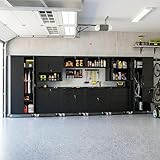
The modern garage has evolved far beyond a simple shelter for vehicles and discarded household items. Today, it functions as a multi-purpose workshop, hobby studio, and high-capacity storage zone that demands the same design consideration as an indoor kitchen or architectural office. Premium garage cabinet organization systems with integrated workbenches bridge the gap between heavy-duty workshop utility and clean, sophisticated aesthetics, turning chaotic clutter into an organized, highly efficient workspace.
Investing in a high-end system requires looking past flashy marketing to evaluate the structural metrics that truly dictate daily performance. Because manufacturers market heavily on visual appeal, buyers often overlook crucial details like steel gauge thickness, mounting engineering, and surface durability. Making the right purchasing decision in 2026 means understanding how these specialized storage combinations are engineered to handle both rigorous projects and long-term environmental stress.
As an Amazon Associate we earn from qualifying purchases at no extra cost to you.
Understanding Structural Integrity and Steel Gauge
When evaluating premium garage systems, the primary indicator of durability is the steel gauge used for the cabinet frames and doors. In the world of metal fabrication, a lower gauge number indicates thicker, stronger steel. Premium systems typically utilize cold-rolled steel ranging from heavy-duty commercial grades down to lighter residential gauges. Thicker steel prevents the cabinet boxes from twisting, warping, or vibrating when you are hammering, cutting, or operating heavy power tools on the adjacent workbench surface. Beyond gauge thickness, pay close attention to internal reinforcement channels and welded corners rather than purely bolted designs, as welded frames offer superior rigidity over years of heavy usage.
Evaluating Workbench Surface Materials
The workbench is the operational heart of your organization system, and the choice of surface material depends entirely on your specific workflow. Solid hardwood tops—such as rubberwood, maple, or bamboo—offer a classic aesthetic, provide natural shock absorption, and can be easily sanded down and refinished if they sustain gouges or stains. Conversely, stainless steel or powder-coated metal worktops are impervious to moisture, heat, and automotive fluids like oil or brake fluid, making them ideal for heavy mechanical work. Composite resin surfaces occupy a middle ground, offering solid chemical resistance and impact absorption without requiring the specialized maintenance that natural wood demands.
Weight Capacities: Wall-Mounted vs. Floor-Standing Systems
Configuration plays a massive role in how much weight your system can safely support. Wall-mounted upper cabinets and floating workbench designs rely entirely on the integrity of your garage wall studs and heavy-gauge mounting rails. If you plan to store heavy cast-iron tools, bulk automotive parts, or dense hardware collections, ensure the mounting system features continuous support rails rather than isolated bracket points. Floor-standing base cabinets and full-height pantry towers distribute weight directly to the concrete slab, allowing for much higher load limits per shelf. Always calculate the maximum cumulative weight of your gear before deciding whether a floating or grounded layout best suits your storage habits.
Modular Flexibility and Future Expansion
A truly premium garage organization setup should adapt as your hobbies and storage needs change over time. Modular systems allow you to mix and match tall lockers, drawer base cabinets, wall-mounted tool storage, and workbenches in various arrangements. Look for manufacturers that use standardized connection hardware or unified wall-track systems, which make it simple to unclip, reposition, or add new modules down the line. Avoid proprietary, single-piece welded monolithic units unless you are entirely certain your garage layout will never change and you will never need to relocate the system to a new home.
Hardware Quality, Soft-Close Mechanisms, and Security
The tactile experience of a high-end system is defined almost entirely by its hardware. Premium garage cabinets should feature heavy-duty, concealed European hinges that offer multi-way adjustability to prevent sagging doors over time. Drawer slides must be fully extending and ball-bearing enabled, allowing you to access tools at the very back of a deep drawer without tipping the unit or straining the glides. Soft-close dampeners are practically mandatory at this price point to prevent slamming in a hard-surface echo chamber like a garage. Additionally, look for integrated cylinder lock systems if you need to secure hazardous chemicals, sharp tools, or expensive diagnostic equipment away from children and guests.
Clearance, Door Swings, and Garage Layout Constraints
Before committing to a multi-piece system, carefully map out your garage’s spatial limitations, including vehicle door clearance, electrical outlet locations, and garage door tracks. A wide workbench paired with deep base cabinets will protrude significantly into your floor space; ensure you still have adequate room to park your vehicles comfortably with the doors fully open. Pay attention to door swing radiuses as well. Tall lockers positioned right next to an inside corner or a side entry door can easily block access if they require a full one-hundred-and-eighty-degree swing to open internal drawers.
When It Makes Sense to Splurge on Professional Installation
While DIY assembly is common for flat-pack furniture, premium garage cabinet systems are heavy, awkward, and occasionally unforgiving during installation. Professional delivery and installation services ensure that multi-hundred-pound wall units are safely anchored into structural studs using appropriate lag hardware, protecting your investment from catastrophic wall failure. Furthermore, experienced installers know how to shim uneven concrete garage floors so that base cabinets align perfectly, doors hang plumb, and integrated workbenches remain completely level across their entire span.
Related Guides
To compare top-rated modular setups and see how specific models perform under rigorous laboratory and real-world testing, check out our comprehensive Best Premium Garage Cabinet Organization Systems with Workbenches in 2026: Compared and Ranked roundup.
FAQ
Are stainless steel or hardwood workbench surfaces better for heavy DIY projects?
Stainless steel is superior if you frequently work with automotive fluids, paints, or chemicals because it resists staining and cleans easily. Hardwood is better if you do woodworking or general crafting, as it provides a forgiving surface that absorbs shock and protects delicate project materials from scratching.
Can I install a heavy premium cabinet and workbench system myself, or do I need professional help?
Many systems are designed for experienced DIYers, but due to the sheer weight of steel panels and the critical nature of wall-stud anchoring, a second pair of hands is mandatory. If your system includes extensive wall-mounted upper cabinets or complex corner configurations, professional installation is strongly recommended for safety.
How do I ensure my garage cabinets won’t sag or pull away from drywall studs?
The secret lies in securing your cabinets to a heavy-gauge steel mounting rail system that spans across multiple wall studs rather than screwing individual cabinets directly into isolated studs. Always use heavy-duty structural screws rated for wood or masonry depending on your garage wall construction.
What is the biggest mistake buyers make when measuring for a combined cabinet and workbench unit?
The most common mistake is failing to account for protruding elements like protruding door handles, electrical conduits, water heater clearances, and open vehicle doors. Always measure your usable wall space at multiple heights to compensate for bowed walls or uneven concrete stem walls.