Key takeaways
- Vacuum slowly in two directions before extracting — wet cleaning over loose grit turns dust into mud in the backing.
- Clean in the morning, then cross-ventilate with a window open and a fan running until evening.
- Blot spot treatments with a white cloth rather than scrubbing; scrubbing distorts pile and spreads the stain outward.
- Rinse and air-dry the machine’s tanks after every use, or the next clean will smell worse than the carpet did.
What's inside
Sleep hygiene advice tends to stop at the mattress. We talk about blackout curtains, room temperature, screen curfews — and almost never about the eight square metres of textile directly beneath the bed. That’s an oversight, because carpet behaves like a reservoir. It holds dust mite allergen, pet dander, shed skin, tracked-in pollen and combustion particles, and it releases them upward every time you walk across it, make the bed, or roll over hard enough to stir the air. For roughly a third of your life, your airway sits about a metre above that surface with the door closed and the ventilation low.
If you wake congested, clear your throat for the first twenty minutes of the day, or find that allergy season hits hardest at 3 a.m., your flooring deserves a closer look than it’s getting. This guide covers how to choose between full-size extractors and portable spot machines, why drying speed matters more to sleep quality than raw cleaning power, how to read a cleaning formula before you buy it, and how to schedule the job so you’re not sleeping in a damp room. Practical tips and answers to common questions follow at the end.
🛒 Best Price Today on Amazon
Prime members get fast, free shipping on everything above, plus member-only deals. New members get a 30-day free trial — cancel anytime.
Our Recommended Picks
As an Amazon Associate we earn from qualifying purchases.



Treat the Bedroom as Priority One
Most people deep clean the living room and hallway first because that’s where visible traffic lands. Reverse it. Bedroom carpet accumulates a different, finer load — skin cells that feed dust mites, plus whatever settles out of the air overnight — and it’s the one room where you breathe the resulting aerosol for hours at a stretch, unmoving. A realistic baseline is a full hot-water extraction twice a year, moving to quarterly if pets sleep on the floor, if anyone in the house has diagnosed allergic rhinitis or asthma, or if the carpet predates your ownership of the home.
Size the Machine to the Job You’ll Actually Do
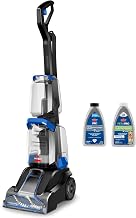
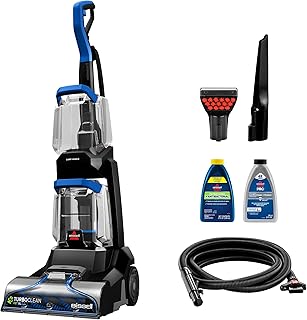
Full-size uprights are the right tool for wall-to-wall carpet. The Hoover PowerScrub Deluxe uses counter-rotating SpinScrub brushes that work solution into the pile rather than skimming the surface, and it pairs with pet and upholstery tools for the furniture in the room. The BISSELL TurboClean 3952 is the lighter option — easier to carry upstairs and less punishing on small bedrooms and apartments. For households with multiple pets or a long-neglected carpet, the BISSELL ProHeat 2X Revolution Pet Pro Plus (3588F) brings dual DirtLifter PowerBrushes and more tank capacity, so you’re not refilling mid-room.
Dry Time Is the Metric That Matters
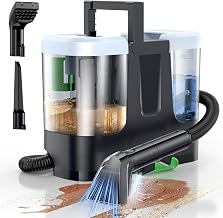
Any decent extractor will lift soil. The difference between machines is how much water they leave behind, and that’s the variable with direct sleep consequences. A saturated carpet pushes bedroom relative humidity well past 55%, which is precisely the range where dust mite populations expand — you can undo the benefit of cleaning within a week. Prioritise recovery suction and heated drying: Hoover’s HeatForce feature is built for exactly this, and among portables the Starrybot upholstery cleaner’s 18Kpa suction pulls a notable amount of moisture back out. Whichever unit you use, finish with two or three dry passes over every strip, trigger released.
Read the Chemistry, Not Just the Feature List
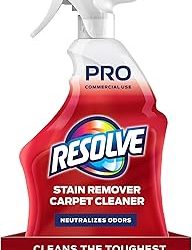
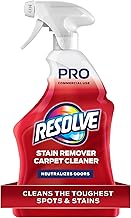
Fragrance load is the most overlooked spec in this category. A heavily perfumed formula will off-gas in a closed bedroom for days, and for fragrance-sensitive sleepers that’s a net negative regardless of how clean the fibres are. Oxygen-based formulas such as the Pro Max Clean & Protect supplied with the TurboClean handle organic staining without heavy masking scents. For pet accidents, choose an enzymatic product — the Oxy Urine Eliminator included with that machine breaks down uric acid crystals rather than covering them, which is why untreated spots smell again in humid weather. Keep Resolve Professional Strength Spot and Stain on hand for isolated marks so you’re not hauling out a machine for a single coffee ring. Always follow with a clear-water rinse pass; detergent residue attracts soil and can irritate airways.
Don’t Stop at the Floor
Upholstered headboards, bench seats, bedroom armchairs and the rug beneath a bed frame all hold the same allergen load as the carpet, and none of them get vacuumed often. A compact extractor is the practical answer here. The BISSELL Little Green 1400B has been the default portable for years for good reason — it’s simple, tough, and its specialty tools reach seams and corners. The Starrybot is the newer challenger, with strong suction in a light body that also handles car interiors. Use either on mattress edges and piping with restraint: mist, agitate, extract thoroughly, and never soak foam.
Tips
- Vacuum slowly in two directions before extracting — wet cleaning over loose grit turns dust into mud in the backing.
- Clean in the morning, then cross-ventilate with a window open and a fan running until evening.
- Blot spot treatments with a white cloth rather than scrubbing; scrubbing distorts pile and spreads the stain outward.
- Rinse and air-dry the machine’s tanks after every use, or the next clean will smell worse than the carpet did.
Frequently Asked Questions
How often should bedroom carpet be deep cleaned?
Twice a year for most households. Move to every three months with indoor pets, allergy sufferers, or carpet older than a decade.
Can cleaning make symptoms worse at first?
Briefly, yes — agitation aerosolises settled allergen. Leave the room during and immediately after, ventilate well, and judge the result after 48 hours.
Do I need a full-size machine for area rugs only?
No. A portable such as the Little Green or the Starrybot handles rugs, upholstery and stairs at a fraction of the storage footprint.
How long before it’s safe to sleep in the room?
Six to twelve hours with good airflow. Press a folded tissue into the pile with your palm; if it dampens at all, wait longer.
Conclusion
For most bedrooms, the sensible setup is a mid-weight upright with genuine drying capability — the Hoover PowerScrub Deluxe or the lighter BISSELL TurboClean 3952 — paired with a portable spotter for furniture and quick accidents. Heavy pet households will get more from the ProHeat 2X Revolution 3588F, and a bottle of Resolve covers everything in between. Choose for suction and dry time over brush count, keep the room’s humidity in the 40–50% band afterwards, and you’ll notice the difference where it counts: in how your airway feels at six in the morning.