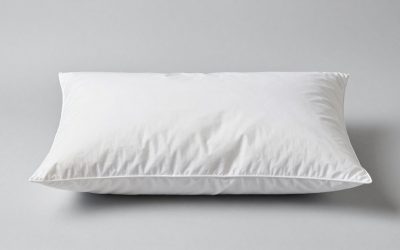
A down or feather pillow does not wear out the way foam does. It flattens because the clusters inside clump together with absorbed moisture, body oil, and dust, and because the fill gets pushed to the edges night after night. The fix is simple in principle: separate the clusters, dry them completely, and redistribute them. Where people go wrong is in the execution. Washing without a thorough rinse leaves detergent that glues down together. Drying at high heat scorches the feathers and makes them brittle. Pulling a pillow out of the dryer while the core is still damp guarantees a musty smell and permanent clumps within a week. A good-quality down pillow costs $60 to $200 and can last 8 to 10 years if you restore it properly a couple of times a year, so the hour of attention below is worth it.
What You Need
| Item | Why | Optional? |
|---|---|---|
| Front-loading or top-loading washer without a center agitator | Agitator posts twist the pillow and can rip the shell | No |
| Down-specific or mild low-suds detergent (1 to 2 tablespoons) | Regular detergent strips natural oils and leaves residue that mats clusters | No |
| Clothes dryer with a low-heat or air-fluff setting | Tumbling breaks up clumps; low heat protects the down | No |
| Wool dryer balls or 2 to 3 clean tennis balls in socks | Beat the clusters apart during drying | No |
| A second pillow or a few towels | Balances the washer drum and speeds drying | Yes |
| Needle and thread | Closes any small seam gaps before washing so fill does not escape | Yes |
| Zippered pillow protector | Slows the next round of oil and moisture buildup | Yes |
| A sunny, breezy spot or a fan | Final airing removes lingering moisture the dryer misses | Yes |
Step-by-Step
1. Inspect and repair the shell (5 minutes)
Remove the pillowcase and protector and look over the shell for pinholes, worn seams, or a failing zipper. Down escapes through the smallest opening once the pillow is wet and tumbling, so stitch any gap closed with small, tight stitches. Give the pillow a shake and a sniff. A sour or musty odor means the fill has been holding moisture and needs a full wash rather than a quick fluff.
Our top picks
 Three Geese Adjustable Layer Goose Feather Pillow
- 2PACK Adjustable and Assemblable Goose Feather Pillow with…
- Adjustable Layer Pillow is what you in need!…
- 1000 Thread Count 100% Cotton Outer Pillow Case,Safety…
As an Amazon Associate we earn from qualifying purchases at no extra cost to you.
2. Try the dry fluff first (15 minutes)
If the pillow is clean and simply flat, skip the wash. Put it in the dryer with two or three dryer balls on air-fluff or the lowest heat setting for 15 to 20 minutes. The tumbling and the impact of the balls separate clumped clusters and knock out dust. For many pillows that are less than a year past their last wash, this alone restores 70 to 80 percent of the original loft. Fluff by hand afterward, pushing fill from the corners back toward the center.
3. Wash on a gentle cycle (45 to 60 minutes)
For a pillow that is stained, smelly, or deeply flattened, wash it. Load two pillows at once, or one pillow plus a few towels, so the drum stays balanced. Use warm water, not hot, and 1 to 2 tablespoons of down wash or a mild detergent with no fabric softener or bleach. Select the gentle or delicate cycle. Fabric softener coats the down and destroys its ability to trap air, so leave it out entirely.
4. Run an extra rinse and spin (15 to 20 minutes)
When the cycle ends, run a second rinse and a high-speed spin. Down holds soap tenaciously, and residue is the number one reason freshly washed pillows come out flatter than they went in. After the final spin, press the pillow between your palms; it will be heavy and lumpy, which is normal. Do not wring or twist it.
5. Dry low and slow (2 to 4 hours)
Move the pillow to the dryer with three to four dryer balls. Use low heat, never medium or high; down begins to lose resilience above roughly 130°F and feathers can scorch. Every 30 minutes, stop the machine, pull the pillow out, and break up the wet clumps by hand, working them apart with your fingers and shaking the pillow. Then return it. A standard 20-by-26-inch pillow with 20 to 30 ounces of fill generally needs 2 to 3 hours; a heavy queen or king can take 4. The pillow is done when it feels light, springs back after a squeeze, and has no cool or damp spots anywhere, including deep in the center.
6. Air out and redistribute (30 to 60 minutes)
Set the pillow in a sunny window or in front of a fan for at least half an hour to let residual humidity escape. Then hold it by two corners and shake it vigorously for 30 seconds, rotate, and repeat until the fill is evenly spread. Chop the center with the side of your hand a few times to open up the clusters. Slip on a zippered protector before the pillowcase goes back on.
Mistakes to Avoid
- Using hot water or high heat. Heat is the fastest way to permanently damage down. Warm wash, low dry, always.
- Adding fabric softener or dryer sheets. The coating they leave flattens clusters and cuts loft dramatically.
- Stopping the dryer too early. A pillow that feels dry on the outside can hold a cup of water in the core. Damp down clumps, smells, and can mildew.
- Washing one pillow alone. An unbalanced drum bangs the pillow against one side and can tear the shell.
- Skipping the extra rinse. Soap residue is what makes freshly washed down feel heavy and dense.
- Dry cleaning. Solvents strip the natural oils that keep down springy. Water washing is safer.
How Often
Fluff a down pillow by hand every morning and give it a 15-minute dryer tumble on air-fluff every 4 to 6 weeks. Wash it fully two to three times a year, or every 3 to 4 months if you sleep hot or skip the protector. Wash the protector itself every 2 to 3 weeks with your sheets. Twice a year, on a dry sunny day, let the pillow sit outdoors in indirect light for a couple of hours; the airflow refreshes the fill and helps with any faint odor. With this routine a well-made down pillow should hold most of its loft for 5 to 10 years.
When to Call a Pro or Replace
Professional down cleaning services, usually offered by bedding specialty shops or some dry cleaners with wet-cleaning equipment, cost $25 to $50 per pillow and make sense for very large or heavily soiled pillows, or for a heirloom pillow you do not want to risk in a home machine. Some shops also offer re-filling, adding 4 to 8 ounces of fresh down for $30 to $60, which can rescue a pillow with a sound shell. Replace the pillow when the shell has worn thin enough to leak fill from multiple spots, when it stays flat and lifeless within a day of a full restore, when it develops a persistent odor after washing, or when you fold it in half and it does not spring open on its own. If you are shopping in 2026, the Canadian Goose Down Pillows Queen Size, 80% goose down and 20% goose feathers with 1650+ fill power and an 800 thread count cotton shell, 20 by 30 inches, sells for about $149.99 and represents the high-loft end. The Three Geese Adjustable Layer Goose Feather Pillow in standard/queen size, with a soft cotton cover and removable layers for side, back, or stomach sleepers, runs around $59.98 and lets you fine-tune height without any restoration at all.
FAQ
Can I restore loft without washing the pillow?
Yes, if the pillow is clean. A 15- to 20-minute tumble in the dryer on air-fluff with dryer balls, followed by a vigorous hand shake, is often enough. Wash only when there is odor, staining, or the fill has been compressed for months.
Why does my pillow smell after washing?
Almost always because it was not fully dry. Wet down has a faint barnyard smell that disappears once every cluster is dry. Return it to the dryer on low for another 30 to 60 minutes and check the center carefully before stopping.
Do feather pillows respond the same way as down?
Mostly. Feather-heavy fills are denser and dry a bit faster, but they also have quills that can poke through a worn shell during tumbling. Check the shell more carefully before washing and expect slightly less dramatic loft recovery, since feathers never had the airy structure of down clusters.
How much loft should a restored pillow have?
A properly restored down pillow should regain most of its original height, typically 5 to 7 inches at the center when lying flat and unloaded. If it tops out at 3 inches or less after a full wash and dry, the fill has broken down and it is time to add down or replace.