The winter duvet decision comes down to one trade: down gives you more warmth per ounce and a lighter, loftier feel, while down alternative gives you a lower price, easy machine washing, and no allergy risk. Both will keep you warm in a 60 to 65 degree bedroom. The question is how much you value the airy weight of real down against the practicality of polyester fill, and how much you are willing to spend up front and on cleaning over the years you own it.
One sizing detail applies to both: a Queen insert is sold at 88 x 88 or 90 x 90 inches. Match or slightly exceed your duvet cover, since a smaller insert slides around and leaves cold corners.
Our top picks
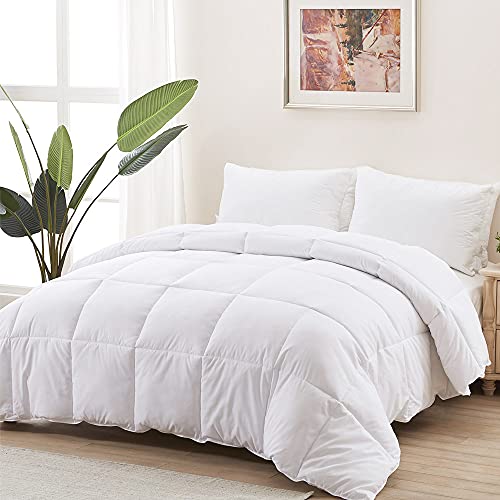
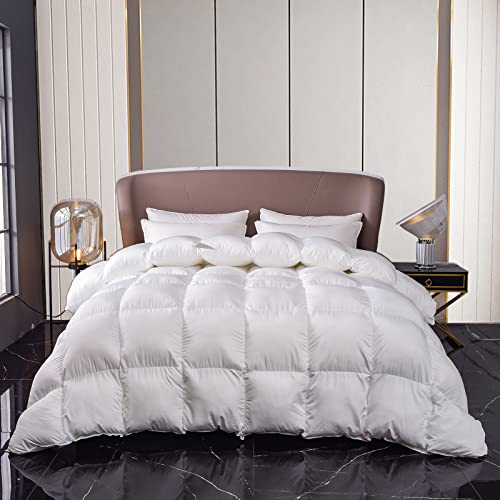
As an Amazon Associate we earn from qualifying purchases at no extra cost to you.
Quick Verdict
Choose down if you sleep cold, want the lightest possible blanket for the warmth, and are willing to spend $150 to $400 for a Queen and dry-clean or carefully launder it once a year. Choose down alternative if you have allergies, share a bed with pets or kids, want to wash the insert at home every few months, or have a budget of $30 to $80. For most households, a 400 GSM down alternative insert such as the ACCURATEX Duvet Insert Queen at $44.99 or a baffle-box design like the MH MYLUNE HOME Down Alternative Comforter at $45.11 delivers real winter warmth for a fraction of the price of down.
Side by Side
| Factor | Down | Down Alternative |
|---|---|---|
| Comfort | Very light and lofty; 650 to 800 fill power traps heat with little weight | Heavier for the same warmth; 300 to 400 GSM feels plush and blanket-like |
| Warmth | Excellent; a 30 to 40 oz Queen suits rooms of 60 F or below | Good; 350 to 500 GSM suits rooms of 60 to 68 F |
| Durability | 10 to 20 years with care | 3 to 7 years before fibers clump and flatten |
| Price range | $150 to $400 for Queen; $500+ for premium | $30 to $80 for Queen; $80 to $150 for premium |
| Maintenance | Professional cleaning or careful home wash once a year; needs full drying | Machine wash and dry at home every 2 to 3 months |
| Space needed | Compresses small for storage in summer | Bulky; a Queen fills a large storage bag |
| Look | Soft, drapey, hotel-style loft | Fuller and stiffer, holds a boxy shape |
| Allergies | Can trigger reactions unless labeled hypoallergenic and well cleaned | Naturally hypoallergenic |
| Resale | Some value if premium and clean | Essentially none |
| Best for | Cold sleepers, cold houses, people who dislike heavy bedding | Allergy sufferers, homes with pets and kids, budget buyers, hot sleepers who still want winter coverage |
Where Down Wins
Down wins on warmth-to-weight. A Queen down insert with 700 fill power and 30 to 35 ounces of fill weighs about 4 to 5 pounds and will keep most people warm in a room at or below 60 degrees. A down alternative insert with the same warmth weighs 7 to 9 pounds. If you dislike the pressed-down feeling of heavy bedding, down is the only way to get winter warmth without it.
It also breathes better. Down clusters let moisture pass through, so sweat from a hot moment in the night evaporates rather than staying trapped. Polyester fibers hold more moisture against the body.
Longevity is the third win. A well-made down insert with a 300 to 400 thread count cotton shell and baffle-box construction lasts 10 to 20 years. The price per year of use ends up comparable to replacing a synthetic insert every 4 or 5 years.
Where Down Alternative Duvet Insert for Winter Wins
Down alternative wins on price, hands down. A $45 insert versus a $200 insert is $155 that can go toward a good cover or a second insert for the guest room. It wins for anyone with allergies, since polyester fill does not harbor the proteins in down that trigger reactions.
It also wins on cleaning. Toss it in a large-capacity washer on warm, dry it on low for 60 to 90 minutes with dryer balls, and it is done. Down needs either a professional cleaner or a very careful home wash followed by two to three hours of drying to prevent mildew. With pets, kids, or a partner who eats breakfast in bed, that difference decides the question.
Finally, alternative fill is consistent. Every insert at 400 GSM behaves about the same, while down quality varies widely with fill power and cluster size.
Cost Over 5 Years
A mid-range down insert costs $150 to $300 up front. Professional cleaning runs $30 to $60 a year, or you can wash at home and spend only on utility costs. Over 5 years: $150 to $300 plus $0 to $300 in cleaning, for a total of $150 to $600. The insert is still good at the end of that period.
A down alternative insert costs $30 to $80. Home washing is essentially free. Expect to replace it once, around year 3 or 4, when the fill flattens. Over 5 years: $60 to $160.
The synthetic option is cheaper over any period under 10 years. Down only closes the gap if you keep it past a decade and skip professional cleaning.
Which One for Your Home
Small Apartment
Down compresses to a fraction of its size for summer storage, which matters when the only closet is already full. An alternative insert takes a large vacuum bag. If storage is tight and the budget allows, down is the practical choice; with a shared or small washer, plan on a laundromat trip either way.
Family With Kids or Pets
Down alternative. Between muddy paws, spilled cocoa, and the occasional accident, you want an insert that goes straight into the washer without a second thought. Buy two for the primary bed so one is always dry and ready.
Rental
Either works, but alternative is the lower-risk choice when your bedroom temperature depends on a landlord’s thermostat. A 400 GSM insert covers rooms from 60 to 68 degrees, and if the next place is warmer you have lost $45 rather than $250. A down insert can also be hard to dry fully in a small apartment dryer.
Long-Term Home
In a home you plan to stay in, with a reliable washer and dryer and a bedroom you keep cool in winter, down earns its price. Pair it with a lighter insert for shoulder seasons. Households that run warm year-round and keep the bedroom at 66 to 68 degrees are still better served by an alternative insert in 2026, since a full winter-weight down duvet will be too warm most nights.
FAQ
What GSM do I need in a down alternative insert for winter?
Look for 350 to 500 GSM for a bedroom kept at 60 to 68 degrees. A 400 GSM Queen is the common winter-weight standard. Below 300 GSM is a spring or summer insert.
What fill power do I need in down for winter?
Aim for 650 to 750 fill power with 30 to 40 ounces of fill in a Queen. Higher fill power means more loft per ounce, so an 800 fill power insert can use less down for the same warmth.
Do I need baffle-box construction?
It helps in both types. Baffle boxes are fabric walls between the top and bottom layers that let the fill stay lofted without shifting into corners. Sewn-through boxes are cheaper and fine for alternative fill, but they create cold seams in a down insert.
Which is better for hot sleepers who still get cold in winter?
Down, because it breathes and can be bought in a lighter weight that still feels warm. If allergies or budget rule down out, choose a 300 to 350 GSM alternative insert with a cotton shell rather than a heavier microfiber one.