Key takeaways
- Trusting the “queen” label alone. Queen inserts range from 86 x 86 to 92 x 96 inches. Measure the cover and match inches to inches.
- Buying an insert smaller than the cover. Even 2 inches of slack lets the insert drift to one corner, leaving empty fabric and a lumpy look. Err larger.
- Buying a king insert for a queen cover. A 102-inch insert will not fit inside an 88-inch cover; the seams strain and the closure gaps.
- Ignoring corner ties. A cover with 8 ties and an insert with 4 loops still works; a cover with 4 ties and an insert with none does not stay put. Sew on loops or use clip-on duvet grips ($8-$15).
- Forgetting shrinkage. A cotton cover that measured 90 x 92 new may be 88 x 90 after washing. Buy the insert for the washed size.
- Choosing by weight instead of dimensions. A heavier insert is warmer, not bigger. Warmth is fill weight; coverage is inches.
The Short Answer
Buy a duvet insert the same size as the cover or up to 2 inches larger in each direction. A queen duvet cover typically measures 88-90 inches wide by 90-92 inches long, so a queen insert of 88 x 88 or 90 x 90 inches fills it correctly. An insert 1-2 inches oversized packs the corners full and looks plump; an insert that is smaller than the cover slides around inside and leaves empty fabric at the edges. If your cover is labeled “full/queen,” measure it first, because that label covers everything from 86 x 86 to 90 x 96 inches and a mismatch is the most common reason a duvet looks flat and lumpy.
Standard Sizes
There is no single regulated duvet size in the United States, so dimensions vary by brand within a few inches. These are the ranges you will actually encounter.
Our top picks


As an Amazon Associate we earn from qualifying purchases at no extra cost to you. Ratings are shown as listed on Amazon.
| Size label | Typical insert dimensions (inches) | Typical insert dimensions (cm) | Mattress it covers | Drop over a 60 x 80 queen mattress |
|---|---|---|---|---|
| Twin | 64-68 x 86-88 | 163-173 x 218-224 | 38 x 75 | Not recommended |
| Twin XL | 68 x 90 | 173 x 229 | 38 x 80 | Not recommended |
| Full / Double | 80-84 x 86-90 | 203-213 x 218-229 | 54 x 75 | 10-12 inches per side, short on length |
| Full / Queen (combined) | 86-90 x 86-92 | 218-229 x 218-234 | 54 x 75 or 60 x 80 | 13-15 inches per side |
| Queen | 88-90 x 88-92 | 224-229 x 224-234 | 60 x 80 | 14-15 inches per side, 8-12 inches at foot |
| Oversized queen | 92-96 x 96-98 | 234-244 x 244-249 | 60 x 80 (12-16 inch thick) | 16-18 inches per side |
| King | 102-108 x 90-96 | 259-274 x 229-244 | 76 x 80 | 21-24 inches per side (too wide for most queen covers) |
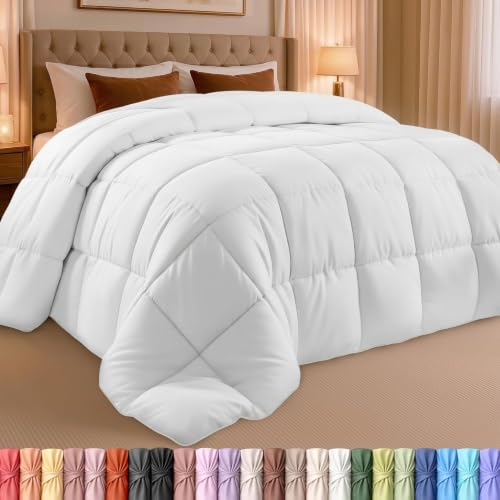
Queen inserts at 88 x 88 inches, such as the Utopia Bedding queen comforter and duvet insert at $29.69 or the Utopia queen insert at $26.74, are the most common budget size and fit a standard 88 x 90 cover with a slightly short foot. The 90 x 90 inch format, seen on the Serta goose feather and down fiber queen comforter at $62.99, fills a 90 x 90 cover exactly and a 88 x 88 cover with a snug 2-inch overfill. Lightweight microfiber inserts like the DOWNCOOL queen at $22.99 usually follow the 88 x 88 pattern. Budget queen inserts weigh 4-6 lb; down-alternative all-season inserts weigh 6-8 lb; down inserts weigh 3-5 lb for the same warmth.
How to Measure Your Space
- Measure the duvet cover, not the mattress. Lay the cover flat, smooth it, and measure width and length edge to edge. Covers shrink 1-3% after the first wash, so measure a washed cover if you can.
- Measure your mattress height including the topper. A 10-inch mattress needs about 12 inches of side drop to look right; a 14-inch mattress with a 3-inch topper needs 16-18 inches. This tells you whether a standard 88-inch or an oversized 92-96 inch insert suits the bed.
- Decide how you want the duvet to hang. For a duvet that drops to the top of a bed skirt or platform, add 2 x (mattress height) to the 60-inch mattress width. A 60-inch queen with a 12-inch mattress calls for an 84-inch-plus width; a 90-inch insert gives 15 inches per side, which covers the mattress and 3 inches of frame.
- Check the closure and ties. Count the corner ties inside the cover (4 is standard, 8 on better covers). The insert needs corner loops to match; without them, an insert 2 inches smaller than the cover will bunch at the foot within a week.
- Add 0-2 inches to the cover size. This is your target insert size. A cover of 88 x 90 wants an insert of 88 x 88 through 90 x 92.
- Verify the insert’s listed dimensions. Product pages often list size by mattress category only; look for the actual inches, since two “queen” inserts can differ by 4-8 inches in length.
By Room or Use Case
Standard Queen Bed, 10-12 Inch Mattress
An 88 x 88 or 88 x 90 insert in an 88 x 90 cover is the classic pairing. Drop is 14 inches per side, enough to cover the mattress and a slat frame. If you use a bed skirt or platform, the foot hangs 8-10 inches over the end.
Thick or Pillow-Top Mattress, 14-16 Inches
Move to a 90 x 90 or 92 x 96 oversized queen insert and a cover to match. A standard 88-inch insert on a 15-inch mattress leaves the drop stopping short of the mattress bottom, exposing the fitted sheet. Oversized queen covers exist for exactly this and cost $10-$20 more than standard.
Couples Who Fight Over the Covers
Size up to a king insert (102-108 x 90) only if your cover is also king. If you want to keep a queen cover, buy the oversized 92-96 inch queen and pair it with the widest cover labeled queen you can find. An extra 4-8 inches of width is usually enough to stop the pulling.
Guest Rooms
A standard 88 x 88 insert in a full/queen cover keeps things simple and serves both full and queen beds if the room changes. Choose a lightweight microfiber insert at 4-6 lb so guests who run hot can still sleep under it.
Dorm or Small Apartment on a Full Bed
A queen insert works on a 54 x 75 inch full mattress and gives a generous 17-inch drop per side. Many students buy a queen insert and cover for a full bed on purpose so it moves with them to a queen later.
Hot Sleepers Using the Duvet Year-Round
Size stays the same; fill changes. A lightweight insert under 2 lb of fill per queen keeps the same 88 x 90 dimensions but sleeps cooler. Do not downsize to a full insert to reduce warmth; it will slide inside a queen cover and bunch.
Common Sizing Mistakes
- Trusting the “queen” label alone. Queen inserts range from 86 x 86 to 92 x 96 inches. Measure the cover and match inches to inches.
- Buying an insert smaller than the cover. Even 2 inches of slack lets the insert drift to one corner, leaving empty fabric and a lumpy look. Err larger.
- Buying a king insert for a queen cover. A 102-inch insert will not fit inside an 88-inch cover; the seams strain and the closure gaps.
- Ignoring corner ties. A cover with 8 ties and an insert with 4 loops still works; a cover with 4 ties and an insert with none does not stay put. Sew on loops or use clip-on duvet grips ($8-$15).
- Forgetting shrinkage. A cotton cover that measured 90 x 92 new may be 88 x 90 after washing. Buy the insert for the washed size.
- Choosing by weight instead of dimensions. A heavier insert is warmer, not bigger. Warmth is fill weight; coverage is inches.
FAQ
Should a duvet insert be the same size as the cover?
Same size or slightly larger, by up to 2 inches per side. A snug fit keeps the insert from shifting and gives a full, rounded edge. A smaller insert wanders inside the cover and looks deflated within days.
Will a full/queen insert fit a queen duvet cover?
Usually, because most full/queen inserts are 86-90 inches wide and 86-92 long. Check the exact inches: an 86 x 86 full/queen insert in a 90 x 92 queen cover leaves 4-6 inches of slack, which is too much. An 88 x 88 or larger full/queen insert works well.
Can I use a king insert in a queen cover for more warmth?
No. At 102 inches or wider it physically will not fit inside an 88-90 inch cover. If you want more warmth, buy a queen insert with a higher fill weight or fill power; if you want more overhang, buy an oversized queen insert and a matching oversized queen cover.
What size duvet insert for a queen bed with a 14-inch mattress?
An oversized queen of 90 x 96 to 96 x 98 inches, with a cover to match. That gives 15-18 inches of drop per side, enough to cover the mattress and reach the frame. In 2026 most bedding brands sell an oversized or “extra long” queen for exactly this mattress height, so you do not need to step up to king.