Key takeaways
- Weight shifts to the downhill side. The operator sits above and behind the drive wheels on most units, which raises the center of gravity (CG) and reduces the weight pressing on the uphill tire.
- The uphill wheel spins. With an open differential, all torque goes to the wheel with the least traction — the one that has unloaded.
- Steering inputs multiply the problem. Pulling a lap bar to correct a slide can transfer even more weight off the uphill wheel, and on a hydrostatic unit the correction isn’t instant.
Best Zero-Turn Mowers for Hills: What Actually Keeps You Safe and Stable
The best zero-turn mowers for hills are those rated by the manufacturer for slopes of at least 15–20 degrees and equipped with a locking or limited-slip differential, low center of gravity, wide drive tires, and a fabricated (not stamped) deck no wider than 48–54 inches. No zero-turn mower is truly safe on wet slopes above about 20 degrees, regardless of price — traction, not horsepower, is the limiting factor. Below is a full breakdown of how to match a machine to your terrain, followed by category-by-category picks and the specific specs that separate a slope-capable mower from one that will slide.
Why Zero-Turns Struggle on Hills in the First Place
A zero-turn mower steers by varying the speed of two independent hydrostatic drive wheels. That design is why it turns on a dime and why it is fundamentally less stable on a slope than a garden tractor. Three things happen on an incline:
Our top picks


As an Amazon Associate we earn from qualifying purchases at no extra cost to you.
- Weight shifts to the downhill side. The operator sits above and behind the drive wheels on most units, which raises the center of gravity (CG) and reduces the weight pressing on the uphill tire.
- The uphill wheel spins. With an open differential, all torque goes to the wheel with the least traction — the one that has unloaded.
- Steering inputs multiply the problem. Pulling a lap bar to correct a slide can transfer even more weight off the uphill wheel, and on a hydrostatic unit the correction isn’t instant.
The practical upshot: slope capability is a function of tire footprint, tire compound, CG height, differential type, and operator technique — in that order. Engine size and top speed are almost irrelevant.
How to Read Slope Ratings Without Getting Fooled
Manufacturers publish slope limits in degrees, and the numbers matter more than they look. A few conversions worth memorizing:
| Slope (degrees) | Rise per 10 ft | Rise per 100 ft | What it feels like |
|---|---|---|---|
| 10° | 1.8 ft | 17.6 ft | Gentle; almost any ZTR handles it |
| 15° | 2.7 ft | 26.8 ft | Noticeable; needs good tires |
| 20° | 3.6 ft | 36.4 ft | Steep residential maximum for most ZTRs |
| 25° | 4.7 ft | 46.6 ft | Beyond the rated limit of nearly all residential zero-turns |
| 30° | 5.8 ft | 57.7 ft | Commercial slope mowers and specialized equipment only |
Two caveats. First, most ratings assume dry turf on a consistent grade. Dew, clay, wet leaves, or a transition where a slope rolls into a ditch will cut effective capability dramatically. Second, a slope that varies — say 18 degrees on average but 24 degrees at the top — should be treated as a 24-degree slope.
You can measure your own grade with a 4-foot level and a tape measure: set one end on the ground pointing uphill, lift the other end until the bubble centers, and measure the height of the raised end. Rise divided by 4 ft, times 100, gives percent grade. Divide percent grade by 1.75 for a rough degree figure (a 35% grade is about 20 degrees).
The Specs That Actually Determine Hill Performance
Traction: differential, tires, and weight distribution
This is the single biggest differentiator. Three tiers exist:
- Open differential (most entry residential units). When one drive wheel loses grip, the other loses power too. On a side slope this means sliding. Fine to about 10–12 degrees when dry.
- Limited-slip or auto-locking differential. Transfers torque to the wheel with grip automatically. This is the feature to look for. Typically found on mid-range residential and all commercial units.
- True locking differential or dual independent pumps with traction control. Lets you lock both wheels together for a straight climb. Mostly commercial; some premium residential models offer it.
Tires matter almost as much. Look for:
- Width: 10–12 inch wide drive tires (some turf tires run 22×11-10 or 24×12-12). Wider = larger contact patch = more grip, and it also spreads weight so you ruts less.
- Compound: soft turf tires grip better than hard, long-wearing compounds. If you mow slopes often, accept faster wear.
- Tread: a chevron or bar-tread turf tire beats a smooth rib for side-hill grip. Turf tires (not ag tires) are what you want — ag tires tear lawns and still don’t help much on grass.
- Air pressure: running tires 2–3 psi below the sidewall recommendation measurably increases the contact patch. Don’t go below about 8 psi or you risk debeading under side load.
Stability: CG height, wheelbase, and track width
A zero-turn’s stability triangle is narrow. Useful numbers to compare:
| Parameter | Typical residential ZTR | Slope-oriented / commercial ZTR | Why it matters |
|---|---|---|---|
| Overall width (with deck) | 48–54 in | 52–60 in | Wider track resists tipping |
| Wheelbase | 42–46 in | 46–52 in | Longer = more fore-aft stability |
| Drive tire width | 9–10 in | 11–12 in | Contact patch and flotation |
| Seat height above ground | 34–38 in | 30–34 in | Lower CG |
| Rated slope | 10–15° | 15–20° | Manufacturer’s tested limit |
| Machine weight | 500–700 lb | 800–1,100 lb | Weight helps grip but hurts wet-slope safety |
Note the tension: heavier mowers grip better but slide farther and faster when they do break loose. That’s why slope-rated commercial units pair weight with locking differentials and low seats — you need the grip without the runaway.
Deck width: the trade-off nobody explains
Deck width is usually chosen for mowing time, but on hills it drives safety and maneuverability too.
- 34–42 inches: Best for tight, terraced, or obstacle-dense slopes. Lowest deck weight, so less mass hanging off the uphill side. Slower — expect to lose 20–30% productivity versus a 54-inch deck.
- 48–54 inches: The sweet spot for most residential hill properties. Wide enough to be efficient, narrow enough to fit through a standard 60-inch gate and to keep deck overhang reasonable.
- 60–72 inches: Commercial productivity, but on a side slope the deck cantilevers far out from the machine’s footprint. Anti-scalp wheels and a deck that floats help; deck weight still pulls the mower downhill. Avoid on slopes over about 15 degrees.
Also check deck construction. Fabricated (welded, 10–12 gauge) decks hold their shape on uneven ground and resist bending when the deck contacts a slope transition. Stamped decks are cheaper and lighter but flex and deform more readily. On hilly properties, fabricated is worth the weight.
Slope Guidance: How to Actually Mow a Hill Safely
Equipment gets you half the way. Technique gets you the rest.
Mow up and down, not across — usually
On slopes under roughly 15 degrees, mowing straight up and down is generally safer than side-hilling, because the machine isn’t relying on side traction and the rollover axis runs fore-aft. Above 15 degrees, though, a zero-turn climbing straight up is vulnerable to rearward tipping and to losing steering authority as the drive wheels unload — and coming down a steep slope, the hydrostatic transmission can lose braking control if you let off the lap bars.
The practical guidance for zero-turns specifically:
- Under 15 degrees: mow up and down in straight passes. Slow, steady, no mid-slope turns.
- 15–20 degrees (if within your machine’s rating): mow straight up and down only. Descend with lap bars fully forward — never coast in neutral. Make all turns at the top or bottom, never on the face of the slope.
- Above 20 degrees: don’t use a zero-turn. Use a walk-behind, a remote-control slope mower, or a steep-terrain mower with a tracked or dual-wheel design.
- Wet, dewy, or recently fertilized turf: treat every slope as one category steeper than it measures.
The three failure modes to know
- Slide-out. The machine slides sideways down the fall line. Correct by steering into the slide (point the front downhill) and easing off the lap bars, not by fighting it. Fighting it flips you.
- Rear tip-over. Happens climbing, especially with a full bagger or a rear discharge blocking weight, or when accelerating hard from a stop on a steep grade. Keep the deck down, avoid rear-mounted accessories on slopes, and accelerate gently.
- Loss of brake authority. Hydrostatic transmissions brake only while the lap bars are held forward. On a steep descent, releasing the bars lets the machine roll. Practice on flat ground first so the reflex is to push forward, not release.
Add ballast and rotate tires thoughtfully
Wheel weights or liquid ballast in the drive tires add 50–150 lb of rear grip and are the cheapest traction upgrade available. On the flip side, more weight means more momentum on a descent, so add ballast only if your machine is rated for it and you’re mowing within its slope limit. Also rotate drive tires front-to-rear if your mower allows it, and replace tires in pairs — mismatched tire heights make a zero-turn pull to one side, which is genuinely dangerous on a slope.
Buying Criteria: A Quick Decision Matrix
| Your situation | Priority features | Deck width | Typical market range |
|---|---|---|---|
| Flat to gently rolling lawn, under 1 acre | Open differential is fine; comfort and cut quality matter more | 42–48 in | $2,500–$3,800 |
| 1–2 acres with consistent 10–15° slopes | Limited-slip differential, 10 in drive tires, fabricated deck, low seat | 48–54 in | $4,000–$6,500 |
| Steep 15–20° property, irregular terrain | Locking differential or traction control, 12 in tires, slope-rated, ROPS with seat belt | 48–54 in | $6,500–$12,000 |
| Terraced, narrow, or obstacle-dense slopes | Compact frame, tight turning, low deck weight | 34–42 in | $3,500–$6,000 |
| Over 20°, ditches, or embankments near water | Not a zero-turn — consider a remote-control or tracked slope mower | N/A | $4,000–$15,000+ |
| Commercial/municipal slopes, 20–30° | Dedicated slope mower, dual wheels or tracks, remote operation | N/A | $15,000–$40,000+ |
Category Picks: What to Look For at Each Level
Rather than force a ranking, the honest approach is to describe the machine class that fits each terrain type, plus the specific configuration details to insist on. Where a well-known model matches the description, it’s named; where the market is fragmented, the specs are what matter.
Best for moderate slopes and mixed terrain: mid-range residential ZTRs (48–54 in)
This is the category that fits the largest number of hill properties. Look for a limited-slip or “smart” differential, 22×11-10 or 24×12-12 drive tires, a fabricated 10-gauge deck, and a rated slope of at least 15 degrees.
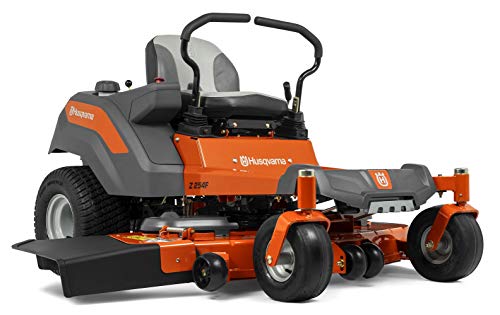
Brands to compare here in 2026 include Scag (Liberty Z and Patriot), Hustler (Raptor XD and FasTrak), Gravely (ZTHD and Pro-Turn), Exmark (Quest and Radius), Kubota (Z231 and Z400 series), Cub Cadet (Ultima ZT1 and ZT2), Husqvarna (Z254F and Z4X), and Ariens (Zenith E and IKON). Within this group the differences that matter on hills are the differential type, seat height, and whether the deck has a floating or rigid mount — floating decks follow ground contour better on undulating slopes.
Expect to pay roughly $4,000–$6,500 for a well-equipped 48–54 inch machine in this class, with Kawasaki FR-series or Kohler 7000-series engines being the common powerplants. Service intervals matter more than brand here: hydrostatic oil and filter at 200 hours, hydro belts inspected every 50 hours, and blade sharpening every 20–25 hours (more often if you’re cutting on slopes, because the deck scalps unevenly and dulls faster).
Best for steep residential slopes: slope-rated and commercial-grade ZTRs
Above about 15 degrees you need a machine explicitly rated for it. These units are heavier (800–1,100 lb), sit lower, use larger drive tires, and typically have locking differentials or independent wheel motors with traction control.
Relevant manufacturers in this tier include Scag (Tiger Cat and Cheetah, both with slope ratings published in the manual), Exmark (Lazer Z and Radius with the Hydro-Gear integrated drives), Gravely (Pro-Turn 200 and 600), Hustler (Super Z and X-One), Wright (Stander models with low CG and slope capability), Ferris (ISX 2200 and 3300 with four-wheel independent suspension and a notably low seat), and Kubota (Z700 series).
Two features unique to this tier deserve attention. First, suspension (Ferris’s independent coil-over setup is the best-known) keeps all four wheels on undulating ground, which keeps the deck at a consistent height and keeps drive tires loaded. Second, ROPS with a seat belt should be used on any slope-rated machine; the fold-down bar only works if you stay in the seat.
Pricing for this class generally runs $6,500–$12,000, and a subset of these machines — marketed as slope mowers — carries published ratings up to 20 or 22 degrees dry. Read the manual, not the brochure; the brochure usually quotes the flattest possible interpretation.
Best for tight, terraced, or steep-with-obstacles properties: compact ZTRs (34–42 in)
Narrow slopes with retaining walls, beds, or trees call for a compact deck. The reduced deck mass means less cantilevered weight pulling the machine downhill, and the narrower track fits between plantings.
Options in this space include compact models from Scag (Liberty Z 48 and smaller commercial frames), Hustler (Raptor XD 42), Ariens (Zenith E 42), Cub Cadet (Ultima ZT1 42), Toro (TimeCutter 42 and 50), and John Deere (Z320 and Z515 series).
Note that sub-48-inch decks are not inherently more slope-capable — a few 42-inch machines have essentially the same wheelbase and drive tires as their 54-inch siblings. What they gain is clearance and reduced deck overhang. If your slope is genuinely steep, a 42-inch deck on a light residential frame is a downgrade in traction compared to a heavier 48-inch unit with a locking differential.
Expect $3,500–$6,000 for a compact machine with a fabricated deck and decent drive tires.
Best for slopes over 20 degrees: not a zero-turn
It’s worth saying plainly: if your property has sustained grades over 20 degrees, a zero-turn is the wrong tool, and the market offers purpose-built alternatives.
- Walk-behind mowers with a locking caster or hill-hold design — lower CG and no operator seat to tip.
- Remote-control slope mowers — the operator stands on flat ground. Several manufacturers produce tracked and wheeled units rated to 45–50 degrees. Expect $4,000–$15,000 for residential-scale units and considerably more for commercial ones.
- Steep-terrain riding mowers with four-wheel drive, a low seat, and a differential lock — a different machine category entirely from a zero-turn.
A zero-turn can be part of the answer here: many owners with mixed terrain mow the flat and moderate areas with a ZTR and handle the steep section with a walk-behind or remote-controlled unit. Budget the second machine from the start rather than buying an oversized ZTR and hoping.
Slope Guidance by Terrain Type
| Terrain | Safe technique | Machine requirement | Watch out for |
|---|---|---|---|
| Flat, under 5° | Standard ZTR patterns, any direction | Open differential acceptable | Nothing slope-specific |
| Gentle, 5–10° | Mow across or diagonal, slow turns | Any residential ZTR | Morning dew |
| Moderate, 10–15° | Up and down; turn at top and bottom only | Limited-slip differential, 10 in tires | Clippings buildup reducing traction |
| Steep, 15–20° | Straight up and down; no mid-slope turns; descents with bars forward | Locking diff, fabricated deck, ROPS, slope-rated | Rear tip-over climbing; loss of braking |
| Very steep, 20°+ | Don’t — use alternative equipment | Walk-behind or remote-control slope mower | Everything |
| Ditches and embankments | Approach parallel at the top, never cross the fall line | Remote-control preferred | Sudden weight shift at the transition |
Maintenance Realities on Hilly Properties
Hills wear machines faster, and it’s worth budgeting for it.
- Belts wear faster. Deck and drive belts run at higher loads climbing. Inspect every 50 hours; a degraded belt is a drive-slip problem waiting to happen.
- Hydro fluid runs hotter. Sustained slope work raises transmission temperature. If your mower has an external hydro filter, change it on the shorter interval in the manual. Air-cooled hydro units benefit from cleaning the cooling fins after every few uses.
- Blades dull faster and unevenly. The uphill side of the deck tends to cut higher, the downhill side lower. Check cut quality with a side-by-side pass on flat ground before blaming the deck.
- Deck wheels and gauge wheels take a beating. These are the parts that make contact on slope transitions. Check the bolts and bushings every season.
- Tires are a wear item, not a lifetime part. On a slope machine, expect to replace drive tires every 400–600 hours — sooner if you’re running on gravel or pavement edges.
- Anti-scalp wheels should be set per the manual, not all the way up. Setting them down on hilly properties reduces scalping on the crown of slopes.
What to Check Before You Buy
A short pre-purchase checklist, in order of importance:
- Measure your actual slope. Use the 4-foot level method above, at the steepest point, not the average.
- Read the manual’s slope rating. Ask for it before purchase. Ratings are typically printed in the safety section, not the spec sheet.
- Confirm the differential type. “Locking,” “limited-slip,” “auto-lock,” or “traction control” — if the spec sheet only says “dual hydrostatic,” assume open.
- Measure your gate and any narrow passage. A 54-inch deck needs at least 56–58 inches of clearance. A 48-inch deck, about 50–52 inches.
- Sit on it. Seat height above ground and how far forward you sit both affect your CG. A machine that fits you is a safer machine.
- Check the tire size and compound. 11- or 12-inch-wide drive tires with a soft turf compound are worth more on a hill than 2 extra horsepower.
- Confirm ROPS and seat belt are included and functional. On any slope-rated machine, this is not optional equipment.
- Verify dealer service proximity. Hydrostatic transmission failures are not a DIY repair for most owners. A dealer within an hour’s drive is worth several hundred dollars in peace of mind.
FAQ: Common Hill-Mowing Questions
Can a zero-turn mow a 25-degree slope?
Almost none can, and the ones that can are purpose-built slope mowers rather than standard zero-turns. Most residential zero-turns are rated for 10–15 degrees; slope-rated commercial models sometimes reach 20–22 degrees. A 25-degree slope on a standard zero-turn is a rollover risk even on dry turf. Use a remote-control or walk-behind machine instead.
Is a zero-turn or a garden tractor safer on hills?
Generally a garden tractor is safer on side slopes because it steers with a front axle and has a lower, more stable footprint — but it can’t turn as tightly, and its rear differential is usually open unless it’s a 4WD model. A zero-turn with a locking differential and wide tires can outperform a garden tractor in traction but is less forgiving if things go wrong. If safety is the priority on steep ground, look at 4WD garden tractors with differential lock or dedicated slope machines.
How wide should my deck be for a hilly lawn?
For most hill properties, 48–54 inches. The deck is the heaviest thing hanging off the machine, so a narrower deck means less cantilevered weight pulling you downhill on a side slope. If your terrain is terraced or obstacle-heavy, 42 inches is a reasonable compromise. Avoid 60-inch-plus decks on slopes over 15 degrees.
Does tire pressure really change hill performance?
Yes, meaningfully. Dropping drive tires 2–3 psi below the sidewall recommendation increases the contact patch and improves grip. Don’t go below about 8 psi — under side load, especially on a slope, an underinflated tire can debead from the rim. Check pressure cold and recheck after the first hour of use, since hilly mowing heats tires.
Will a bagger make my mower less stable on slopes?
Yes. A rear bagger adds 60–150 lb behind the rear axle, raising the effective center of gravity and increasing the chance of rearward tip-over on climbs. If you mow slopes regularly, consider side-discharge, mulching, or a front-mounted collection system instead, and never run a full bagger up a steep grade.
How do I know if my property is too steep for any zero-turn?
Measure the steepest sustained section. If it exceeds 20 degrees, or if it exceeds 15 degrees and stays wet or shaded for much of the season, a zero-turn isn’t the right primary machine. Below those thresholds, a slope-rated zero-turn with a locking differential will handle the property competently.
The Bottom Line
For hilly lawns, prioritize in this order: a locking or limited-slip differential, wide soft-compound drive tires, a low seat and low CG, a fabricated deck sized 48–54 inches, and a manufacturer-published slope rating that exceeds your steepest measured grade. Budget roughly $4,000–$6,500 for a capable mid-range machine and $6,500–$12,000 for a slope-rated commercial unit. Above 20 degrees, buy a walk-behind or remote-control slope mower instead of a zero-turn — and either way, mow up and down, turn only at the top and bottom, and keep the lap bars forward on every descent.