Best Outdoor Storage Deck Boxes for Every Patio
The best outdoor storage deck boxes are resin boxes for year-round, low-maintenance storage, metal boxes for stronger security, and wood-look or solid-wood boxes when appearance matters most; the right choice depends on your patio’s available footprint, the items you need to store, and whether the lid will also serve as seating.
Quick picks by patio situation
| Patio situation | Best box type | Useful capacity | Why it fits |
|---|---|---|---|
| Small apartment balcony | Compact resin box | 30–50 gallons | Usually 20–30 inches wide and 15–20 inches deep; stores cushions without consuming the walking path |
| Family patio with toys and pet supplies | Large resin or polypropylene box | 90–150 gallons | Easy to wipe clean, rust-free, and roomy enough for bulky outdoor items |
| Entertaining area | Bench-style deck box | 100–150 gallons | Combines cushion storage with extra seating, provided the lid is reinforced and weight-rated |
| Rental home | Lightweight resin box | 50–100 gallons | Can be disassembled or moved without drilling into walls or adding permanent storage |
| Security-conscious storage | Lockable metal or reinforced resin box | 80–150 gallons | Better resistance to prying than a thin decorative storage chest |
Material comparison: what lasts outdoors?
| Material | Weather resistance | Strength and security | Maintenance | Best use |
|---|---|---|---|---|
| Resin or polypropylene | Very good against rain, humidity, and UV when UV-stabilized | Good for ordinary storage; weaker against forced entry than metal | Low; wash with mild soap | Most patios and year-round cushion storage |
| Powder-coated steel | Good until scratches expose bare metal; coastal air demands extra care | Usually the strongest option for a lock hasp and rigid walls | Inspect chips and rust, especially near hinges and fasteners | Tools, equipment, and security-sensitive items |
| Aluminum | Very good corrosion resistance, including in many coastal settings | Lightweight but can dent more easily than steel | Low; rinse away salt deposits | Movable storage where rust resistance matters |
| Solid wood | Variable; requires exterior finish and regular maintenance | Rigid and attractive, but hinges and joints can loosen over time | Seal, inspect, and refinish as needed | Covered patios and design-led spaces |
| Engineered wood | Usually poor if water reaches unprotected edges | Suitable for sheltered use, not persistent exposure | Keep dry and repair swelling quickly | Covered porches rather than open patios |
For most homes, UV-stabilized resin offers the best balance of price, weather resistance, and ease of care. It will not make a thin box theft-proof, but it avoids common wood problems such as swelling, peeling finishes, and mold in damp joints. Metal is preferable when the contents are valuable or the box sits in a shared courtyard, but check that the drainage design and coating are suitable for your climate.
Our top picks
 Keter Westwood 150 Gal Outdoor Storage Box
- Fashionably store your outdoor furniture cushions, pool floats,…
- This multipurpose outdoor storage container has a large…
- This deck storage box is attractive and rugged…
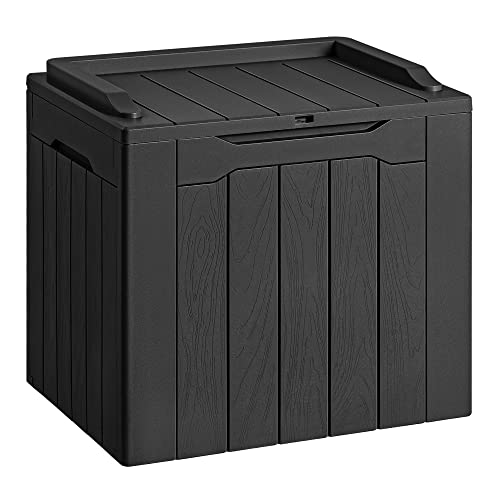 Devoko 30 Gallon Resin Deck Box Waterproof
- Light & Solid: Made of a high density…
- Extra Seat: It can be used as an…
- Moved and Locked: With built-in armrest, water and…
 Keter Kentwood 92 Gal Outdoor Storage Box
- Exterior: 50.4 in
- Storage capacity of 92 gallons is perfect for…
- Store outdoor patio furniture cushions, outdoor gear, pool…
| Product | Key specs | |
|---|---|---|
| Keter Westwood 150 Gal Outdoor Storage Box | Fashionably store your outdoor furniture cushions, pool floats,… This multipurpose outdoor storage container has a large… This deck storage box is attractive and rugged… | Check price |
| Devoko 30 Gallon Resin Deck Box Waterproof | Light & Solid: Made of a high density… Extra Seat: It can be used as an… Moved and Locked: With built-in armrest, water and… | Check price |
| Keter Kentwood 92 Gal Outdoor Storage Box | Exterior: 50.4 in Storage capacity of 92 gallons is perfect for… Store outdoor patio furniture cushions, outdoor gear, pool… | Check price |
 Keter Westwood Outdoor Storage Deck Box Keter Westwood Outdoor Storage Deck Box | Fashionably store your outdoor furniture cushions, pool gear,… This multipurpose outdoor storage container has a large… This deck storage box is attractive and rugged… | Check price |
As an Amazon Associate we earn from qualifying purchases at no extra cost to you.
How much capacity do you really need?
Manufacturers measure deck boxes in gallons, but the useful question is what fits inside without crushing it. A 30–50-gallon box generally handles a few dining-chair cushions, small toys, or gardening accessories. A 70–100-gallon model is a practical middle size for several seat cushions, throw pillows, and a compact outdoor rug. Boxes of 120–150 gallons can hold sectional cushions or larger toys, but they need substantially more floor space and a lid that is easy to lift.
Measure the folded or rolled items first. Leave roughly 10–15 percent empty space so cushions are not compressed against the lid and so air can circulate. A box listed as 100 gallons may have less usable space after the sloped lid, internal ribs, hinge mechanism, or thick walls are accounted for.
Check the footprint before you buy
A storage box should not simply fit on the patio; it should leave room to open the lid and walk around it. Allow at least 24 inches of clear space in front of a front-opening lid. For frequent access, 30–36 inches is more comfortable. If the box sits behind a dining chair, leave about 36 inches between the box and the table so someone can pull out the chair and still reach the storage.
| Available patio area | Recommended outside footprint | Typical capacity | Planning note |
|---|---|---|---|
| Balcony or patio under 50 sq. ft. | Up to about 30 in. W × 20 in. D | 30–50 gallons | Keep at least 24 inches for the main walking route |
| 50–100 sq. ft. | About 36–48 in. W × 20–24 in. D | 50–100 gallons | Works beside a compact bistro set or loveseat |
| 100–150 sq. ft. | About 48–60 in. W × 24–30 in. D | 100–150 gallons | Usually suits a dining or sectional seating zone |
| Large patio over 150 sq. ft. | 60 in. W or larger, or two smaller boxes | 150 gallons and up | Two boxes can be easier to move and organize than one oversized chest |
Also measure vertical clearance. A lid may rise 12–20 inches above the box when fully open, so a box tucked under a window, counter, or balcony rail may not be usable even if its floor footprint fits.
Can the lid be used as a seat?
Only treat a deck box as seating when the manufacturer provides a seat weight rating and the lid has appropriate reinforcement. A casual adult seat typically requires a rating of at least 250 pounds; a two-person bench should have a clearly stated rating of 400–500 pounds or more. Do not infer strength from a thick-looking lid. Hinges, edge rails, and the bottom panel often fail before the central lid surface.
Bench-style boxes are useful around a fire pit or dining area, but they are not always comfortable. A typical outdoor seat is around 17–19 inches high, while a storage box may be 18–20 inches high before adding a cushion. Check the depth too: a box only 18–20 inches deep may work as upright perching but can feel shallow for relaxed seating. Keep the lid clear of sharp hardware and verify that children cannot pinch fingers in the hinge.
Drainage, ventilation, and security details that matter
- Drainage: Look for channels or drain holes at the lowest points, rather than assuming a sealed lid makes the box waterproof. Drainage is especially important if rain can enter while the lid is open.
- Water management: A raised base keeps the bottom away from puddles. On a balcony, do not block the surface drain or place the box where it redirects water toward a doorway.
- Ventilation: Small vents help reduce condensation, but they should be positioned under an overhang or protected by the box design. Store cushions completely dry whenever possible.
- Sealing: Overlapping lids and gasketed edges provide better rain resistance than a flat lid resting directly on the rim. No outdoor box should be assumed fully watertight unless that performance is explicitly specified.
- Locks: A lockable hasp deters casual access, but it does not turn resin into a security safe. For higher security, choose rigid metal or reinforced resin, concealed hinges, and a tamper-resistant padlock.
Assembly and moving realities
Large resin boxes often arrive as several panels and a lid, with assembly taking roughly 20–60 minutes depending on the fastening system. Align the base before tightening screws; a slightly twisted frame can prevent the lid from closing evenly. Metal boxes may use more hardware and can require two people because panels are awkward even when the total weight is moderate.
Before ordering, measure the narrowest doorway, stair turn, elevator opening, and gate. A fully assembled 60-inch box may not turn through a 30-inch doorway. Choose a flat-pack design or plan to assemble it near its final position. Large boxes can weigh approximately 30–80 pounds empty, and stored cushions add bulk rather than much weight, while tools or soil can make the box difficult to move.
The parts most likely to wear are hinges, lid-support arms, latch points, and the bottom panel where it contacts wet ground. Put the box on a level surface, avoid overfilling it, and keep heavy equipment on the floor rather than hanging it from the lid. With those precautions, a quality resin box is usually the lowest-effort choice for everyday patio storage.
Bottom line
Choose a compact 30–50-gallon resin box for a small balcony, a 70–100-gallon model for ordinary cushion storage, and a 120–150-gallon bench-style box when you need both seating and storage. Pick powder-coated steel or aluminum when security or corrosion resistance outweighs portability, and reserve solid wood for covered patios where you are willing to maintain the finish. The best outdoor storage deck boxes are the ones that leave usable walking clearance, keep contents elevated and ventilated, and match the real weight and access demands of your patio.