Key takeaways
- Know which physics you’re buying: Evaporative units are truly ventless and cool 5–15°F below ambient in dry climates; compressor ACs deliver deeper, more reliable cooling but must exhaust heat somewhere. Neither can defy thermodynamics indoors with no outlet.
- Match capacity to actual square footage: Look for SACC (seasonally adjusted) ratings, not just headline BTU. A 12,000 BTU unit rated 7,500 SACC is honest about real-world output for a 400–450 sq. ft. room.
- Treat noise as a sleep specification: Anything above roughly 55 dB near the bed fragments light sleep stages. Prioritize models with a low or “sleep” fan speed, and place the unit at the far end of the room so airflow reaches you before the compressor noise does.
- Humidity direction matters: If your space already feels clammy, choose a compressor unit with a dehumidify mode. If your winter-dry, high-altitude bedroom leaves you with a scratchy throat, an evaporative cooler solves two problems at once.
- Plan the small logistics: Confirm drainage or self-evaporating operation, count how many ice packs ship in the box, and check for a 7–24 hour timer so the unit can taper off during your deepest sleep window instead of running cold until dawn.
What's inside
Anyone who has tried to sleep through a heat wave in a room with no operable window knows the particular misery of it: core body temperature needs to drop roughly one to two degrees for sleep to begin, and a stagnant 80°F bedroom simply won’t allow that. Basement apartments, converted attics, casement-only rentals, interior offices, dorms, and RVs all share the same constraint — nowhere obvious to send hot exhaust air. So buyers start searching for a “ventless air conditioner,” and the market happily sells them two very different machines under that one label.
This guide separates them honestly. Evaporative coolers (swamp coolers) are genuinely ventless and need no window at all, but they cool by adding moisture and work best in dry air. Compressor-based portable ACs are true refrigerant units that dehumidify and drop real degrees — they still need an exhaust path, though that path can be a sliding door, a wall vent, a drop ceiling, or a dryer-style port rather than a sash window. Below, you’ll find how to choose between the two approaches, plus expert notes on five units worth considering for sleep-critical rooms in 2026.
As an Amazon Associate we earn from qualifying purchases.


🛒 Best Price Today on Amazon
Prime members get fast, free shipping on everything above, plus member-only deals. New members get a 30-day free trial — cancel anytime.
How to Choose a Ventless Air Conditioner No Window (2026)
- Know which physics you’re buying: Evaporative units are truly ventless and cool 5–15°F below ambient in dry climates; compressor ACs deliver deeper, more reliable cooling but must exhaust heat somewhere. Neither can defy thermodynamics indoors with no outlet.
- Match capacity to actual square footage: Look for SACC (seasonally adjusted) ratings, not just headline BTU. A 12,000 BTU unit rated 7,500 SACC is honest about real-world output for a 400–450 sq. ft. room.
- Treat noise as a sleep specification: Anything above roughly 55 dB near the bed fragments light sleep stages. Prioritize models with a low or “sleep” fan speed, and place the unit at the far end of the room so airflow reaches you before the compressor noise does.
- Humidity direction matters: If your space already feels clammy, choose a compressor unit with a dehumidify mode. If your winter-dry, high-altitude bedroom leaves you with a scratchy throat, an evaporative cooler solves two problems at once.
- Plan the small logistics: Confirm drainage or self-evaporating operation, count how many ice packs ship in the box, and check for a 7–24 hour timer so the unit can taper off during your deepest sleep window instead of running cold until dawn.
The Best Ventless Air Conditioners With No Window (2026), Reviewed
12,000 BTU Portable Air Conditioner (550 Sq. Ft.)
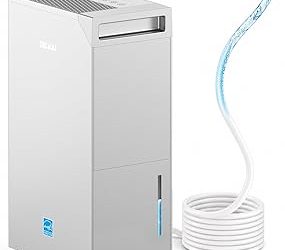
This is the strongest true-cooling option here, with 3-in-1 cool, fan, and dehumidify modes and self-evaporating operation that spares you the nightly bucket ritual. It does need an exhaust route — a sliding door, transom, or wall port all work — but for a hot upstairs bedroom it’s the only category that reliably lowers temperature enough to protect sleep onset.
SereneLife 8,000 BTU Portable AC With WiFi
Sized for rooms up to 350 sq. ft., the SereneLife earns its place through control: app scheduling plus a 24-hour timer lets you pre-cool the bedroom before you go up and ease off after midnight, which is exactly the temperature curve sleep researchers recommend.
Windowless 3-in-1 Evaporative Cooler (70° Oscillation)
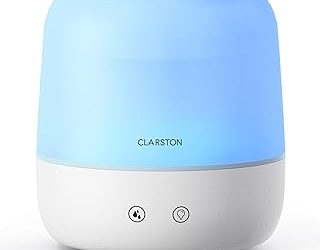
Fully ventless and genuinely portable, this cooler pairs four ice packs with 70° oscillation and a 7-hour timer — a sensible pick for a windowless home office or a dry-climate studio where circulation matters as much as raw degrees.
25.3″ Evaporative Cooler With 90° Oscillation and Remote
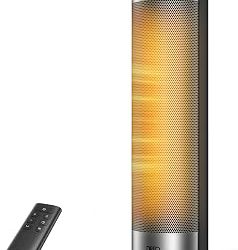
The taller tower design puts airflow closer to bed height, and 90° oscillation spreads it wider without pointing a cold draft at your face all night. Three speeds, four modes, and quiet operation make it the more bedroom-appropriate of the two swamp coolers.
Shinco 12,000 BTU (7,500 SACC) Portable AC
Shinco’s transparency about SACC is refreshing, and 7,500 SACC is honest muscle for a 450 sq. ft. room. Cool, dehumidify, and fan modes plus a 24-hour timer make it a dependable all-season choice for humid basements.
Frequently Asked Questions
Do truly ventless air conditioners exist?
Evaporative coolers are ventless, but they cool by evaporating water rather than removing heat. Any refrigerant-based AC must reject heat outside the room, so “ventless portable AC” listings almost always describe swamp coolers.
How can I vent a portable AC without a window?
Common solutions include a sliding-door kit, a drop-ceiling vent, a dryer-style wall port, or exhausting into an unconditioned adjacent space such as a garage or utility room.
Will an evaporative cooler make my room humid?
Somewhat, yes. In dry air that’s a benefit; in already-humid climates above about 60% relative humidity, performance drops and the room can feel muggy.
Which type is quieter for sleeping?
Evaporative coolers generally run quieter because there’s no compressor cycling on and off. If you choose a compressor unit, look for a dedicated sleep or low-fan setting.
Final Thoughts
For real temperature control in a hot, humid, window-limited bedroom, the 12,000 BTU 550 sq. ft. portable AC or the Shinco 12,000 BTU (7,500 SACC) are the units most likely to protect your sleep — provided you can arrange a modest exhaust path. If no exhaust is possible at all, the 25.3″ evaporative cooler with 90° oscillation is the smartest genuinely ventless choice, delivering quiet, well-distributed airflow that makes a stuffy room meaningfully more sleepable.