Key takeaways
- Seat depth and height: Aim for a seat 17–19 inches deep and roughly 18 inches high, leaving 10–12 inches between seat and tabletop. Too deep and the front edge compresses the back of your knees; too shallow and your thighs lose support, which is what drives that constant repositioning during long meals.
- Backrest geometry: A gently curved or wingback shape cradles the lumbar spine and encourages a neutral pelvis. Flat vertical backs push you into a slouch, and slouching compresses the diaphragm — worth avoiding when you’re eating a meal you’d like to digest before lying down.
- Fabric breathability: Chenille and linen-weave textiles move heat and moisture away from skin; dense velvets feel plush but insulate more. If your dining space runs warm or you eat late, prioritize open-weave fabrics to avoid arriving at bedtime with elevated core temperature.
- Cushion density: High-resilience foam that rebounds when pressed will hold its shape for years. Soft, slow-recovering padding feels luxurious in the showroom and flattens into a hammock within months, undoing whatever postural support the frame provides.
- Mobility and noise: Casters make it effortless to slide back from the table without the abrupt jolt and scrape that spikes alertness in a quiet house. Choose smooth-rolling wheels rated for your flooring, and check that they lock or offer enough resistance to prevent drift.
What's inside
As someone who spends their working life studying rest, I’ve come to a slightly unfashionable conclusion: the wind-down that determines how well you sleep doesn’t begin in the bedroom. It begins at the dinner table. The last ninety minutes before bed are when your nervous system decides whether to shift into parasympathetic mode — and a chair that pinches your hips, tips your pelvis backward, or forces you to perch forward keeps low-grade muscular tension humming right through the evening. Most shoppers choose dining seating on looks alone, then wonder why lingering over a meal feels like a chore and why they arrive in bed already braced.
This guide approaches upholstered dining chairs through that lens: seat depth and back support that let you sit for an hour without fidgeting, fabrics that don’t trap heat against your legs, and construction that stays quiet and stable so nobody’s scraping wood across the floor at ten at night. Below you’ll find the models worth your attention in 2026, followed by a buying framework and answers to the questions I hear most often from clients rebuilding their evening routine.
As an Amazon Associate we earn from qualifying purchases.


🛒 Best Price Today on Amazon
Prime members get fast, free shipping on everything above, plus member-only deals. New members get a 30-day free trial — cancel anytime.
How to Choose a/an Upholstered Dining Room Chairs (2026)
- Seat depth and height: Aim for a seat 17–19 inches deep and roughly 18 inches high, leaving 10–12 inches between seat and tabletop. Too deep and the front edge compresses the back of your knees; too shallow and your thighs lose support, which is what drives that constant repositioning during long meals.
- Backrest geometry: A gently curved or wingback shape cradles the lumbar spine and encourages a neutral pelvis. Flat vertical backs push you into a slouch, and slouching compresses the diaphragm — worth avoiding when you’re eating a meal you’d like to digest before lying down.
- Fabric breathability: Chenille and linen-weave textiles move heat and moisture away from skin; dense velvets feel plush but insulate more. If your dining space runs warm or you eat late, prioritize open-weave fabrics to avoid arriving at bedtime with elevated core temperature.
- Cushion density: High-resilience foam that rebounds when pressed will hold its shape for years. Soft, slow-recovering padding feels luxurious in the showroom and flattens into a hammock within months, undoing whatever postural support the frame provides.
- Mobility and noise: Casters make it effortless to slide back from the table without the abrupt jolt and scrape that spikes alertness in a quiet house. Choose smooth-rolling wheels rated for your flooring, and check that they lock or offer enough resistance to prevent drift.
The Best Upholstered Dining Room Chairs (2026)s Reviewed
VKNOW Upholstered Dining Chairs with Casters (Set of 4)
The chenille upholstery here is the standout: breathable, soft against bare legs, and removable for washing, which matters more than people expect in a room where food happens. Combined with armrests and smooth casters, this is the set I’d point toward for households who linger at the table well into the evening.
COLAMY Fabric Wingback Side Dining Chairs (Set of 4)
The wingback silhouette and button-tufted back do genuine postural work, encircling the torso and discouraging the forward lean that flattens the lumbar curve. A strong pick for anyone who works, reads, or holds long conversations at the dining table rather than just eating and leaving.
VKNOW Wooden Dining Chairs with Walnut Legs (Set of 4)
Faux mohair over a curved back gives you mid-century restraint without the punishing hard shell those designs usually involve. The solid walnut legs keep the chair planted and blessedly silent — no creak, no wobble, no percussion during a late meal.
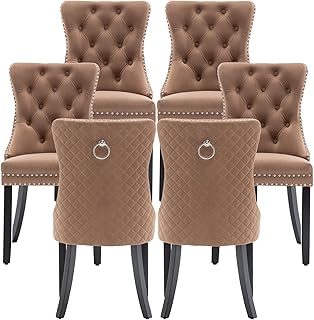
Velvet Dining Chairs with Nailhead Trim (Set of 6)
For larger households, this six-piece set delivers coordinated formality at sensible value, with nailhead detailing that reads far more expensive than it is. The velvet does run warmer than woven fabrics, so it suits cooler rooms and earlier dinners best.
UVV Upholstered Dining Chairs with Casters (Set of 2)
A tidy linen-clad pair for compact rooms, breakfast nooks, or filling out a mismatched table. The armrests and four casters give it a genuinely restful, armchair-like quality that belies the modest footprint.
Frequently Asked Questions
Does dining chair comfort really affect sleep quality?
Indirectly, but meaningfully. Sustained muscular tension and postural strain keep sympathetic arousal elevated, and evening is precisely when you want that dialing down. Comfortable seating also encourages slower, more mindful eating, which supports digestion before you lie flat.
Are casters practical in a dining room?
Yes, provided you match the wheel type to your floor — softer polyurethane for hardwood, harder wheels for carpet. Rolling chairs eliminate the sudden scrape-and-jerk of dragging furniture, a small sensory disruption that adds up in a household winding down.
How do I keep upholstered chairs clean?
Vacuum the seams weekly, blot spills immediately rather than rubbing, and treat new fabric with a protectant spray. Removable washable covers, like those on the VKNOW chenille set, remove nearly all the anxiety from this equation.
Velvet or linen for a dining chair?
Linen and chenille breathe better and suit warm rooms or late dinners. Velvet offers richer depth and stain resistance from its dense pile, but retains more heat — a fair trade if your dining room runs cool.
Final Thoughts
If you want one recommendation, the VKNOW chenille set with casters offers the best balance of breathability, support, and real-world maintainability. Those prioritizing back support should look hard at the COLAMY wingback chairs, while the VKNOW walnut-leg set is the most elegant way to get all three without sacrificing design.