Key takeaways
- Weave density over thickness: A tightly woven 1.2mm cloth outlasts a loose, lofty one every time. Loose weaves snag on belt buckles and let crumbs migrate into the foam, where they compact and create hard spots under the sit bones.
- Thermal behaviour: Natural and faux linens wick moisture and shed heat quickly, which is why they feel neutral rather than clammy after a long meal. Slick synthetics with a plastic hand trap body warmth and encourage that restless shifting you see in guests halfway through dessert.
- Yardage math before colour: Budget roughly half a yard per standard seat pad, then add 25% for pattern alignment and the pull-under allowance. Running short forces seam placement at the front edge — precisely where pressure concentrates and stitching fails.
- Recovery under load: Press your thumb into the fabric over foam and release. Material that holds a dimple will develop permanent seat-shaped depressions that concentrate pressure unevenly, exactly the way a fatigued mattress panel does.
- Honest colour choices: Mid-tone greys, flax, and muted navies conceal the inevitable oil marks from hands and hair without reading as sterile. Pale cream demands a stain treatment; deep black shows every crumb and thread.
What's inside
Most dining chair complaints have nothing to do with the frame. People blame the wood, the seat height, the leg splay — but when someone tells me they can’t linger at their own table for more than twenty minutes, the culprit is almost always the fabric wrapped around the seat. I spend my working life studying how surfaces affect human rest: thermal exchange, pressure distribution, the way a material either breathes with a body or traps heat against it. Those same principles govern a mattress and a dining chair cushion. A fabric that doesn’t dissipate warmth will make a forty-minute dinner feel like a chore, no matter how generous the padding underneath.
This guide approaches upholstery selection through that comfort-physiology lens rather than a purely decorative one. Below you’ll find yardage goods worth reupholstering with, plus two ready-made chair sets for anyone who’d rather skip the staple gun entirely. I’ve weighted my assessments toward weave density, breathability, tactile temperature, and how each material behaves after a few hundred sit-downs — because durability and comfort are the same conversation viewed from different angles.
As an Amazon Associate we earn from qualifying purchases.



🛒 Best Price Today on Amazon
Prime members get fast, free shipping on everything above, plus member-only deals. New members get a 30-day free trial — cancel anytime.
How to Choose a Fabric For Upholstered Dining Chairs (2026)
- Weave density over thickness: A tightly woven 1.2mm cloth outlasts a loose, lofty one every time. Loose weaves snag on belt buckles and let crumbs migrate into the foam, where they compact and create hard spots under the sit bones.
- Thermal behaviour: Natural and faux linens wick moisture and shed heat quickly, which is why they feel neutral rather than clammy after a long meal. Slick synthetics with a plastic hand trap body warmth and encourage that restless shifting you see in guests halfway through dessert.
- Yardage math before colour: Budget roughly half a yard per standard seat pad, then add 25% for pattern alignment and the pull-under allowance. Running short forces seam placement at the front edge — precisely where pressure concentrates and stitching fails.
- Recovery under load: Press your thumb into the fabric over foam and release. Material that holds a dimple will develop permanent seat-shaped depressions that concentrate pressure unevenly, exactly the way a fatigued mattress panel does.
- Honest colour choices: Mid-tone greys, flax, and muted navies conceal the inevitable oil marks from hands and hair without reading as sterile. Pale cream demands a stain treatment; deep black shows every crumb and thread.
The Best Fabric For Upholstered Dining Chairs (2026)s Reviewed
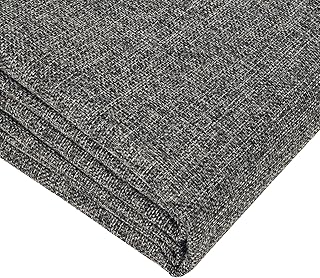
Heavy Linen Fabric, 80×57 Inches (Dark Grey)
At 1.2mm with a genuine linen hand, this is the breathability benchmark — it moves heat away from the body faster than any synthetic in this lineup, which matters enormously across a two-hour meal. The generous 80-inch cut covers three to four standard seats, though expect some initial stiffness that softens considerably after the first month of use.
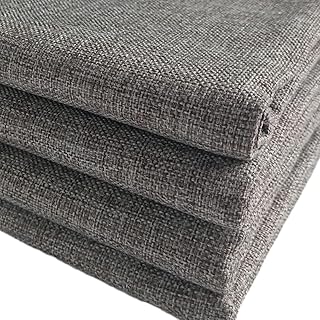
Faux Linen Needlework Fabric, 3.3 Yards (Grey Blue)
The best value per seat here, with enough length to upholster a full six-chair set and keep offcuts for future repairs. The grey-blue reads warmer in lamplight than it does on screen, and the faux composition resists the wrinkling that bothers some people about true linen.
TinaKim Thick Chair Upholstery Fabric (Flaxen)
Purpose-built for seating rather than adapted from apparel goods, and the difference shows in how evenly it stretches over a curved seat without puckering at the corners. The flaxen tone is genuinely forgiving of everyday marks, making it my default recommendation for households with children.
LaSilk Premium Upholstery Fabric (Navy Blue)
The heaviest hand of the four yardage options, with a substantial thickened backing that adds a perceptible cushioning layer above the foam. Sold by the single yard, so it suits one or two chairs — or a patch repair on an existing set you’d rather not replace wholesale.
COLAMY Wooden Dining Chairs, Set of 6
For anyone who’d rather buy than reupholster, this set pairs a breathable beige weave with foot pegs that meaningfully reduce frame racking over years of use. The seat padding is firm rather than plush, which is the correct choice for dining posture — soft seats encourage slumping and lower-back fatigue.
Frequently Asked Questions
How much fabric do I need per dining chair?
Plan on 0.5 yards for a simple drop-in seat pad and 1 to 1.5 yards for a chair with a full upholstered back. Buy in one lot to guarantee dye-batch consistency.
Is linen durable enough for daily dining use?
Heavy linen at 1.2mm or above performs well, and its strength actually increases when damp. The trade-off is wrinkling, which most people find acceptable given the comfort payoff.
Should I apply a fabric protector?
Yes, on anything lighter than mid-tone. Apply after upholstering, let it cure fully for 48 hours, and reapply annually on heavily used seats.
Can I upholster over the existing fabric?
You can, but I’d advise against it. Old compressed padding creates uneven pressure points beneath the new cover, and trapped debris will telegraph through as lumps within weeks.
Final Thoughts
If comfort across long meals is the priority, the Heavy Linen in Dark Grey delivers the best thermal performance of anything here. For covering a full set economically, the Faux Linen Needlework fabric at 3.3 yards is the clear choice, while the TinaKim Thick Chair Upholstery Fabric strikes the most reliable balance between forgiving colour, seating-grade weight, and ease of installation for a first-time project.