Key takeaways
- Weight and hand: Aim for a mid- to heavyweight cloth with a dense, tightly packed weave. Hold it up to a window — if light streams through the gaps, the foam beneath will start showing wear lines within a season.
- Breathability: Vinyl and coated fabrics wipe clean beautifully but trap heat against the body during long meals. Faux linen and flannel-backed cottons let air move, which is why they feel neutral rather than sticky after forty minutes.
- Yardage math: Budget roughly half a yard per standard drop-in seat and closer to a full yard for a chair with a padded back. Buy one extra half-yard beyond your estimate for pattern matching and mistakes.
- Cleanability: Households with children or frequent guests should prioritize a waterproof or water-resistant finish. Everyone else can trade that for a softer surface texture and spot-clean as needed.
- Pattern scale: Small repeats and subtle textures forgive imprecise cutting. Large florals and directional prints demand careful alignment across a matching set, so pad your yardage accordingly.
What's inside
Most people don’t think about their dining chairs until they’ve spent an hour sitting in one. Then the complaints arrive all at once: the seat has gone flat, the old fabric feels clammy against the backs of your legs, and every crumb from the last three dinner parties seems to have made a permanent home in the weave. I spend most of my professional life talking to people about rest and recovery, and one thing surfaces again and again — the rooms where we slow down matter as much as the rooms where we sleep. A dining chair you actively avoid is a table you stop lingering at, and lingering is where the good part of the evening happens.
Reupholstering is the cheapest fix available, and the fabric you choose determines whether the repair lasts two years or ten. This guide walks through the yardage options worth your money in 2026, what to look for in weave, weight and cleanability, and where a ready-made chair makes more sense than a sewing project. I’ve focused on fabrics sold in the quantities a real dining set actually requires, because nothing derails a Saturday faster than running out of cloth on chair number three.
As an Amazon Associate we earn from qualifying purchases.



🛒 Best Price Today on Amazon
Prime members get fast, free shipping on everything above, plus member-only deals. New members get a 30-day free trial — cancel anytime.
How to Choose a Fabric To Reupholster Dining Chairs (2026)
- Weight and hand: Aim for a mid- to heavyweight cloth with a dense, tightly packed weave. Hold it up to a window — if light streams through the gaps, the foam beneath will start showing wear lines within a season.
- Breathability: Vinyl and coated fabrics wipe clean beautifully but trap heat against the body during long meals. Faux linen and flannel-backed cottons let air move, which is why they feel neutral rather than sticky after forty minutes.
- Yardage math: Budget roughly half a yard per standard drop-in seat and closer to a full yard for a chair with a padded back. Buy one extra half-yard beyond your estimate for pattern matching and mistakes.
- Cleanability: Households with children or frequent guests should prioritize a waterproof or water-resistant finish. Everyone else can trade that for a softer surface texture and spot-clean as needed.
- Pattern scale: Small repeats and subtle textures forgive imprecise cutting. Large florals and directional prints demand careful alignment across a matching set, so pad your yardage accordingly.
The Best Fabric To Reupholster Dining Chairs (2026)s Reviewed
TinaKim Thick Chair Upholstery Fabric (Flaxen, 2 Yards)
This is the default recommendation for a first-time reupholstery project: a substantial faux linen with enough body to staple cleanly without puckering at the corners. Two yards covers four standard drop-in seats comfortably, and the flaxen tone reads as neutral under both warm bulbs and daylight.
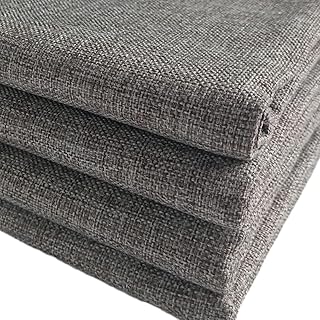
Faux Linen Needlework Fabric (Grey Blue, 3.3 Yards)
The extra yardage here is the point — 3.3 yards is the sweet spot for a six-chair set, and buying a single cut avoids the dye-lot mismatch that plagues multiple orders. The grey-blue has a soft, slightly desaturated cast that pairs well with oak and walnut without competing for attention.
Erosebridal Florals Flannel Fabric (1 Yard)
A flannel weave gives you a warmer, more cushioned surface feel than plain-woven linen, which suits cooler climates and long winter dinners. The single-yard cut makes this best suited to accent chairs, bench pads, or a quick refresh of one or two seats rather than a full set.
Erosebridal Cowboy Fabric (Brown, 10 Yards)
Ten yards of waterproof, denim-weight cloth is genuinely useful for larger projects — a long dining bench, a full set with padded backs, or an indoor-outdoor eating area. The western motif is committed rather than subtle, so treat it as a design decision and not a neutral fallback.
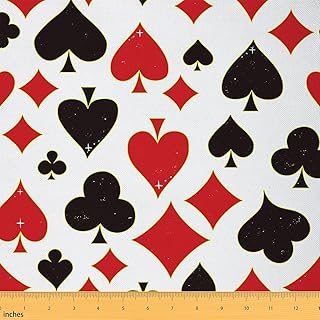
Poker Plaid Upholstery Fabric (Red Black, 5 Yards)
The waterproof finish and dark ground make this the most practical choice on the list for game rooms, basement bars, and any table that sees regular spills. Five yards is enough for a four- to six-chair set with margin left over for a matching cushion or two.
Frequently Asked Questions
How much fabric do I need for four dining chairs?
Two yards handles four simple drop-in seats. Add a yard if the chairs have upholstered backs, and another half-yard if you’re working with a large-scale pattern that needs matching.
Should I replace the foam at the same time?
Yes, if the seat compresses more than an inch under your hand. Fresh high-density foam is what actually makes a chair comfortable for an hour — new fabric over collapsed padding just looks better while feeling the same.
Are waterproof fabrics uncomfortable to sit on?
Modern water-resistant finishes on woven cloth breathe reasonably well. Fully coated vinyl is the option that traps heat, so if comfort during long meals is the priority, choose a treated weave instead.
When is buying a new chair the better move?
If the joints wobble or the frame has cracked, reupholstering is money spent on a failing structure. A ready-made option like the HomePop Parsons Dining Chair in dark blue solves the problem outright and skips the staple gun entirely.
Final Thoughts
For most dining sets, the TinaKim Thick Chair Upholstery Fabric is the safest starting point — forgiving to work with, neutral in color, and priced for a first attempt. Step up to the Faux Linen Needlework Fabric in grey blue if you’re covering six chairs and want a single consistent cut, and choose the Poker Plaid Upholstery Fabric when spill resistance outranks softness. Whichever you pick, replace the foam while the seats are off; that’s the change your guests will actually notice.