Key takeaways
- Color temperature options: Fixed 6500K units are fine above a prep station but harsh after dark. Look for lights offering three temperatures so you can run 2700K–3000K in the evening and cooler white when you’re actually chopping.
- How low the dimmer goes: Five levels sounds generous, but the number that matters is the lowest one. A true low setting — enough to navigate by, not enough to read fine print — is what makes a fixture sleep-friendly rather than sleep-hostile.
- Motion sensor tuning: Check the detection angle, trigger distance, and shut-off delay. An overly eager sensor that fires every time the dog walks past becomes a nuisance in a hallway or bedroom closet; a 15-to-20-second timeout is the practical sweet spot.
- Battery capacity and recharge friction: A 2000–2400mAh cell typically covers weeks of ordinary motion-triggered use, but always-on modes drain it fast. Multi-packs with a shared charging dock or a power-level readout save you from the guessing game.
- Mounting and length: Magnetic backing plus adhesive means renters and cabinet-scratch-averse homeowners can install without hardware. Measure your span first: a single 14–15 inch bar suits a long counter, while shorter 10 inch units or pucks distribute light better across shelving.
What's inside
Most people shop for under cabinet lighting to solve a visibility problem — the shadow that falls across a cutting board, the dim back corner of a pantry. But there’s a second problem that rarely makes it onto the spec sheet: what that light does to your body at 11 p.m. As someone who spends most days talking with people about why they lie awake, I’ve come to see the overhead kitchen light as an underrated sleep disruptor. Flipping on a 3000-lumen ceiling fixture for a glass of water floods your retina with enough light to blunt melatonin release and nudge your internal clock later. Hardwired strips have the same issue in miniature: they’re often wired to the same bright, cool-white circuit, and installing them means an electrician, a drill, or both.
Wireless, rechargeable under cabinet lights sidestep all of that. They’re magnetic, they mount in seconds, and — critically — the good ones let you choose a warm, low-output setting that lets you see the countertop without waking your whole circadian system. This guide covers what actually matters when you’re buying for both function and rest: color temperature range, dimming floor, motion-sensor behavior, battery realities, and mounting. Below are the models worth your money in 2026, evaluated with an eye toward late-night usability as much as daytime task lighting.
As an Amazon Associate we earn from qualifying purchases.




🛒 Best Price Today on Amazon
Prime members get fast, free shipping on everything above, plus member-only deals. New members get a 30-day free trial — cancel anytime.
How to Choose Under Cabinet Wireless Lighting (2026)
- Color temperature options: Fixed 6500K units are fine above a prep station but harsh after dark. Look for lights offering three temperatures so you can run 2700K–3000K in the evening and cooler white when you’re actually chopping.
- How low the dimmer goes: Five levels sounds generous, but the number that matters is the lowest one. A true low setting — enough to navigate by, not enough to read fine print — is what makes a fixture sleep-friendly rather than sleep-hostile.
- Motion sensor tuning: Check the detection angle, trigger distance, and shut-off delay. An overly eager sensor that fires every time the dog walks past becomes a nuisance in a hallway or bedroom closet; a 15-to-20-second timeout is the practical sweet spot.
- Battery capacity and recharge friction: A 2000–2400mAh cell typically covers weeks of ordinary motion-triggered use, but always-on modes drain it fast. Multi-packs with a shared charging dock or a power-level readout save you from the guessing game.
- Mounting and length: Magnetic backing plus adhesive means renters and cabinet-scratch-averse homeowners can install without hardware. Measure your span first: a single 14–15 inch bar suits a long counter, while shorter 10 inch units or pucks distribute light better across shelving.
The Best Under Cabinet Wireless Lighting of 2026, Reviewed
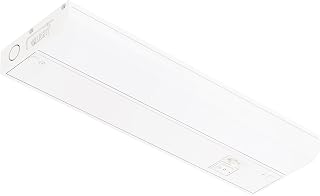
MCGOR 14.7-inch Under Cabinet Lighting (2 Pack)
The longer bar format spreads light evenly across a full counter run instead of dropping hot spots, and the five-step dimmer includes a genuinely dim bottom rung that works well as a nighttime guide light. It’s my default recommendation for kitchens where one fixture needs to cover a lot of ground.
EZVALO Under Cabinet Lighting with Charging Station (6 Pack)
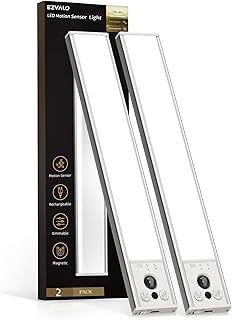
The dock is the real feature here: six bars on a shared charging station removes the main reason people abandon rechargeable lighting, which is the hassle of topping off individual units. Three color temperatures, a remote, and a timer make it the most complete package for whole-kitchen or multi-closet coverage.
10-inch Wireless Motion Sensor Light (3 Pack, Black)
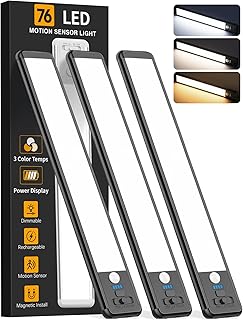
The onboard power display takes the uncertainty out of battery management, and the black housing disappears under darker cabinetry where white bars would read as a visible stripe. A sensible pick for shelving and shorter spans.
EZVALO 5-Pack Under Cabinet Lighting
Strong value per unit with a healthy 2400mAh battery and remote control, though the 6500K output is decidedly cool — best suited to pantries, garages, and utility spaces rather than rooms you pass through before bed.
EZVALO RGB Under Cabinet Puck Lights (6 Pack)
Twelve RGB colors sound like a novelty until you realize a deep amber or red setting is about the least melatonin-disruptive light you can put in a hallway. Pucks throw a narrower pool than bars, so use them for accent and orientation rather than task work.
Frequently Asked Questions
Does under cabinet lighting really affect sleep?
Indirectly, yes. Bright, blue-heavy light in the hour or two before bed — or during a middle-of-the-night kitchen trip — suppresses melatonin and can delay sleep onset. Low, warm under cabinet lighting lets you skip the overhead fixture entirely, which is the actual win.
How long do the batteries last between charges?
With motion-activated use in a typical kitchen, expect several weeks from a 2000–2400mAh unit. Running lights continuously at full brightness cuts that to a few nights, so treat always-on mode as the exception.
Will magnetic mounting hold on any cabinet?
The magnet attaches to an included metal plate, which adheres with strong tape — so it works on wood, laminate, and painted surfaces. Clean and dry the area first, and give the adhesive a full day to cure before loading weight on it.
Is motion sensing or a remote better?
Motion sensing wins for closets and stairs where your hands are full. A remote wins for kitchens, where you want the light to stay on for twenty minutes of cooking rather than cycling off mid-task. Models offering both give you the most flexibility.
Final Thoughts
For most homes, the EZVALO 6-Pack with Charging Station is the strongest all-around buy — three color temperatures, a timer, and a dock that keeps every unit charged. If you’re lighting one long counter, the MCGOR 14.7-inch pair delivers the smoothest, most even wash of the group, and the RGB pucks are a clever choice for anyone who wants a warm amber path light that won’t cost them an hour of sleep.